
Lieferung heute & morgen

Qualitätsgarantie

Willkommens-Angebote freischalten: KOSTENLOSE Lieferung | Bis zu 80 % RABATT | Kostenlose 30-Tage-JoyPlus-Testphase
App herunterladen
Magnesium 400 mg per daily serving may initially sound clear-cut. However, a closer look reveals significant differences between magnesium supplements, dosage, magnesium compounds and formats. For physically active adults, people with demanding lifestyles or those with specific dietary requirements, it is therefore worth checking the nutritional information and ingredients list.
For example, a product may state “Magnesium Glycinate 1,422 mg” on the front. What matters, however, is how much elemental magnesium is stated per daily serving. This is the only value that can be meaningfully compared with Magnesium 400 mg from other products. A high figure for the name of the compound does not automatically mean a correspondingly high magnesium intake.
“Contains B vitamins”, “time-release” or “direct” initially describe the composition or method of intake. On their own, they say nothing about whether the product is suitable for you. Anyone already taking several food supplements should consider their total intake of vitamin B6, B12, D or folic acid. Sweeteners such as sorbitol, aspartame or acesulfame-K may also be relevant for certain people.
Products containing 500 or 600 mg of magnesium per serving are not generally suitable for all adults. Product information warns that higher amounts of magnesium may have a laxative effect in sensitive individuals. If you have kidney disease, are pregnant or breastfeeding, or take medication regularly, it is advisable to consult a doctor.
First check whether the stated amount applies to one tablet, one stick, one sachet or several capsules. Several of the products featured here provide 400 mg of magnesium per daily serving. Depending on the labelling, this corresponds to approximately 100 to 107% of the European Nutrient Reference Value. Products containing Magnesium 500 mg or Magnesium 600 mg are correspondingly higher and should not be preferred solely because of their dosage.
Magnesium tablets are suitable for daily use with water. Tablets that can be split may make it easier to adjust the dosage, provided this is stated in the product information. Magnesium capsules have a neutral taste, but usually require several capsules per daily serving.
Magnesium direct granules, Magnesium sticks and products containing magnesium that can be taken without water are suitable for use on the go. Ingredients such as sorbitol and aspartame should be taken into account. Magnesium effervescent tablets are dissolved in water and can be a practical alternative for people who dislike swallowing tablets. The recommended amount of water should be followed.
For a vegan, vegetarian, gluten-free or lactose-free diet, the respective manufacturer’s information and ingredients list are decisive. Claims such as “vegan” or “gluten-free” should not be inferred from the product name; check the packaging instead.
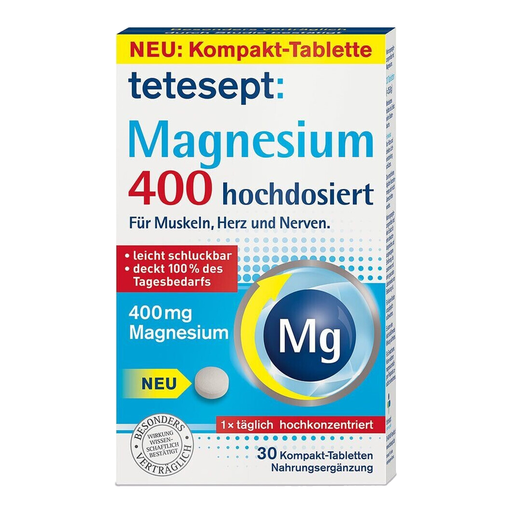
Why this product suits this profile: One tablet a day provides 400 mg of magnesium in a clearly stated serving, without additional vitamins or minerals.
The daily serving is stated directly. This prevents the weight of the magnesium compound from being confused with the actual magnesium intake.
400 mg of magnesium per tablet; gluten- and lactose-free according to the product information.
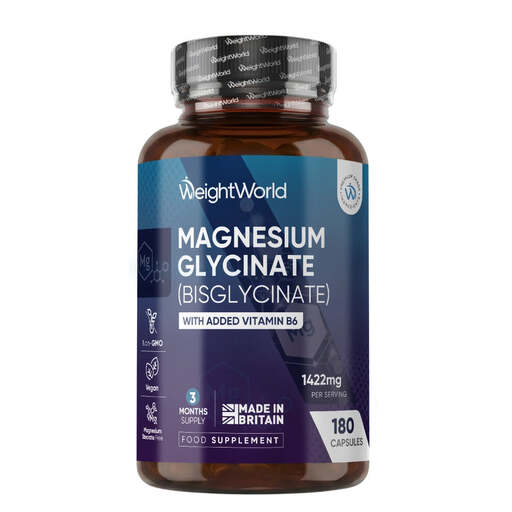
Why this product suits this profile: The formula uses magnesium glycinate and plant-based capsule shells. It is aimed at adults looking for a vegan capsule solution with a neutral taste.
The stated 1,422 mg refers to magnesium glycinate as a compound. For comparison, check the elemental magnesium amount on the packaging.
180 capsules; plant-based capsule shell; free from gluten, lactose and soya according to the product information.

Why this product suits this profile: One stick provides 400 mg of magnesium and, according to the product information, can be taken without water. This is practical for commuters, travellers and physically active people.
The format is clearly identified as a stick. The ingredients description also lists B vitamins, vitamin C, vitamin E and lemon balm extract.
400 mg of magnesium per stick; can be taken without water; B complex with B1, B2, B6 and B12.

Why this product suits this profile: The combination of magnesium, potassium, iron, zinc, chromium and vitamins B6 and B12 appeals to people who want to combine several nutrients in one daily tablet.
The composition is detailed per daily serving. This makes it possible to check whether additional potassium or vitamin supplements are actually needed.
400 mg of magnesium and 400 mg of potassium per tablet; vegetarian, and gluten- and lactose-free according to the product information.
We have compiled a complete, regularly updated list of products that fully meet these strict selection criteria and the safety regulations applicable in the EU.
Follow the daily serving stated by the manufacturer and do not exceed it. Tablets are generally taken with a meal and plenty of water. Direct granules and sticks should be used according to the instructions on the packaging. With effervescent tablets, it is important to dissolve them completely in the specified amount of water.
Magnesium supplements are not a substitute for a balanced diet. If you have a sensitive digestive system, a smaller serving may be advisable, provided this is permitted by the product information. People with impaired kidney function and anyone taking medication should seek medical advice before taking magnesium.
Not automatically. The right amount depends on your diet, personal requirements, other supplements and individual tolerability. For many products, a daily serving of 400 mg is already above the European reference value. Therefore, pay attention to the warnings on the packaging.
There is no definitive ranking. The key factors are the amount of elemental magnesium, the recommended serving, the ingredients list and your personal tolerability. Do not compare only the figure in the product name; check the nutritional information per daily serving.
According to authorised nutrition-related claims, magnesium contributes to the reduction of tiredness and fatigue and to normal energy-yielding metabolism. This is not a claim that it treats persistent tiredness. If symptoms recur or are severe, the cause should be medically assessed.