
Lieferung heute & morgen

Qualitätsgarantie

Willkommens-Angebote freischalten: KOSTENLOSE Lieferung | Bis zu 80 % RABATT | Kostenlose 30-Tage-JoyPlus-Testphase
App herunterladen
Anyone looking to buy a magnesium supplement will quickly find products offering 300, 400, 500 or even 600 mg per daily serving. You will also come across terms such as magnesium citrate, magnesium glycinate, timed-release, direct sticks and vitamin B complex. Price alone says little about which option is right for you. What matters is the actual amount of magnesium contained, the chemical compound, the format and your personal requirements, such as a vegan or gluten-free diet.
With magnesium supplements, the stated amount may refer to the magnesium compound or the elemental magnesium it contains. For example, WeightWorld Magnesium Glycinate lists 1,422 mg of magnesium glycinate per serving. This figure cannot automatically be equated with 1,422 mg of elemental magnesium. You should therefore check the nutritional information before buying.
Magnesium 400 mg, Magnesium 500 mg or high-strength magnesium may be appealing for certain user profiles. However, more is not necessarily needed. Several of the product labels mentioned here point out that amounts above 250 mg of magnesium from food supplements may have a laxative effect in sensitive individuals. The recommended daily dose must not be exceeded.
A magnesium supplement with vitamin B complex, calcium and potassium or vitamin D can provide additional nutrients. At the same time, the number of ingredients increases. Sweeteners, flavourings, anti-caking agents and potential allergens should therefore be checked carefully, particularly with direct sticks, effervescent tablets and combination products. “Vegan”, “gluten-free magnesium” and “lactose-free” should only be selected when these claims are clearly stated on the product page or packaging.
The form of magnesium affects the composition and often the format you choose:
First check how many capsules, tablets or sticks make up a daily serving. A product containing 180 capsules may last around three months when taking two capsules per day. A pack of 30 magnesium tablets, on the other hand, usually provides a one-month supply.
For food supplements, follow the information on the label. Products in this selection typically recommend one daily serving, often with a meal and plenty of fluid. Direct granules do not require water, but they dissolve on the tongue differently depending on the product. If you are taking medicines, have impaired kidney function, are pregnant or breastfeeding, or have an existing medical condition, seek medical advice before taking a supplement.
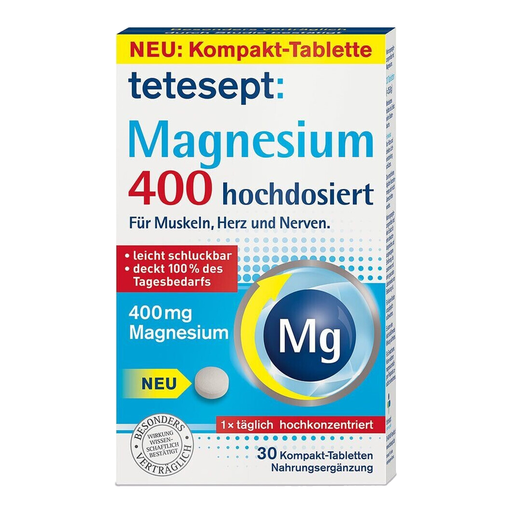
Why this product suits this profile: One tablet a day containing 400 mg of magnesium and a pack size of 30 provides a straightforward routine for adults.
The nutritional information states the amount of magnesium per daily dose directly. The product description states that it is gluten- and lactose-free.
A simple one-product routine, 400 mg per tablet and a short ingredients list.
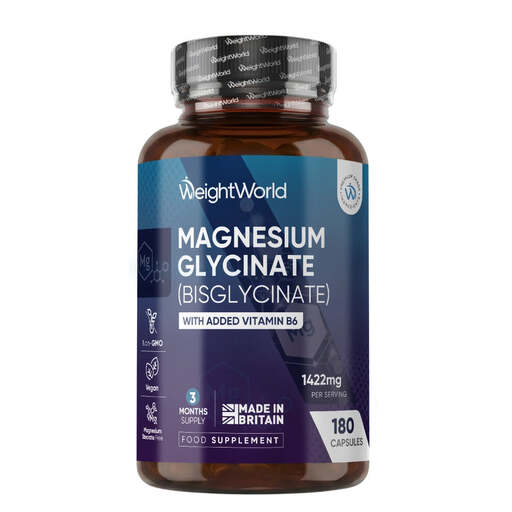
Why this product suits this profile: These capsules use magnesium glycinate and a plant-based capsule shell. According to the product information, the daily serving is two capsules.
The product description clearly identifies the compound as magnesium glycinate. However, buyers should still check the amount of elemental magnesium separately on the label.
180 plant-based capsules, described as vegan and free from gluten, lactose and soya.

Why this product suits this profile: According to the product information, the direct sticks provide 400 mg of magnesium per stick and can be taken without water.
The serving size is individually packaged and the instructions for use are clear. Check the full ingredients list for sweeteners and flavourings before buying.
Water-free use, 400 mg of magnesium and B vitamins per stick according to the product information.

Why this product suits this profile: One effervescent tablet is dissolved in 250 ml of water each day. This suits users who prefer a flavoured drink to capsules.
The daily serving, required amount of fluid and nutritional values are clearly stated. The product is also listed as gluten- and lactose-free.
400 mg of magnesium plus vitamins C and E and several B vitamins per effervescent tablet, according to the product information.
For people who also want to consider electrolyte balance alongside magnesium, products containing potassium or calcium may be worth considering. According to the nutritional information, Doppelherz Active Magnesium 500 + Calcium & Potassium contains 500 mg of magnesium, 250 mg of calcium and 300 mg of potassium per tablet. If you have kidney or heart disease or are taking medicines, potassium in particular should be discussed with a doctor beforehand.
A milder dosage is offered by products such as Sunlife Magnesium 300 mg. The product is described as vegan, gluten-free, lactose-free and sugar-free. For athletes and active adults, it is also important to consider your total magnesium intake from food and other supplements together.
We have put together a complete, regularly updated list of products that fully meet these strict selection criteria and the safety regulations applicable in the EU.
This depends on your individual needs, diet and whether you are taking other products. Daily servings commonly contain 300 to 400 mg. The key point is the stated amount of elemental magnesium and the warning about the recommended daily dose. A high dosage should not be chosen without a specific reason.
There is no universally applicable recommendation. Magnesium citrate, magnesium glycinate and magnesium oxide differ in their chemical composition. Start with the serving stated on the label and note that many products warn of a possible laxative effect at higher amounts.
Not necessarily. Direct sticks are convenient when no water is available while you are out and about. Effervescent tablets are dissolved in water, whereas capsules and standard tablets are usually taken with fluid. The most suitable format therefore depends primarily on your lifestyle, taste, ingredients list and preferred dosage.