
Lieferung heute & morgen

Qualitätsgarantie

Willkommens-Angebote freischalten: KOSTENLOSE Lieferung | Bis zu 80 % RABATT | Kostenlose 30-Tage-JoyPlus-Testphase
App herunterladen
Anyone looking to buy a magnesium supplement will find a wide range of options, including Magnesium 400 mg, Magnesium 500 mg and Magnesium 600 mg. There are also various formats, such as magnesium tablets, effervescent magnesium tablets, magnesium capsules and direct magnesium granules. The choice may seem straightforward at first, but different magnesium compounds, additives and marketing claims can quickly make things confusing.
For an informed purchasing decision, three points are particularly important: the actual amount of magnesium, the compound used and how practical the product is for everyday use. The following guidance will help you avoid unnecessary expense and unsuitable supplements.
A product labelled “Magnesium Glycinate 1,422 mg” does not automatically contain 1,422 mg of pure magnesium. This figure may refer to the total compound. The key information is the amount of elemental magnesium per daily serving shown in the nutritional information table.
With Magnesium 400 mg, for example, the recommended daily dose should actually provide 400 mg of magnesium. The same applies to Magnesium 500 mg and Magnesium 600 mg: it is worth checking the table and the percentage reference intake figures.
More magnesium is not necessarily better. Several of the products mentioned here point out that amounts above 250 mg may have a laxative effect in sensitive individuals. The recommended daily dose should not be exceeded.
If you have impaired kidney function, are pregnant or breastfeeding, or take medication regularly, you should discuss taking magnesium supplements with a doctor or pharmacist beforehand. Magnesium supplements are not a substitute for a varied diet or a healthy lifestyle.
Terms such as magnesium citrate, magnesium glycinate or “complex” describe the compound used, but they are not, on their own, proof of quality. You should also check:
Magnesium oxide is commonly used in tablets and effervescent tablets, allowing for compact, high-dose formulations. Magnesium citrate and magnesium bisglycinate are also widely used compounds. Rather than assessing claims about bioavailability in isolation, shoppers should consider the full product declaration and how well the product suits them in everyday use.
A magnesium complex can combine several compounds, such as citrate, bisglycinate, malate and oxide. This may appeal to shoppers who prefer several forms in a single product. If you have a sensitive digestive system, monitor how well the product suits you personally.
Products containing magnesium with vitamin B combine magnesium with nutrients such as B1, B6, B12 or folic acid. According to the underlying product information, magnesium and certain B vitamins contribute to the normal functioning of muscles, the nervous system and energy-yielding metabolism. These permitted nutrition claims should not be confused with medical treatment or a guaranteed effect against symptoms.
Products containing vitamin D, calcium or potassium are also available. With these combinations, shoppers should check whether the additional nutrients suit their individual needs and whether they are already taking other supplements.
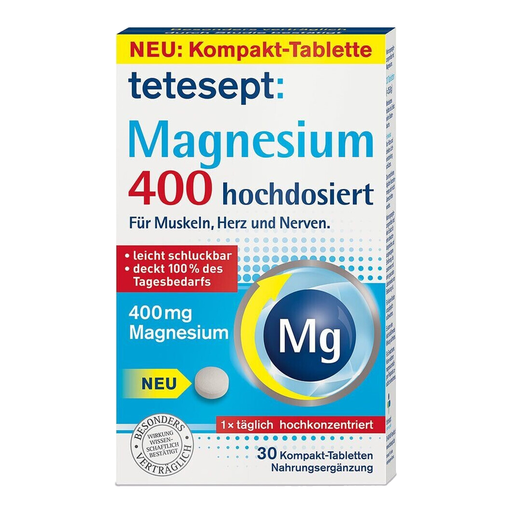
Why this product suits this profile: A straightforward Magnesium 400 mg formulation with one tablet per daily serving. The product information states that it is gluten-free and lactose-free.
The daily amount of 400 mg is stated directly in the nutritional information. There is no need for a complicated multi-compound formulation.
One tablet a day; gluten-free and lactose-free product information; clearly stated magnesium dosage.

Why this product suits this profile: The capsules use magnesium glycinate and a plant-based capsule shell. According to the product information, the formulation is vegan and free from gluten, lactose and soya.
The product description distinguishes between the glycinate compound and the serving size of two capsules. This makes it easier to assess the declaration accurately.
Plant-based capsule shell; magnesium glycinate as the stated compound; 180 capsules per pack.

Why this product suits this profile: A slow-release formulation containing magnesium oxide, magnesium citrate and magnesium bisglycinate. According to the product information, it is vegan, gluten-free and lactose-free.
The three magnesium compounds used are listed in the ingredients. The higher dosage is accompanied by a warning about a possible laxative effect.
600 mg of magnesium per tablet; slow-release formulation; three stated magnesium compounds.
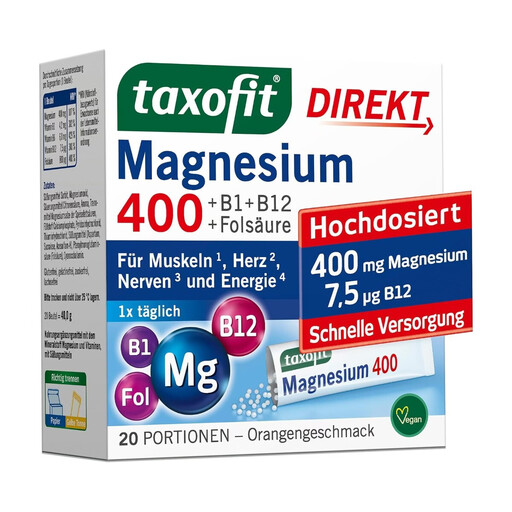
Why this product suits this profile: Direct granules in individual sachets for sport, work or travel. The product information states that it provides 400 mg of magnesium plus vitamins B1, B6, B12 and folic acid.
Each serving is individually packaged, with the dosage stated per sachet. The ingredients list clearly identifies sweeteners such as sorbitol and other sweetening agents.
No-water formula; 20 individual sachets; suitable for vegans according to the product information.
We have put together a complete, regularly updated list of products that fully meet these strict selection criteria and the safety regulations applicable in the EU.
That depends on your individual needs, diet and chosen formulation. Products providing 300 mg, Magnesium 400 mg, Magnesium 500 mg or Magnesium 600 mg are commonly available. The important factor is not just the number on the packaging, but the amount of elemental magnesium per daily dose. The recommended intake must not be exceeded.
There is no universally applicable answer. These are different magnesium compounds, each with its own formulation characteristics. Shoppers should compare the amount of elemental magnesium, ingredients list, preferred format and personal tolerance.
Combining supplements can increase the total amount of certain nutrients. You should therefore check all the products you use for magnesium, vitamin B, vitamin D, calcium or potassium. If you take medication, have a chronic condition or have impaired kidney function, it is advisable to consult a medical professional beforehand.