
Lieferung heute & morgen

Qualitätsgarantie

Willkommens-Angebote freischalten: KOSTENLOSE Lieferung | Bis zu 80 % RABATT | Kostenlose 30-Tage-JoyPlus-Testphase
App herunterladen
Magnesium supplements are often purchased when diet, exercise or a stressful lifestyle makes it difficult to meet your individual needs. However, a high milligram figure alone says little about how suitable a preparation is for everyday use. What matters is the amount of elemental magnesium, the additional ingredients and a format that you can use regularly.
Many unsuitable purchases result from three common marketing traps:
For magnesium tablets or magnesium effervescent tablets, the figure “magnesium per daily serving” is the key detail. It describes the stated amount of the mineral itself, rather than simply the weight of the compound.
For guidance:
These percentages are not a personal intake recommendation. The appropriate amount depends on factors including diet, tolerance, age and health status.
For physically active people, magnesium with potassium or an electrolyte supplement may be worth considering. Sweating causes the loss of various electrolytes; however, a combination product does not automatically contain all the nutrients you need in individually suitable amounts.
If your focus is on energy and nervous system function, you will find products containing vitamin B1, B6, B12 or folic acid. According to the authorised nutrient claims on which the relevant information is based, magnesium and certain B vitamins contribute to normal energy metabolism and normal functioning of the nervous system. This should not be confused with treating symptoms.
When choosing magnesium for night-time use, read the instructions on when to take it and which ingredients it contains carefully. Products containing melatonin are not suitable for every group of people. Pregnant and breastfeeding women, as well as people taking medication or experiencing health problems, should seek medical advice before use.
Magnesium effervescent tablets are dissolved in water and can be a practical solution for people who do not like swallowing tablets. However, the sweeteners, flavourings and specified amount of water must suit your personal taste.
Magnesium tablets, on the other hand, do not require a glass and are suitable for taking on the go. According to the manufacturer, slow-release or prolonged-release formulations release the nutrients over a longer period. This may fit your preferred intake routine, but it does not replace checking the dosage and ingredients list.
You should also look out for:
The following selection categorises specific preparations according to their intended use. The details are based on the product and nutritional information provided. Check the current packaging information before buying.

Why this product suits the profile: One effervescent tablet a day provides 400 mg of magnesium along with vitamins C, E, B1, B6 and B12, plus folic acid. The orange and grapefruit flavour is dissolved in 250 ml of water.
The daily serving and magnesium content are clearly stated. This makes it easy to compare the amount directly with other 400 mg products.
Gluten-free and lactose-free according to the product information; made in Germany; contains several B vitamins.
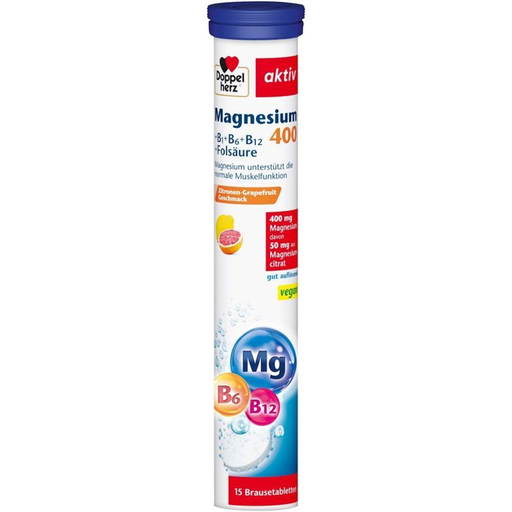
Why this product suits the profile: According to the product description, the formula combines 400 mg of elemental magnesium from magnesium carbonate and magnesium citrate with B1, B6, B12 and folic acid.
The different magnesium compounds are explicitly named. The warnings, including those concerning use with thyroid medication, should also be observed.
400 mg of magnesium per daily serving; B6, B12 and folic acid in the same effervescent tablet; lemon flavour.
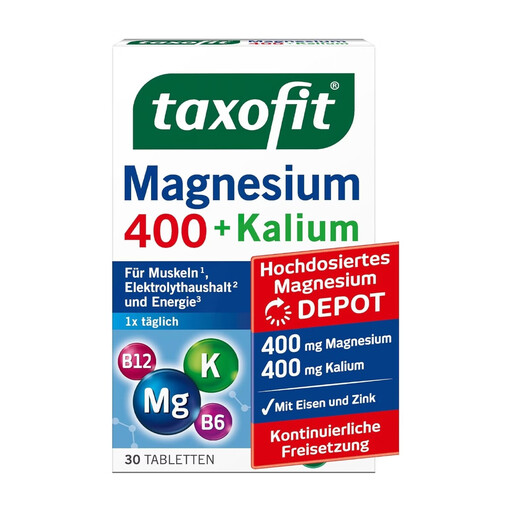
Why this product suits the profile: One slow-release tablet provides 400 mg of magnesium and 400 mg of potassium. It also contains B6, B12, iron and zinc, making it suitable for people with broader nutritional requirements.
The combination of magnesium and potassium is stated transparently. If you do not need additional potassium or iron, compare the formula with your own requirements before ordering.
400 mg of magnesium plus 400 mg of potassium; slow-release tablet; gluten-free, sugar-free and lactose-free according to the product information.
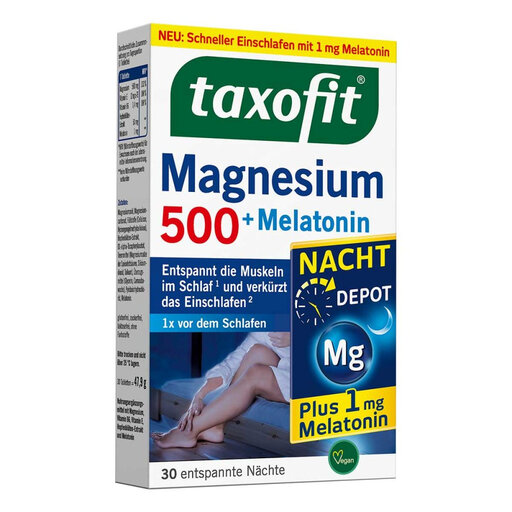
Why this product suits the profile: The tablet contains 500 mg of magnesium, vitamin B6, vitamin E, hop blossom extract and 1 mg of melatonin. According to the product information, it is intended to be taken shortly before going to bed.
Melatonin is clearly stated rather than being promoted simply as part of a general night-time formula. The guidance for adults, as well as for pregnant and breastfeeding women, should be followed.
500 mg of magnesium; slow-release tablet; defined quantity of 1 mg of melatonin per tablet.
We have put together a complete, regularly updated list of products that fully meet these strict selection criteria and the safety regulations applicable in the EU.
Taking the product daily according to the pack instructions makes it easier to compare costs: divide the purchase price by the number of daily servings. With 30 tablets, one tablet a day corresponds to approximately one month’s supply. Effervescent tablets may cost more per serving if the flavour and easy preparation offer practical added value for you.
Magnesium may have a mild laxative effect in sensitive individuals. If symptoms occur, stop taking the product and seek medical advice if necessary. If you have kidney disease, take medication regularly or are unsure about combining magnesium with potassium, iron or other minerals, it is advisable to consult a healthcare professional beforehand.
There is no single answer that applies to everyone. Products containing magnesium 400 mg, magnesium 500 mg or magnesium 600 mg differ considerably in their daily amounts. Start by checking your diet and the information on the packaging. A higher dosage is not automatically suitable.
Magnesium tablets can be carried and taken without water. Magnesium effervescent tablets are dissolved in water and may suit people who prefer this format. The key consideration is which form fits into your personal routine over the long term.
According to authorised nutrient claims, magnesium and vitamins B6 and B12 contribute to the reduction of tiredness and fatigue. However, a food supplement is no substitute for a balanced diet, sufficient sleep or medical assessment of persistent tiredness.