
Lieferung heute & morgen

Qualitätsgarantie

Willkommens-Angebote freischalten: KOSTENLOSE Lieferung | Bis zu 80 % RABATT | Kostenlose 30-Tage-JoyPlus-Testphase
App herunterladen
Magnetic building blocks have become a staple in many children's rooms. As STEM learning toys, they foster creativity, spatial reasoning, and fine motor skills. However, the market is vast and overwhelming. Many products look identical at first glance, but they differ in crucial details that can mean the difference between joy and frustration. This guide will help you navigate the most common pitfalls and find a set that is safe and offers long-lasting play value.
Before you make a decision, you should be aware of the typical problems that can arise with low-quality sets. These issues often lead to the expensive toy being left to gather dust in a corner.
To avoid the pitfalls mentioned above, focus on three verifiable criteria. These will help you objectively assess the quality of a magnetic building block set.
magnetic construction toys use reinforced magnets. These ensure a reliable adhesion that allows children to build more complex and taller structures without them collapsing immediately. Phrases like "reinforced magnets" or "strong magnetic performance" in the product description are a good indicator.magnetic tiles for kids are 7.5 cm and 2.5 cm. If you plan to add more sets later, it is advisable to stick to one size to ensure compatibility. A larger set offers more possibilities from the start but is also a bigger investment. For beginners, a medium-sized set may be sufficient.Here are some recommendations tailored to different needs and use cases.

Why it's a great fit: With 55 pieces, this set offers a good balance between size and price. It's ideal for discovering the world of magnetic construction without making a large initial investment. The standard 7.5 cm size ensures a solid foundation for future expansions.
According to the manufacturer, the set uses reinforced magnets for stable constructions and is made from non-toxic ABS plastic, with the magnets sealed via ultrasonic welding.
The diamond-facet surface creates interesting light refractions. The number of pieces is sufficient for initial 3D structures and helps develop an understanding of geometric shapes.
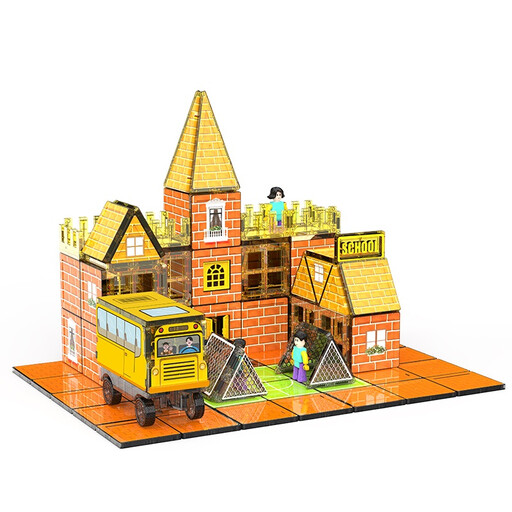
Why it's a great fit: With 116 pieces, including special architectural elements like windows, doors, and roof parts, this set is aimed at children who already have experience and want to build complex, multi-story buildings. It's an ideal `creative building toy` for ambitious projects.
According to the manufacturer, a dual-layer magnet system ensures exceptional stability. The use of food-grade ABS plastic and additional edge riveting provides a high level of safety.
Includes specialized components for architectural construction not found in standard sets. Fosters an understanding of structural engineering and design principles.
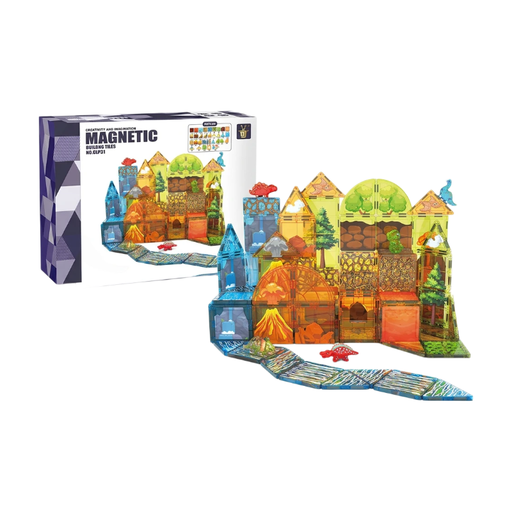
Why it's a great fit: This set is an ideal `gift for kids` with a passion for dinosaurs. The printed tiles and special shapes encourage imaginative role-playing in prehistoric worlds, combining construction with thematic learning.
According to the manufacturer, the product is ASTM/CPC certified, which demonstrates compliance with safety standards. Strong magnets allow for the construction of stable volcano and landscape scenes.
The engaging dinosaur theme specifically fosters an interest in natural sciences. The 7.5 cm standard size allows for combination with other compatible sets.
We have compiled a comprehensive, up-to-date list of products that fully meet these strict selection criteria and safety regulations.
Most manufacturers recommend magnetic toys for ages 3 and up. This is because the sets contain small parts and magnets that can pose a choking or injury hazard to younger children. Always observe the manufacturer's age recommendation on the packaging and only allow young children, especially those under 3, to play with them under adult supervision.
Compatibility is not guaranteed and mainly depends on the edge length of the tiles. Sets with the same tile size (e.g., 7.5 cm) are often compatible with each other, even if they are from different manufacturers. However, it is advisable to check this before purchasing, especially if you want to expand an existing set. The shape of the tiles (e.g., squares, triangles) is usually standardized.
To clean the building blocks, they should only be wiped with a soft, dry, or slightly damp cloth. Never submerge the tiles completely in water and do not use harsh cleaning agents. Liquid can penetrate the interior, damage the magnets, and lead to rust, which will impair the magnetic force.