
Lieferung heute & morgen

Qualitätsgarantie

Willkommens-Angebote freischalten: KOSTENLOSE Lieferung | Bis zu 80 % RABATT | Kostenlose 30-Tage-JoyPlus-Testphase
App herunterladen
Magnetic building blocks combine ease of use with endless construction possibilities. However, not every set provides lasting enjoyment. Parents often choose based on colourful product images or a high piece count, overlooking important details such as the actual size, compatibility and safety information.
This buying guide from the Joybuy Product Recommendation Officer helps you compare magnetic building blocks for children objectively and choose a set suited to your child’s age, available space, budget and intended use.
At first glance, a set with 145 pieces sounds more extensive than one with 68 pieces. However, what matters is which shapes are included. Many basic shapes are suitable for flat designs and simple buildings. Special pieces such as roofs, windows, doors and decorative elements are important if you want to create houses, villas or architectural models.
The size of the pieces also affects how they can be used. Small components allow for intricate patterns, but are harder for younger children to hold. Larger tiles make it easier to get started and can provide a clearer overview when building larger structures.
Magnetic strength alone says little about everyday suitability. Buyers should check whether the magnets are permanently enclosed in the plastic and whether the casing remains intact if damaged. Magnetic building blocks and magnetic balls pose a significant risk if swallowed. Damaged pieces should therefore be removed immediately, and small components kept out of reach of younger children.
The label “from 3 years” does not mean that a child should play without supervision. The sets contain small parts and magnets. Adult supervision is particularly advisable during the first few play sessions and when younger children are using the set. Architecture building sets with many small components are often more suitable for children aged 6 and over, older children or adults.
For magnetic building blocks for children aged 3 and over, manageable sets with larger or easy-to-grip pieces are often a good choice. The XINQIYUAN set with 81 pieces uses magnetic tiles with an edge length of 7,5 cm and is designed for villa structures. If you prefer compact patterns or more detailed constructions, you can choose a set with 3,75-cm tiles.
The number of pieces should match how you plan to use the set:
Several of the sets featured here are made from ABS building blocks. ABS is a widely used plastic for construction toys. Smooth, rounded edges are important, as is a design in which the magnets are not freely accessible. The XINQIYUAN product details mention ultrasonic welding and fully enclosed magnets, among other features.
For information such as EN71, REACH SVHC or CPC/ASTM, check which specific product and version the certification refers to. Such information is not a substitute for following the age recommendation and checking each individual component. Before every play session, rule out cracks, loose parts and visible magnets.
Magnetic building blocks from different brands are not automatically compatible. Measurements such as 2,5 cm, 3,75 cm or 7,5 cm can serve as a guide, but do not guarantee an identical magnet arrangement or shape. If you want to expand an existing collection, compare the dimensions and product description carefully.
A storage bag or box helps prevent pieces from going missing and makes tidying up easier. Sets containing magnetic balls should be stored separately in a secure, closed container.
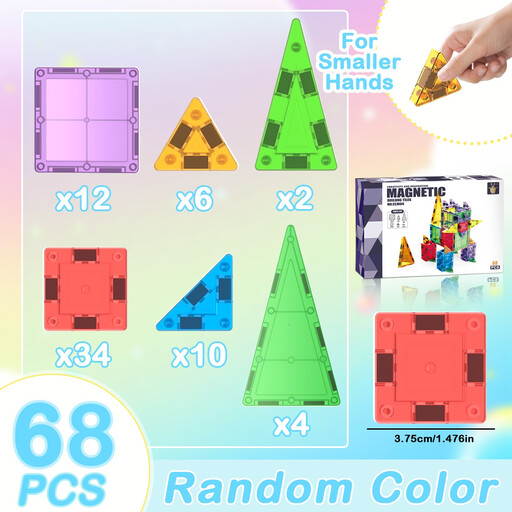
Why this product suits the profile: This compact set with 3,75-cm tiles is suitable for first 2D patterns and smaller 3D constructions. The storage box makes it convenient to use when travelling or as part of everyday family life.
The manageable number of pieces makes it easier to plan your first purchase. The product details state that the pieces have rounded edges and permanently enclosed magnets. The recommendation for children aged 3 and over applies with supervision.
68 tiles, 3,75 cm edge length, ABS plastic and compact storage.
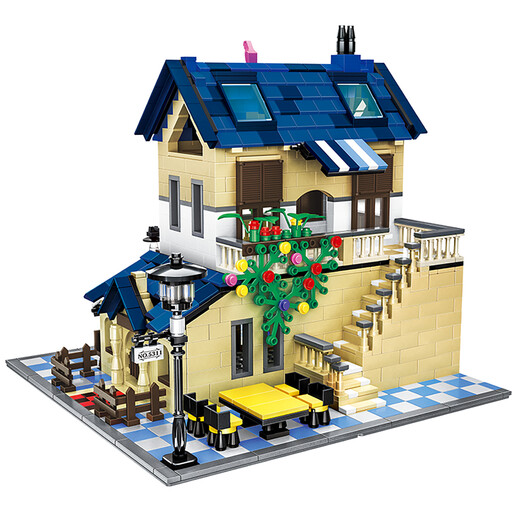
Why this product suits the profile: This classic construction set is aimed at hobby builders and families with older children. The French country villa model provides a clearly defined building objective and can then be displayed as decoration.
The high piece count is paired with a specific architectural theme. According to the product description, the set is intended for children aged 6 and over with full supervision and contains small components.
1,298 ABS pieces, French country house theme and gift box measuring 50 × 35 × 8 cm.
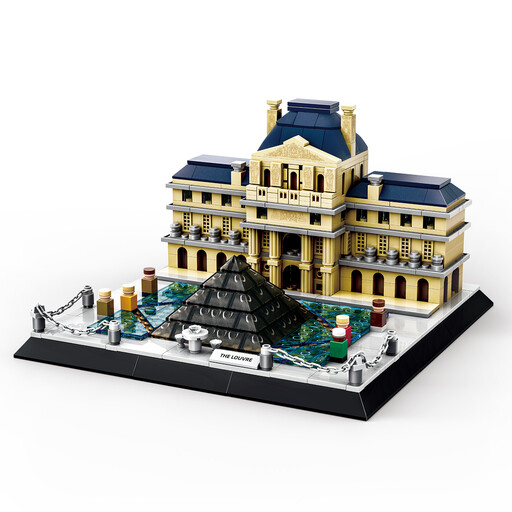
Why this product suits the profile: The Louvre building set is designed for longer projects, architecture enthusiasts and collectors. Its fixed theme sets it apart from the open-ended play offered by classic building blocks for children.
The product description expressly states that the set contains small parts and is recommended for children aged 6 and over with full supervision. This defines the target audience more clearly than general statements about children’s toys.
803 ABS pieces, Louvre theme and stated packaging dimensions of 40 × 25 × 8,7 cm.
We have put together a complete, regularly updated list of products that fully meet these strict selection criteria and the safety regulations applicable in the EU.
The sets mentioned are not suitable for children under 3 because they contain small parts and magnets. Supervision remains an important safety precaution even for older children.
Some sets are recommended from age 3 according to the product information. This age recommendation relates to the construction and the parts included, not to unsupervised play. With magnetic building blocks, an adult should be present, particularly when younger children are playing.
Their lifespan depends on the material, the magnetic closure and how they are handled. ABS tiles with enclosed magnets can be used for a long time under normal conditions. Drops, excessive bending, heat and water can damage the plastic or magnet casing. Regular visual checks are therefore more important than a blanket lifespan estimate.
The sets enable activities such as combining shapes, recognising spatial relationships and planning simple structures. They are therefore often marketed as STEM toys or Montessori construction toys. However, these terms do not represent a consistent learning promise. The important factors are the selection of pieces, the instructions, the age recommendation and how the child plays with the set.