
Lieferung heute & morgen

Qualitätsgarantie

Willkommens-Angebote freischalten: KOSTENLOSE Lieferung | Bis zu 80 % RABATT | Kostenlose 30-Tage-JoyPlus-Testphase
App herunterladen
Magnetic building blocks for children bring together building, sorting and open-ended creativity. But choosing the right set isn’t always easy for parents, grandparents and educational settings: product images often show impressive constructions, while details such as set size, magnet design and safety information can be buried in the small print.
Three common buying mistakes can lead to the wrong purchase:
Many magnetic building blocks are intended for children aged three and over. That doesn’t mean they should be used without supervision. Small pieces can pose a choking risk. Pay particular attention to the warning about magnets: if more than one magnet is swallowed, they can attract each other inside the body and cause serious injuries.
Look for:
If a magnetic building block is damaged, stop using it. If you suspect that a magnet has been swallowed, seek medical help immediately.
Magnetic tiles for children often come in a particular standard size. The sets featured here include 7.5 cm tiles, 5.5 cm diamond shapes and 2.5 cm pixel blocks. So, before buying an expansion set, check the size of your existing system.
A manufacturer’s compatibility claim usually applies to systems with the same dimensions. Don’t assume it applies to every magnetic construction toy.
A set of 52 or 58 pieces may be enough to get started if you’re planning to build simple shapes. Sets with 81, 100, 108 or 117 pieces are more practical for bigger family projects or more complex 3D constructions. The total number of pieces isn’t the only thing that matters: consider how many basic shapes and specialist pieces are included.
A bag or box is useful for everyday storage. It makes sorting easier, helps prevent pieces from getting lost and makes the set more convenient to take on trips. Product information usually recommends wiping the pieces with a soft, slightly damp or dry cloth. Don’t immerse magnetic pieces in water.

Why this product suits this type of buyer: With 58 pieces, 7.5 cm blocks and a storage bag, this set offers a manageable way to get started at home or on the go.
The number of pieces and tile size are clearly stated. The product description also mentions sealed magnets, rounded edges and checks for damage.
58 pieces, a 7.5 cm format, no batteries required and a storage bag.
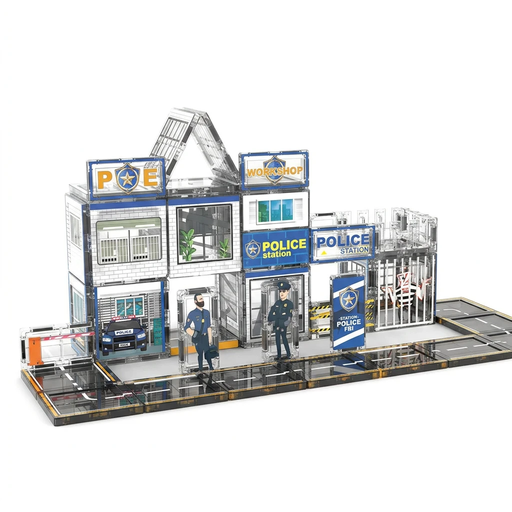
Why this product suits this type of buyer: The product information lists 7.5 cm tiles, ABS plastic, welded magnets and CPC and ASTM certifications.
Rather than leaving the size unclear, the product information specifies the format, material and safety details. However, regular visual checks and supervision are still essential.
52 pieces in the 7.5 cm system, rounded edges, a storage bag and a themed set to get started.
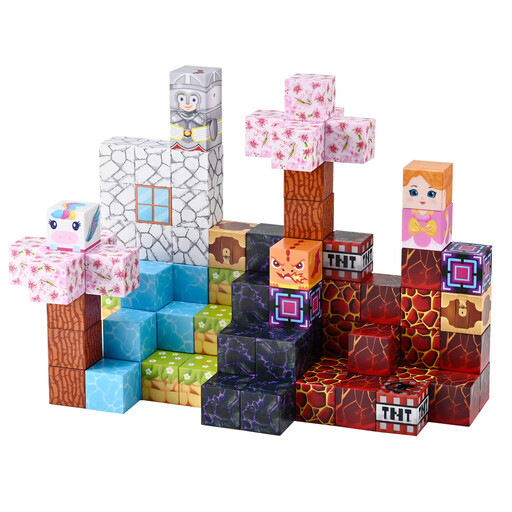
Why this product suits this type of buyer: The 2.5 cm pixel pieces are designed for children who want to create characters, buildings and landscapes in a block-style design.
The smaller piece size is clearly stated, making it easier to judge before buying whether the set is suitable for a child’s motor skills.
100 ABS pixel pieces, a gift box and a themed design for creative scene-building.
Labels such as STEM learning toy or Montessori building blocks often describe how a product is intended to be used in play, but they’re no substitute for specific product information. For example, building can help children compare shapes, recognise spatial relationships and plan their own constructions. This may offer a learning opportunity, but it isn’t a medical or educational guarantee.
For nurseries and family groups, sets with plenty of basic shapes, sturdy storage and clearly organised pieces are especially practical. A themed box or pixel set may be a better choice as a birthday present for a child. Age, supervision, set size and compatibility remain key considerations.
We’ve put together a complete, regularly updated list of products that meet these strict selection criteria and fully comply with the safety regulations in force in the EU.
The manufacturer’s age recommendation of 3+ is a guide. Because the sets contain small pieces and strong magnets, children should initially play under supervision. Depending on the size of the pieces and the child’s stage of development, a larger tile system may be easier to handle than small pixel blocks.
Their lifespan depends on the materials, construction and how they’re used. Don’t throw them or bend them forcefully, and keep them away from heat. Check the casing, edges and magnet chambers regularly. If a piece is cracked or has a loose magnet, remove it from the set.
The sets featured here use manual magnetic connections and don’t need batteries. For models with lights or other additional features, check the product information for details about power and batteries.