
Lieferung heute & morgen

Qualitätsgarantie

Willkommens-Angebote freischalten: KOSTENLOSE Lieferung | Bis zu 80 % RABATT | Kostenlose 30-Tage-JoyPlus-Testphase
App herunterladen
Magnetic building blocks for children combine freeform building with geometric shapes and simple construction principles. Depending on the set, children can create flat patterns, towers, vehicles or complex 3D structures. To make sure a toy really works for family life, however, parents and relatives should look beyond the number of pieces and colourful packaging.
The following criteria can help you look past the marketing claims and choose the right construction toy for children.
A set with lots of pieces can still offer limited variety if it contains mostly identical squares. Creative building sets benefit from a range of shapes, connectors and extra components. Triangles, rectangles, arches and special functional pieces all open up more ways to build.
It’s also worth checking the actual piece count. For example, a product may count individual small parts, connectors or accessories separately. The specific pack description is the best guide.
Magnetic connections can help stabilise 3D constructions. At the same time, loose or damaged magnets pose a serious risk. Before buying, check that the product provides information about how the magnets are secured, the materials used and the recommended age.
For magnetic building blocks labelled for ages 3 and up, follow the age guidance on the packaging. After each play session, parents should check for cracks in the casing or any magnets coming loose. If a magnet becomes visible or a piece falls apart, stop using it.
Terms such as STEM toy or Montessori building blocks often describe a product’s design concept. They don’t guarantee any particular developmental or educational benefits. What matters is whether the set suits the child’s age, attention span and interests.
Magnetic sets with small parts are generally unsuitable for children under 3. Supervision is sensible for older children too, especially when siblings of different ages are playing together.
Individual pixel blocks with an edge length of, for example, 2.5 cm may be easy for small hands to grip, but complex models can involve several small parts. For toddlers aged 12 months and up, classic building blocks for children without magnets are often a better choice.
For plastic sets, the product description should name the material used, such as ABS plastic. Smooth edges, a sealed magnet compartment and clear manufacturer details are important things to check. Buyers should also look for the CE marking, safety warnings and details of the manufacturer or responsible person in the EU.
Wooden blocks should be free from visible cracks, sharp edges and flaking surfaces. For FSC-certified wood, the certification relates to the origin of the wood; it shouldn’t be taken as a general statement about every aspect of the toy.
If you’re looking for magnetic building blocks for 3D play, check the variety of shapes and the stability of the connections. Transparent magnetic tiles, for example, are good for creating geometric surfaces and visible interiors. Pixel blocks appeal to children who want to build their own figures, landscapes or scenes.
Batteries may be needed to power lights or track pieces. So check whether batteries are included, what size is required and whether an adult needs to replace them.
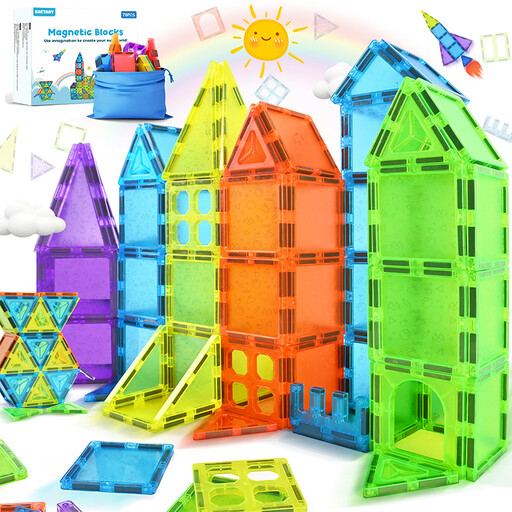
Why it suits this profile: With 78 pieces, this set offers a manageable introduction to flat shapes and simple 3D constructions for children aged 3 and up.
The product description specifies the material, recommended age and rounded edges, so you can check these key details before buying.
78 pieces, ABS plastic and designed for both 2D and 3D shapes.

Why it suits this profile: The combination of transparent pieces, track components and a lighting feature is ideal for families who want to explore different ways of building in one set.
The description lists the 126 pieces, the plastics used, the batteries and the warnings about small parts and magnets.
126 pieces, transparent 3D components and a battery-powered lighting feature; batteries are not included.
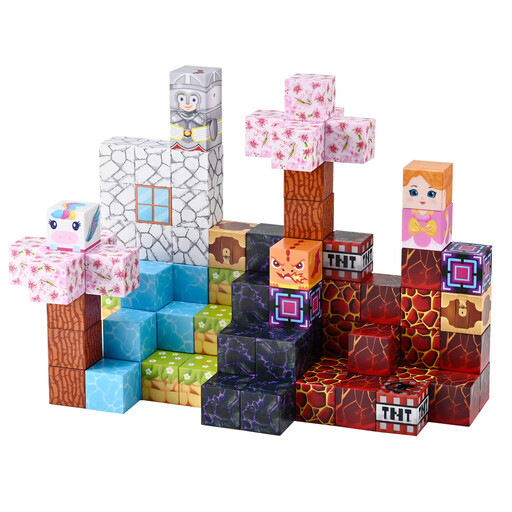
Why it suits this profile: The pixel design is ideal for children who want to create figures, buildings and landscapes using a themed building system.
Details of the 100 pieces, 2.5 cm pixel blocks and ABS material make it easier to check the set’s contents and how easy it is to handle.
100 pixel building blocks, magnetic connections and a colourful storage box.
For children aged 12 months and up, building blocks without magnets are often a simpler option. The Haba Basic Building Block Starter Kit includes cubes, cuboids, triangles, bridges and round pillars made from beech wood. Another option is the hauck Wooden Stacking Tower with Shapes – Stack N Raise, which combines stacking, sorting and matching.
Adults should also check wooden toys regularly for splinters, cracks and loose parts. When choosing a gift for a child, a clear age recommendation matters more than oversized packaging.
We’ve put together a complete, regularly updated list of products that meet these strict selection criteria and fully comply with the safety regulations in force in the EU.
Many magnetic tiles and pixel blocks are designed for children aged 3 and up. Always check the specific product’s age label and warnings. Sets containing small parts and magnets are unsuitable for children under 3.
How long they last depends on the materials, construction and how they’re used. Storing them in a dry place, avoiding excessive pressure and regularly checking the magnet casings can help extend their lifespan. Remove any damaged pieces from use straight away.
Classic magnetic building blocks and wooden blocks don’t usually need batteries. Sets with lights or other functional features may require them. Before buying, check whether batteries are included and which types are needed.