
Lieferung heute & morgen

Qualitätsgarantie

Willkommens-Angebote freischalten: KOSTENLOSE Lieferung | Bis zu 80 % RABATT | Kostenlose 30-Tage-JoyPlus-Testphase
App herunterladen
Magnetic building blocks for children combine open-ended play with shapes, colours and spatial construction. But choosing a set isn’t always easy for families: many look similar at first glance, yet differ considerably in piece size, how the magnets are enclosed, storage and age recommendations.
As a Joybuy Product Recommendation Officer, I’ve sifted through the key product details to show parents, gift buyers and hobby builders what to look out for.
A set of magnetic building blocks with 100 pieces sounds like a lot. What matters, though, is what’s in the box: does it contain lots of identical squares, or does it also include triangles, diamonds, roof pieces and connectors? A variety of shapes usually makes it possible to create more varied 2D patterns and 3D structures.
For younger children, a more manageable set of 32 or 50 pieces may be a better choice. It’s easier to sort and reduces the risk of pieces getting lost.
Strong magnets can make building easier, but that alone says nothing about safety. More important is whether the magnets are permanently enclosed in their plastic casings and whether the casing can come apart during normal use.
With magnetic building blocks, the magnets must not be swallowed. If any pieces are damaged or magnets become visible, stop using the toy. Check the product’s warnings and age recommendation before buying.
“Magnetic building blocks for ages 3+” doesn’t mean children should always play without supervision. Small parts can be swallowed. Take particular care with children who still put things in their mouths.
Small magnetic tiles are suitable for intricate constructions, but need to be handled safely. Larger tiles, for example with sides measuring 5.5 or 7.5 cm, are useful for simple buildings and larger visible surfaces. Also check:
Many of the magnetic building blocks described here are made from ABS plastic. Look for smooth edges without burrs, a securely closed casing and clear information from the manufacturer. Claims such as “non-toxic” or “safe” shouldn’t be considered in isolation. Also look for specific safety information, details of the responsible person in the EU and a clear product description.
A storage bag or metal tin helps stop pieces from getting scattered around the bedroom, car or luggage. Clean magnetic tiles according to the care instructions. If you have several sets, check them separately for cracks, loose magnets and missing pieces.

Why this product suits this profile: This set contains 32 square magnetic tiles, each measuring 3.75 cm along the side, plus a portable metal tin. It’s a handy choice for first building experiments, trips and smaller play areas.
The number and size of the individual pieces are clearly specified. The metal tin makes it easier to put everything away and helps prevent pieces from getting scattered.
32 pieces, ABS plastic, no assembly required and compact storage.
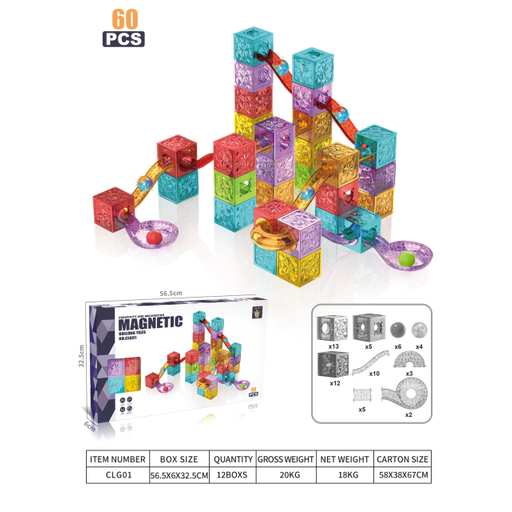
Why this product suits this profile: The 5.5 cm diamond-shaped tiles offer different building possibilities from classic squares. The set contains 60 pieces, a storage bag and information about CPC and ASTM certifications.
The product details cover the material, individual piece size, number of pieces, storage and safety features, rather than relying on vague promises about learning benefits.
60 pieces, 5.5 cm diamond-shaped blocks, magnets sealed according to the product details, and the option to expand with compatible systems.
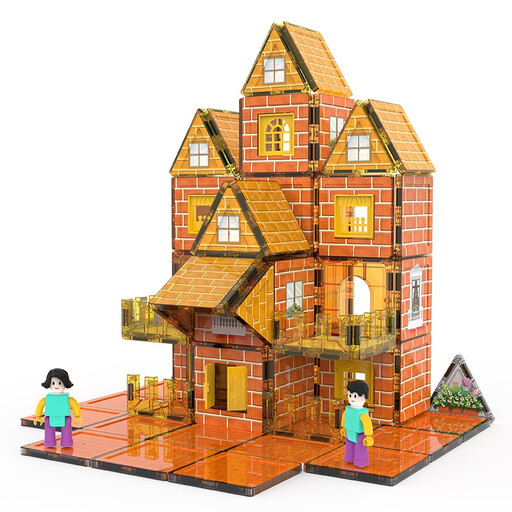
Why this product suits this profile: With 81 pieces in the 7.5 cm size and a villa theme, this set is suited to families planning to build bigger structures and enjoy longer play sessions together.
The larger number of pieces comes with a specific theme and a storage bag, so it’s clear what the extra pieces are for.
81 pieces, 7.5 cm size, villa theme, storage bag and magnets sealed using ultrasound, according to the product details.
We’ve put together a complete, regularly updated list of products that meet these strict selection criteria and fully comply with the safety regulations in force in the EU.
Before handing over the set, parents should check the pieces for cracks, sharp edges and loose magnets. It’s also a good idea to:
Some sets are intended for ages 3 and over, according to the product details. This age recommendation takes into account the product’s design and any small parts. Whether a set is suitable also depends on the child’s development. Supervision and regular checks remain important.
How long they last depends on the material, construction and how they’re handled. ABS plastic can hold up well with normal use. Drops, forceful bending, heat and casings that have come apart can damage the pieces. Loose magnets or cracks are a reason to stop using the affected set.
For a first try, 32 to 50 pieces may be enough. Families who want to build larger structures together can choose 60, 81 or more pieces. As well as the number of pieces, consider the range of shapes, the size of each piece and whether the set is compatible with any construction sets you already own.