
Lieferung heute & morgen

Qualitätsgarantie

Willkommens-Angebote freischalten: KOSTENLOSE Lieferung | Bis zu 80 % RABATT | Kostenlose 30-Tage-JoyPlus-Testphase
App herunterladen
Magnetic building blocks for children combine open-ended play with geometric thinking. Before you buy, though, it’s worth taking a closer look at the size, magnet construction and what’s included. A high piece count alone tells you little about whether a set is right for your child’s age, your home or the kind of play you have in mind.
A 145-piece set sounds substantial, but it may contain lots of small components that are difficult for younger children to grip. What matters is the range of shapes, the size of the pieces and whether they can be used to build stable 3D structures.
A firm connection can be useful when building. At the same time, parents need to check that the magnets are permanently enclosed in the plastic. Damaged tiles, cracks or protruding magnets should be taken out of play immediately. Swallowing more than one magnet poses a serious health risk. If you suspect this has happened, seek medical help immediately.
Magnetic tiles for children come in different sizes, with edge lengths of 3.75 cm, 5.5 cm or 7.5 cm, for example. Sets in different sizes generally won’t connect in a useful way. So any claim of compatibility should always be checked against the specific size and shape.
According to the product details, the sets featured here are intended for children aged 3 and over. The age recommendation does not mean that supervision is unnecessary: an adult should supervise a child’s first time playing with magnetic toys and small pieces, and check the play materials regularly.
In particular, look out for:
Many sets are made from ABS plastic with rounded edges. This can make the pieces easier to grip and help prevent sharp edges. However, claims such as ‘non-toxic’ or ‘safe’ shouldn’t be considered in isolation. More useful details include the specific material, how the magnets are sealed in and any available evidence of safety testing.
Several products mention CPC and ASTM standards. These designations come from the US product safety system and are not automatically equivalent to a European declaration of conformity. When buying in Germany, you should also check the product labelling, the manufacturer or responsible person in the EU, and the safety information on the product page.
Small 3.75 cm tiles are easy to take along without using much space. Larger pieces measuring 5.5 cm or 7.5 cm may be easier for some children to grip and are well suited to bigger builds. The piece count mainly affects how much freedom you have to create:
A bag, box or metal case reduces the risk of individual pieces going missing. Store the pieces somewhere dry, away from direct sunlight and high temperatures.

Why this product is a good fit: This compact set of 32 tiles, each measuring 3.75 cm, is ideal for first building attempts, smaller children’s bedrooms and play on the go.
The number of pieces is manageable, and the included metal case makes it easier to keep them stored away.
32 pieces, 3.75 cm tile size, no batteries required and a portable case.
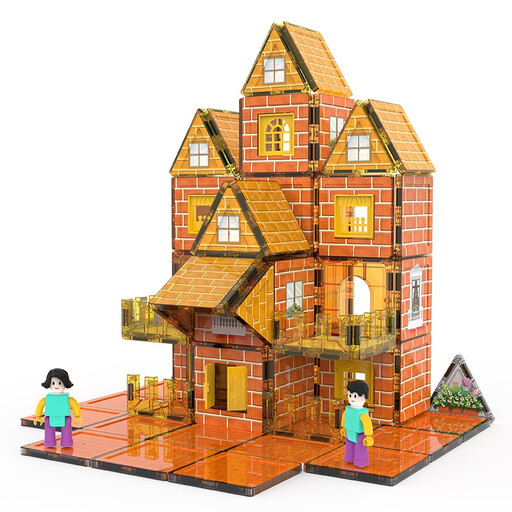
Why this product is a good fit: The 7.5 cm pieces and villa theme make this set a good choice for families who prefer larger 3D models and a coordinated system.
The stated tile size makes compatibility clear; the set is designed for use with other 7.5 cm systems.
81 pieces, a storage bag, no batteries required and, according to the product details, sealed magnets.

Why this product is a good fit: For families looking to combine 3D magnetic building blocks with a marble run and light-up elements, this set offers several ways to play.
The product details clearly state what’s included, which batteries are needed and that supervision is required. This makes it easier to assess any extra costs and the level of supervision involved.
126 pieces, transparent track elements and a light-up feature; requires 3 AA batteries, which are not included.
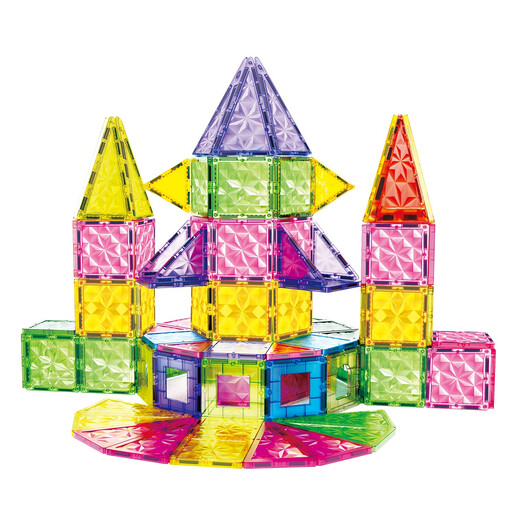
Why this product is a good fit: With its high piece count, this set is aimed at siblings, groups or children who already have experience with magnetic construction toys.
The 7.5 cm size and piece count are clearly stated. This makes it easier to check in advance whether your existing blocks are compatible and whether you have enough storage space.
117 pieces, 3D building options, a storage solution and, according to the product description, a system with a variety of shapes.
We’ve put together a complete, regularly updated list of products that fully meet these strict selection criteria and the safety regulations in force in the EU.
Clean magnetic building blocks with a soft cloth. Depending on the product instructions, you may be able to use a slightly damp cloth; avoid immersing the pieces in water. Liquids can affect the plastic, coating or magnets.
After every play session:
Educational settings may also find it useful to keep a simple inventory list. This makes it easier to spot missing or damaged pieces.
According to the product details, the products listed are intended for children aged 3 and over. Because they contain small parts and strong magnets, children should play with them under supervision at first. The sets are not suitable for children under 3.
Their lifespan depends on how well they’re made, how they’re used and how they’re stored. Regular checks, dry storage and careful handling can help them last longer. If the casing is damaged or a magnet becomes visible, stop using that piece.
Most traditional magnetic tiles and blocks work without batteries. Sets with lights or special features may need them, however. For example, the TOKKY 126-piece set requires 3 AA batteries, which, according to the product details, are not included.