
Lieferung heute & morgen

Qualitätsgarantie

Willkommens-Angebote freischalten: KOSTENLOSE Lieferung | Bis zu 80 % RABATT | Kostenlose 30-Tage-JoyPlus-Testphase
App herunterladen
Magnetic building blocks for children combine free-form construction with colours, shapes and imaginative play ideas. However, parents, grandparents and gift buyers are faced with a huge choice: magnetic tiles for children vary significantly in size, number of pieces, magnet design and age recommendation.
As Joybuy’s Product Recommendation Officer, I’ve filtered the most important product details and will show you what really matters when making a purchase. That’s because three common pitfalls can quickly make a building set impractical for children: the wrong piece size, unclear safety information, or poor compatibility with existing sets.
A high number of pieces sounds appealing at first. What really matters, however, is which shapes are included and how versatile they are for building. A set with lots of small, specialised pieces can be less flexible than a compact mix of squares, triangles and connectors.
For younger children, clear sets with simple basic shapes are often easier to get to grips with. Larger building sets are better suited to children who already have experience with magnetic construction toys or who build together with adults.
Magnetic building blocks for ages 3 and up can contain small components, depending on the model. Particularly with sets that include magnetic balls or mini tiles, the age recommendation should not be treated as mere decoration. The product descriptions for several models explicitly mention small parts and the potential risks of swallowing.
Magnets must not be put in the mouth. If magnets are swallowed, seek immediate medical help. Damaged parts or loose magnets should not be used any further. A storage bag or box also helps you check all the pieces after playtime.
Magnetic tiles with edge lengths of 2.5 cm, 3.75 cm or 7.5 cm cannot simply be combined with one another. If you want to expand an existing set, you should therefore compare the dimensions and the shape of the connections. Statements like “compatible” often only refer to sets of the same size.
Look for a firmly sealed magnet capsule and a casing without cracks, sharp edges or loose spots. In the product details of some sets, ultrasonic welding is mentioned for sealing the magnets. That is a verifiable technical detail, but it does not replace a regular check before play.
Special care is needed with magnetic balls. They are small and can attract each other. The magnetic building blocks presented here are not intended for children under three years old. Even with older children, supervision is advisable, especially during first use.
According to the manufacturers, several sets are made from ABS plastic with rounded edges. Product 4 also mentions CPC/ASTM certifications, and product 7 mentions CPC, ASTM F963 and EN71. Such details should be clearly listed in the specific product description.
An age recommendation of three years and up is an important guide, but it is not a substitute for adult supervision. Also check whether care instructions are provided. For the sets mentioned, wiping with a soft, slightly damp cloth is mostly recommended; full immersion in water should be avoided.
Small 2.5 cm tiles are space-saving and can be suitable for travel, waiting rooms or playing at a restaurant table. Larger tiles are often easier for little hands to grip and offer more surface area for simple structures. A bag or box reduces the risk of losing pieces.
For STEM toys and creative construction games, it is not just the number of pieces that counts, but also basic geometric shapes, stable connections and the ability to develop your own models without a rigid template.
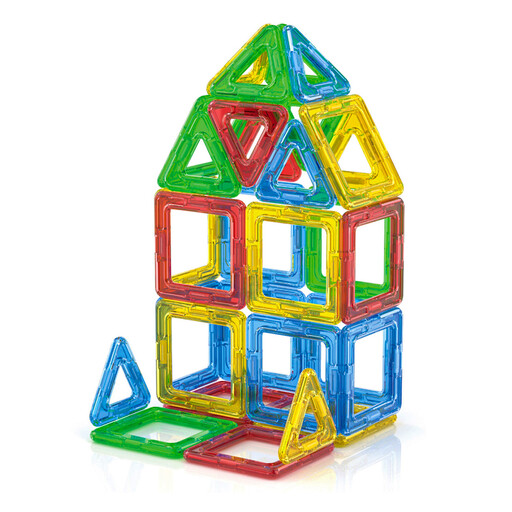
Why this product fits the profile: This compact starter set is designed for children aged 3 and up and, according to the product details, contains 50 magnetic tiles. It is suitable for first houses, vehicles and simple shapes.
The manageable set size makes it easier to get started and makes missing pieces easier to spot after playtime.
ABS plastic, rounded edges, enclosed magnets and no battery operation according to the product description.
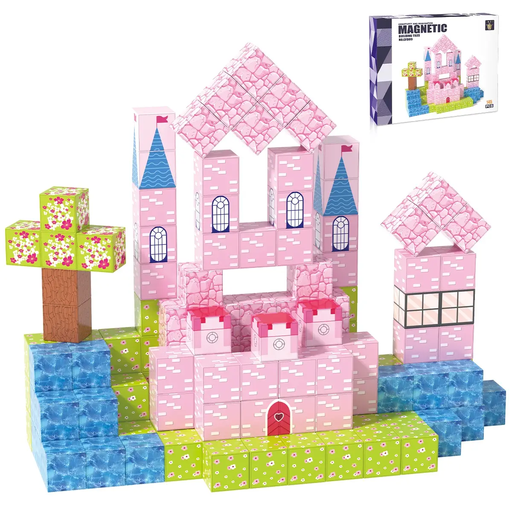
Why this product fits the profile: This extensive set is aimed at children aged 3 and up who want to try out different building shapes. It contains tiles and magnetic balls, as well as a storage option.
The product details mention sealed magnets, smooth edges and regular checks for damage.
145 pieces, reinforced magnets, ABS plastic and compatibility with other 2.5 cm sets according to the manufacturer.
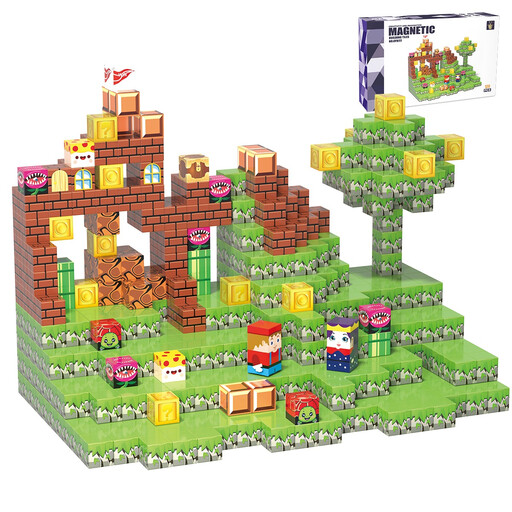
Why this product fits the profile: This set combines 2.5 cm tiles with magnetic balls and themed nature motifs. This makes it suitable for travel, quiet play sessions and detail-oriented building ideas.
The compact building size and storage container speak against unnecessarily bulky transport solutions.
120 pieces, nature motifs, combined 2D and 3D building methods and a 2.5 cm format that is described as compatible.
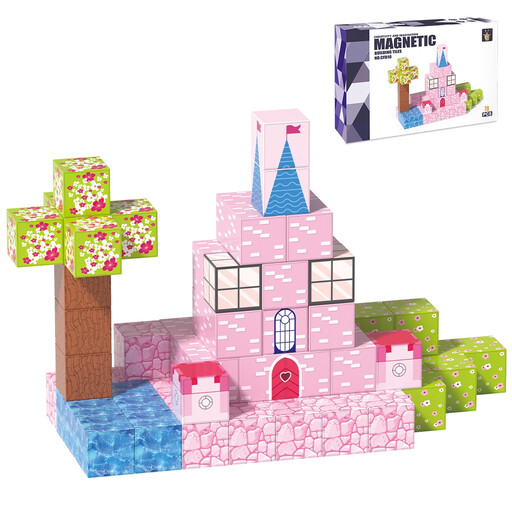
Why this product fits the profile: The miniature format with a castle motif makes it a great gift for children aged 3 and up when a themed building set for on the go is needed.
The product description mentions the compact 2.5 cm format, a bag and sealed magnets as practical features.
78 pieces, castle and princess motifs, no batteries required, and suitable for travel according to the manufacturer.
We have put together a complete, regularly updated list of products that fully meet these strict selection criteria and the safety regulations in force in the EU.
Magnetic building blocks do not require batteries and incur no ongoing energy costs during normal use. Their lifespan depends mainly on material quality, wear and storage. If you do not throw the pieces, do not handle them with sharp objects and store them dry, you will reduce unnecessary wear and tear.
Before each use, parents should check for cracks, open edges or loose magnets. Damaged pieces should be removed from play. For cleaning the products mentioned, a soft cloth with a little moisture is sufficient. Harsh cleaning agents and soaking in water should be avoided.
According to the respective product details, the magnetic building blocks presented here are mostly intended for ages 3 and up. As small parts and magnets may be included, children should be supervised at first. These sets are not suitable for children under three years old.
For getting started, around 36 to 50 pieces can be enough. 76 to 145 pieces offer more possibilities for larger structures and playing together. What also matters are the shapes included, the size of the tiles and suitable storage.
Not automatically. Before buying, compare edge length, formats and connection system. The product descriptions for individual sets mention compatibility with other sets of the same size, for example 2.5 cm, 3.75 cm or 7.5 cm.