
Lieferung heute & morgen

Qualitätsgarantie

Willkommens-Angebote freischalten: KOSTENLOSE Lieferung | Bis zu 80 % RABATT | Kostenlose 30-Tage-JoyPlus-Testphase
App herunterladen
Magnetic building blocks for children combine free-form construction with shapes, colours and early structural concepts. For parents, grandparents, nurseries and primary schools, however, the choice isn't always straightforward: many sets look similar but differ significantly in piece count, tile size, magnetic connection and accessories.
To ensure your new magnetic construction toy doesn't end up unused in the cupboard after a short time, it's worth taking a close look at the product specifications. The following criteria will help you separate marketing claims from practically relevant features.
A magnetic building block set with 100 pieces sounds comprehensive at first. What really matters, however, is what shapes those pieces include. Lots of squares allow you to build large surfaces, while triangles, diamonds, windows, wheels or special pieces open up additional construction ideas.
You should also check whether the stated piece count actually includes all building components or whether, for example, balls, connectors and storage items are counted too. For a simple start, 32 to 60 pieces are often enough. For collaborative building with several children, 76 to 126 pieces are more practical.
Magnetic tiles measuring 2.5 cm, 3.75 cm, 5.5 cm or 7.5 cm can differ in shape and magnet position. A set with 2.5 cm pieces therefore cannot simply be combined with a 7.5 cm system.
If you already own magnetic building blocks, compare the external dimensions, formats and compatibility information before buying. The term "compatible" should ideally refer to a specific size or system.
A firm connection makes building easier. But it is no substitute for checking each individual piece. With magnetic toys, small components and magnets are among the most important safety considerations. Before each use, parents should check whether the casings have cracks or whether magnets are loose or visible.
According to the respective manufacturers' product information, in several of the following sets the magnets are permanently enclosed in the plastic, in some cases through ultrasonic welding. This information should be cross-checked against the warning notices and labelling on the packaging.
According to product information, the featured items are intended for children aged 3 years and over. This does not mean that children of this age should play without supervision. Small parts can be swallowed, and swallowed magnets can cause serious injury. An adult should regularly inspect the toy and immediately remove any damaged pieces from use.
For nurseries and primary schools, a clear storage routine is also recommended: after playtime, all pieces are counted or packed away together in the bag, box or packaging.
According to product information, the sets are predominantly made from ABS plastic. Look for smooth edges, a traceable manufacturer's details, and available conformity and safety information. Individual products mention CPC, ASTM, EN 71 or REACH. These details come from the respective product descriptions; buyers should check the specific labelling of the item they want.
Important: statements such as "non-toxic" or "safe" should not be considered in isolation. What matters are the complete warning notices, the age symbol, the material information and the quality of workmanship.
Some sets contain only basic shapes, while others add wheels, balls, tracks, printed pieces or themed building blocks. A set with wheels is better suited to vehicles and moving models. A marble run offers additional play sequences but needs more space and careful supervision of the balls.
For maintenance, the product information usually recommends wiping with a soft cloth. Water, harsh cleaning agents and prolonged soaking should be avoided if the manufacturer expressly rules them out.

Why this product fits the profile: The 32-piece set with 3.75 cm squares and a metal box is suitable for first building attempts and travel. The compact packaging makes storage and transport easier.
The specific piece count, individual size and packaging type are stated. This makes it easier to match the set with existing blocks and available storage space.
32 pieces, 3.75 cm squares, ABS plastic and a portable metal box according to the product description.
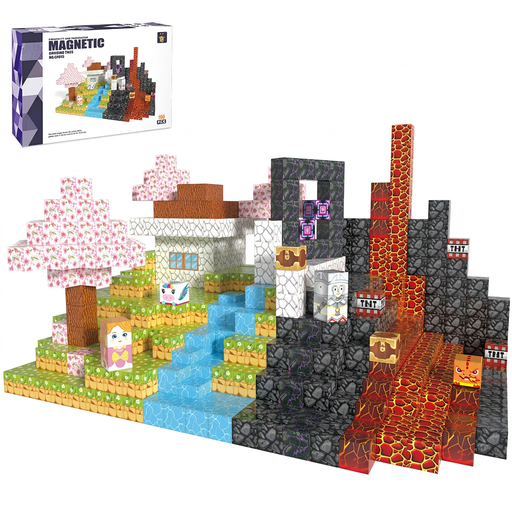
Why this product fits the profile: With 100 pieces and a 2.5 cm format, this set offers plenty of basic shapes for families, learning spaces and group activities.
The product states the individual size, piece count, material and compatibility with other 2.5 cm sets. This data reduces the risk of buying an incompatible addition.
100 pieces, storage bag and, according to product information, CPC and ASTM certifications.
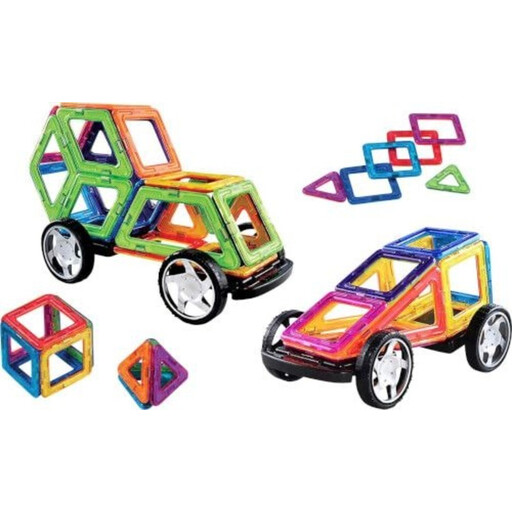
Why this product fits the profile: The wheels and connector pieces are aimed at children who want to build vehicles, trucks and moving models.
The intended focus on wheels is clearly described. Buyers therefore do not expect exclusively classic magnetic tiles, but a set for vehicle construction.
32 magnetic components, wheels, lightweight plastic material and age recommendation from 3 years according to the product description.

Why this product fits the profile: This extensive set combines transparent building pieces, marble run elements and a light-up function. It suits families or settings with enough play space and an interest in more complex constructions.
The product description states the required 3 AA batteries and notes that these are not included. This allows you to plan for additional costs and accessories before buying.
126 pieces, marble run elements, transparent panels and battery-operated light-up function according to product data.
We have compiled a complete, regularly updated list of products that fully meet these strict selection criteria and the safety regulations in force in the EU.
Magnetic construction toys stay organised when they are sorted after each play session. A bag, metal box or gift packaging can serve as storage. Additionally, you should:
The sets mentioned are intended for children aged 3 and over according to product information. Because of small parts and the magnets included, supervised use is advisable. These products are not suitable for children under 3 years old.
For initial shapes and smaller models, 32 to 60 pieces can be enough. If you want to build houses, vehicles or larger 3D structures, you will benefit from 76 to 126 pieces. With several children, a higher piece count is practical so they can build simultaneously.
That depends on the respective format and construction. Some product descriptions explicitly state compatibility with 2.5 cm, 5.5 cm or 7.5 cm systems. Before buying, compare the individual size, shape and magnet position rather than just looking at the brand name.