
Lieferung heute & morgen

Qualitätsgarantie

Willkommens-Angebote freischalten: KOSTENLOSE Lieferung | Bis zu 80 % RABATT | Kostenlose 30-Tage-JoyPlus-Testphase
App herunterladen
Magnetic building blocks for children combine free-form construction with simple geometric principles. For parents, grandparents, nurseries and educational settings, however, choosing the right set isn’t just about the number of pieces. What really matters are safe magnetic connections, suitable materials, a clear age recommendation and storage that works in everyday life.
A magnetic tile set with 100 pieces sounds impressive. But if it lacks basic shapes like squares, triangles or components for stable connections, your construction possibilities will be limited. So don’t just look at the number of pieces — check the shape variety and the size of the individual blocks too.
A powerful connection can enable larger constructions. At the same time, the magnets must be permanently sealed inside each piece. If there are cracks, split edges or loose parts, there is a serious risk if magnets are swallowed or inhaled. That’s why you should check the warnings about magnets and small parts before buying and during regular use.
Terms like “non-toxic ABS blocks” describe the stated material, but they don’t replace a proper check of the product information. Look out for:
According to the product details, the XINQIYUAN set uses non-toxic ABS and mentions CPC and ASTM certifications. These details come from the product description and should be cross-checked with the compliance information available at the time of purchase.
When it comes to magnetic building blocks, size is a practical selection criterion. The XINQIYUAN 100-piece set uses blocks measuring 2.5 cm and is described as compatible with other magnetic tile sets of the same standard. Compatible 2.5 cm magnetic blocks can expand your existing collection, provided the shape, magnet position and connection strength actually match.
Not every magnetic building range can be combined with another. A set with 5.5 cm pieces, such as the XINQIYUAN 28-piece set, belongs to a different size category. So before mixing sets, compare the dimensions and the product description.
Ultrasonic welding can help keep the magnets permanently sealed inside the tiles. When buying, look for closed edges and consistent workmanship. After unpacking, it’s a good idea to visually inspect every piece. Any blocks with cracks, deformations or visible magnets should not be used.
For playing together at home or in a group, a magnetic tile set of 100 pieces offers more variety than a small starter set. A storage bag isn’t just practical — it reduces loose small parts lying around and makes it easier to check that everything is complete. The XINQIYUAN set includes a portable bag and is described as suitable for home, school and on the go.
The recommendations below don’t rank the sets by a general quality judgement, but by use case, piece count and documented product features.
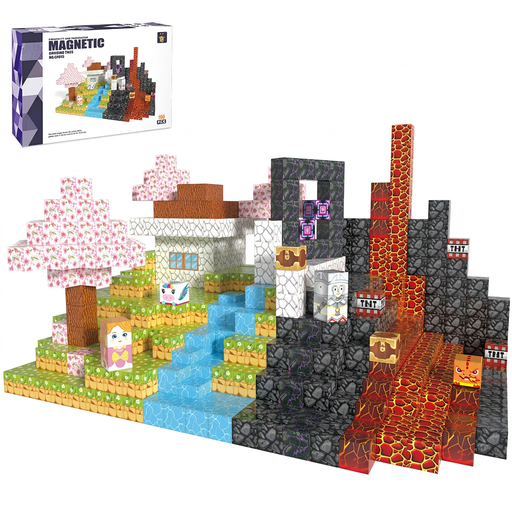
Why this product fits the profile: 100 pieces offer a relatively large foundation for families who want to try magnetic construction toys at home first.
The product description mentions basic geometric shapes, 2.5 cm compatibility and a bag. This makes expansion and tidying easier.
100 pieces, ABS plastic according to the product details, no batteries required and a portable storage bag.
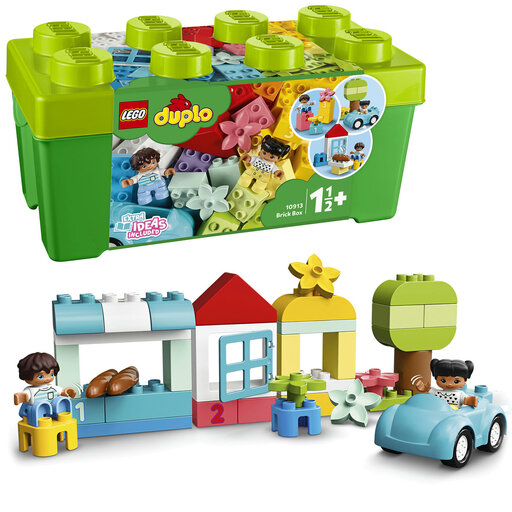
Why this product fits the profile: If you’re deliberately looking for a non-magnetic educational toy for children with large, easy-to-grip pieces, this is an alternative for younger children from 18 months.
The 65 pieces can be stored in a box with a lid. The clear age recommendation helps avoid confusing magnetic small parts for older children with a toddler set.
65 pieces, two figures, number bricks and a sturdy storage box with lid.

Why this product fits the profile: This more compact set is ideal for travel, smaller play areas or as an addition to magnetic blocks in the 5.5 cm format.
The 5.5 cm size is explicitly stated. This makes it easier to check compatibility before combining with other sets.
28 pieces, storage bag, textured surface and, according to the product details, reinforced magnets.
STEM toys for ages 3 and up should always be used in a way that matches the child’s development. Adults should supervise the first building attempts and check the pieces regularly. It’s also important to:
The educational value lies mainly in hands-on experimentation: children can explore colours, shapes, symmetry and basic stability. Statements about developing fine motor skills, spatial thinking or problem-solving abilities describe possible play experiences, but are not a medical guarantee of results.
We’ve put together a full, regularly updated list of products that meet these strict selection criteria and the safety regulations in force in the EU.
Many sets are labelled for ages 3 and up. However, the manufacturer’s own age recommendation is what counts. Because of small parts and magnets, younger children should not have access. Even with children aged 3 and over, supervision is advisable.
A set with 100 pieces offers more basic shapes for houses, towers and flat patterns than a small starter set. For groups in nursery or school, several compatible sets can be useful. What matters is whether the dimensions and magnet arrangement match.
How long they last depends on the material, build quality and how they’re handled. Daily throwing, strong bending or moisture can damage the pieces. Dry storage, gentle cleaning and regular checks for cracks help keep them usable in everyday life.