
Lieferung heute & morgen

Qualitätsgarantie

Willkommens-Angebote freischalten: KOSTENLOSE Lieferung | Bis zu 80 % RABATT | Kostenlose 30-Tage-JoyPlus-Testphase
App herunterladen
Magnetic building blocks for children combine free-form building with geometric shapes and simple construction principles. But choosing the right set isn’t always straightforward for parents, grandparents, nurseries and educational settings. Product pictures often show impressive structures, while the set itself may contain only a few basic shapes. Claims such as “strong magnets”, “STEM” or “compatible” are also worth checking more closely before you buy.
A 58-piece set is a good introduction, but offers fewer options for building large structures than a magnetic building block set with 117 or 145 pieces. The total number isn’t the only thing that matters: check how the pieces are divided between squares, triangles, roofs, special shapes and decorative elements.
A secure connection is useful when building. But it doesn’t tell you whether the magnets are safely enclosed in each piece. Look for information about welded or sealed magnet housings, rounded edges and regular visual checks. Damaged pieces with visible or loose magnets should be kept out of children’s hands.
Swallowed magnets and small parts can cause serious injuries. According to the product information, the sets featured here are intended for children aged 3 and over. The recommended age doesn’t replace supervision, particularly for younger children.
“Compatible” may simply mean that the pieces will stick together. For different magnetic construction sets to work well together, their tile sizes, formats and magnet arrangements should match. The systems featured here often specify a 7.5 cm format. Before adding to a set of magnetic tiles you already own, compare the dimensions and product description of the specific set.
7.5 cm magnetic building blocks are easy for many children to handle and provide a manageable building surface. Smaller sets are easier to transport, while larger sets allow for more ambitious 3D structures. If you’re buying for a nursery or school, it’s also worth thinking about storage: a bag or box helps keep small pieces organised and prevents them from getting lost.
The products listed use ABS plastic with smooth or rounded edges. Several sets state that the magnets are enclosed in the plastic using ultrasound technology. This information comes from the individual product descriptions and should be backed up with a visual check. Don’t immerse the pieces in water or use harsh cleaning products, and discard any damaged pieces.
Take particular care with products that include extra magnetic balls. If several magnets are swallowed, they can attract one another inside the body. If you suspect a child has swallowed or inhaled a magnet, seek medical help immediately.
A themed set, such as a magnetic villa building block set, can make it easier to get started. Free-form magnetic tiles offer more flexibility if children want to keep creating new designs. STEM toys shouldn’t be treated as a promise of learning outcomes: building can encourage spatial awareness, fine motor skills and problem-solving, but it doesn’t replace educational guidance.

Why it suits this type of buyer: With 58 pieces, this set is a good introduction to magnetic building blocks and works well for occasional building. The included bag makes it easier to store and transport.
The stated piece count and 7.5 cm tile size give you a clearer idea of what to expect, rather than relying on pictures of large example builds.
58 pieces, 7.5 cm format, ABS plastic and storage bag, according to the product information.
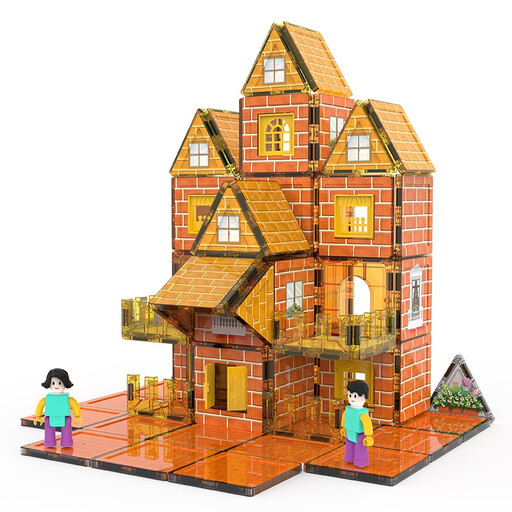
Why it suits this type of buyer: The 81-piece villa set combines themed building pieces with a 7.5 cm format. According to the product information, the magnets are enclosed in the ABS plastic using ultrasound technology.
Information about the magnet enclosure, materials and piece count makes it easier to check important safety features before you buy.
81 pieces, a villa theme and a storage bag; the supplier also states that it’s compatible with other 7.5 cm sets.
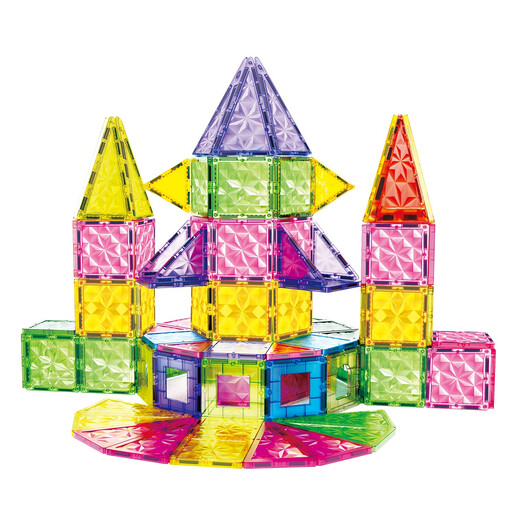
Why it suits this type of buyer: With 117 pieces and a variety of shapes, this set is designed for more ambitious building projects. It could be a good choice for solo or group play at home or in an educational setting.
The product description lists the piece count, material, magnet enclosure and storage dimensions. This makes it easier to check whether the larger set will fit in the space you have.
117 pieces, diamond-patterned surfaces and a variety of shapes; the supplier also states that it’s compatible with popular magnetic tile systems.
Magnetic building blocks don’t need batteries and have no ongoing energy costs during normal use. To help them last longer, store the pieces in a dry place and clean them with a soft, slightly damp cloth. Check them regularly for:
A regular storage routine helps prevent pieces from going missing. In nurseries and schools, it’s also a good idea to check the pieces visually before each larger group activity.
We’ve put together a complete, regularly updated list of products that meet these strict selection criteria and fully comply with the safety regulations in force in the EU.
According to the product information, the sets featured are intended for children aged 3 and over. Follow the age recommendation because the sets contain magnets and small parts. Adults should supervise younger children, particularly the first time they use the blocks, and remove any damaged pieces immediately.
A set of 52 to 58 pieces is often enough for first patterns and small structures. With 81 pieces, there are more options for themed builds. For larger houses, animals or 3D models, 117 pieces or more is a good choice. The right amount also depends on whether a child will be building alone or with others.
No. Even if two products are described as compatible, compare the tile size, shapes and magnet arrangement. With 7.5 cm systems, there’s a better chance of finding pieces that fit, but only the information from the relevant manufacturer can confirm compatibility.