
Lieferung heute & morgen

Qualitätsgarantie

Willkommens-Angebote freischalten: KOSTENLOSE Lieferung | Bis zu 80 % RABATT | Kostenlose 30-Tage-JoyPlus-Testphase
App herunterladen
Magnetic building blocks for children combine open-ended construction with shapes, colours and early spatial challenges. For parents, grandparents, nurseries and educational settings, the claims can sound convincing: strong magnets, STEM toys, Montessori building toys or particularly large sets. But not every product is right for every age or purpose.
Three common buying mistakes are especially likely to lead to the wrong choice:
Magnetic building blocks for children aged 3 and over often contain small individual pieces. This means they’re not suitable for children under three and should be used under supervision. The quality of the magnet housings is particularly important. The magnets should be securely enclosed in the plastic casing. If a magnet comes loose or a casing is damaged, remove the piece from use.
Swallowing magnets can cause serious injuries. If you suspect this has happened, seek medical help immediately. Magnetic building blocks should also be kept away from sensitive electronic devices, cards and medical devices that are sensitive to magnetic fields.
ABS plastic is used in many magnetic tiles and magnetic construction toys. When choosing a set, smooth edges without burrs, a sturdy casing and clear manufacturer information matter more than marketing names for colours. Product information should state the material, age range and warnings, and provide details of a responsible contact in the EU.
A strong magnetic connection is particularly important for three-dimensional constructions. Smaller sets are enough for simple flat structures; towers, houses and bridges call for more ways to connect the pieces and a wider range of shapes. With transparent magnetic tiles, you can also see how light passes through your construction.
A good set of magnetic building blocks should suit the space you have and the way your child likes to play:
A metal box can be handy for trips or visits to grandparents. Gift packaging is mainly worth considering if you’re giving the magnetic building blocks as a present.

Why it suits this profile: This set includes 32 square magnetic tiles, each 3.75 cm along the edge, and comes in a portable metal box. It’s a good choice for first building attempts, trips or visits to grandparents.
The manageable number of pieces means this starter set won’t become confusing with unnecessary specialist parts. The product information also warns about small parts and strong magnets.
32 pieces, ABS plastic, smooth edges and a metal storage box.

Why it suits this profile: With 76 transparent pieces, this set offers more ways to combine tiles for families who want to build together. The magnets are described as safely enclosed, and compatibility with other standard sets adds more options for building.
The product information specifies the magnet encapsulation, ABS material and smooth edges, so you can check key safety details before buying.
76 pieces, transparent design, 3.75 cm squares and no batteries required.

Why it suits this profile: This 126-piece set is designed for children, siblings or groups with lots of building ideas. Alongside transparent building pieces, it includes marble run components and a light function.
The contents are clearly described: 126 pieces, 3 AA batteries required and not included, and direct adult supervision.
A generous number of pieces, transparent 3D elements, marble run components and a gift box.
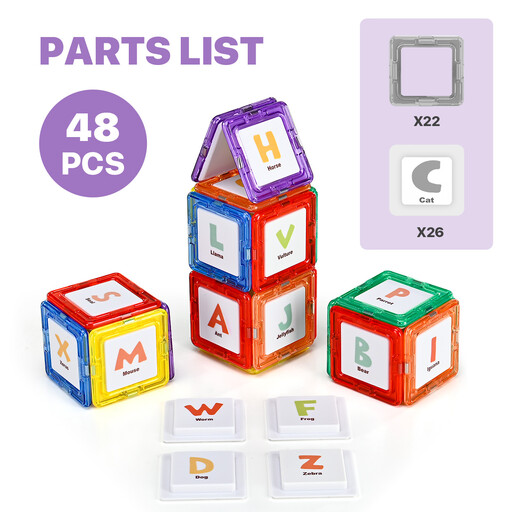
Why it suits this profile: These 48 pieces combine building shapes with an alphabet theme. That makes the set an interesting option for families or settings looking to combine creative learning toys with early language activities.
Rather than making a broad educational claim, the product description specifies the alphabet theme, piece count and transparent ABS material.
48 pieces, alphabet design, transparent ABS components and gift-box packaging.
We’ve put together a complete, regularly updated list of products that meet these strict selection criteria and fully comply with the safety regulations in force in the EU.
Clean magnetic tiles with a soft, slightly damp cloth, then store them dry. Soaking them in water, using harsh cleaning products or scrubbing them can damage the surfaces or magnet areas. It’s a good idea to give them a quick check before each use:
Extra supervision is needed for children under three, groups with children of different ages, or if pieces are being thrown or bitten frequently.
Many sets are marked as suitable from age 3. Always follow the information for the specific product. Because they contain small parts and strong magnets, they must not be used by children under three. Age-appropriate supervision is still recommended for older children.
How long they last depends on the quality of the plastic, how securely the magnets are enclosed and how the blocks are handled. Regular checks are more useful than a general lifespan estimate. Damaged pieces, loose magnets or broken casings should be removed from play straight away.
Most traditional magnetic building blocks don’t need batteries. Sets with lights or special functions may, however, require them. For example, the Tokky 126-piece set needs three AA batteries, which are not included according to the product information.