
Lieferung heute & morgen

Qualitätsgarantie

Willkommens-Angebote freischalten: KOSTENLOSE Lieferung | Bis zu 80 % RABATT | Kostenlose 30-Tage-JoyPlus-Testphase
App herunterladen
Magnetic building blocks for children combine free-form construction with geometric shapes, colours and basic principles of statics. To ensure the set actually gets used in family life, parents should look beyond just the piece count or colourful product images. What really matters are the right formats, securely enclosed magnets, a clear age recommendation and a storage solution.
A magnetic building block set with 100 pieces sounds impressive at first. However, if it contains mostly small, similar shapes, the range of building options can be limited. For younger children, a variety of basic shapes is often more useful than a very high number of identical pieces. So check whether squares, triangles, diamonds, connectors or special roof and door pieces are included.
A stable connection makes building easier. But on its own, it tells you nothing about how the magnets are fixed inside the piece. According to product information for various sets, the magnets are permanently enclosed in ABS plastic using ultrasonic welding. Nevertheless, parents should regularly check the pieces for cracks, exposed magnets or open edges.
Magnets and small parts can pose serious dangers if swallowed. Sets with an age recommendation of 3 years and above should not be given to younger children. If you suspect a magnet has been swallowed, seek medical help immediately.
Magnetic tiles that look similar are not necessarily compatible. Measurements such as 2.5 cm, 5.5 cm or 7.5 cm refer to different edges or side surfaces depending on the product. If you want to expand an existing set, you should compare the exact format, shape and position of the magnetic connections.
Most of the magnetic building blocks mentioned here are described as suitable for children aged 3 and over. This is a minimum recommendation and not a statement about whether a child can already build independently. Adult supervision is recommended for the first use. Direct supervision is particularly advisable with small pieces, magnetic balls or complex building instructions.
For children aged 3 and over, larger pieces with simple basic shapes can make starting easier. Small-format sets with 2.5 cm pieces allow detailed models but require particularly careful storage.
ABS blocks are used in many sets. According to the respective product information, several models feature rounded edges and magnets that are enclosed in the plastic. Claims such as "non-toxic" or "low-odour" should always be considered alongside the specific safety and manufacturer information.
Also look out for:
Some products mention CPC, ASTM or EN 71. According to the respective manufacturer's product information, these refer to the safety requirements listed there. You should check the details in the product description and packaging again before buying.
A set with 7.5 cm tiles is suitable for larger houses, towers or imaginative scenes. Smaller formats are more space-saving and can be good for travel. A magnetic building blocks with storage bag solution reduces scattered individual pieces and makes transport to nursery, to family or on holiday easier.
Themed sets, such as villa, police station, castle or pixel motifs, provide a play prompt. Open basic shapes, on the other hand, allow more freedom for your own designs. For educational settings, sets with many geometric variations and compatible expansions can be more practical.
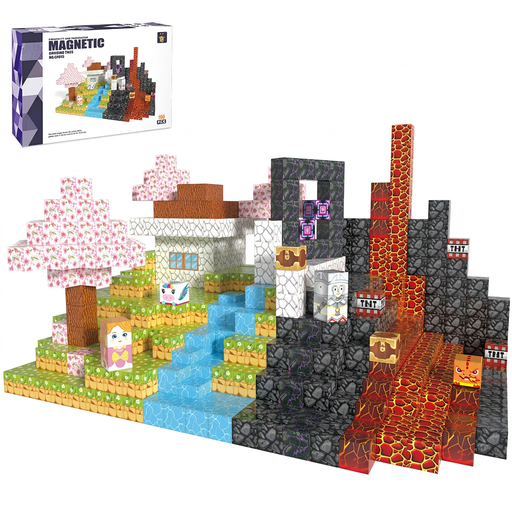
Why this product fits the profile: The 100-piece set offers various basic geometric shapes and a storage bag. According to the product information, it is suitable for children aged 3 and over and is compatible with other 2.5 cm sets.
The piece count is complemented by specific details on format, material and bag. This makes it easier to assess the scope of delivery before buying.
100 pieces, 2.5 cm format, ABS plastic according to product information and a storage bag.

Why this product fits the profile: The set combines 100 transparent, diamond-shaped pieces in a 7.5 cm format. According to the product information, EN 71 requirements are mentioned; the specific marking should be checked on the product page.
The product description mentions material, piece count, individual size and warnings rather than just general marketing claims.
100 pieces, 7.5 cm tiles and diamond-cut, transparent surfaces according to product information.
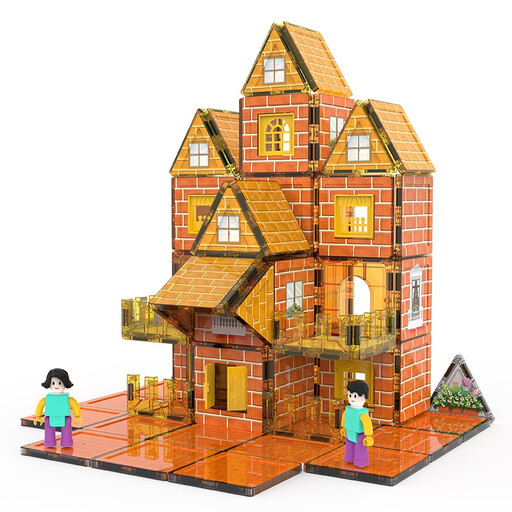
Why this product fits the profile: This themed set is designed for larger structures and shared play at home, in educational settings or on the go. A bag is included according to the product description.
The 7.5 cm size and the stated compatibility with other 7.5 cm systems make it easier to plan a future expansion.
81 pieces, villa theme, reinforced magnets according to product information and a portable storage bag.
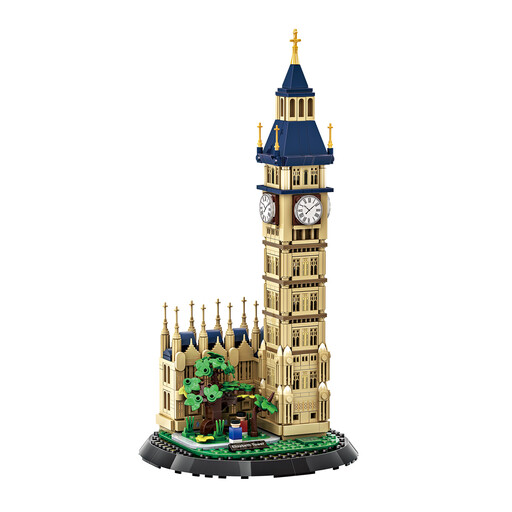
Why this product fits the profile: According to the product description, this ABS building set is aimed at people aged 6 and over, as well as adults, who want to build a detailed architectural model and then display it.
The high piece count is combined with a clear architectural theme and a recommended age group. This makes the intended use clearer than with a non-specific set.
783 ABS pieces, architectural theme and box dimensions of 40 × 25 × 8.7 cm according to product information.
We have put together a complete, regularly updated list of products that fully meet these strict selection criteria and the safety regulations in force in the EU.
Many sets carry an age recommendation of 3 years and over. This recommendation refers to the specific product and does not replace supervision. Because of small parts and magnets, children should be supervised during first use. The sets mentioned are not intended for children under 3 years of age.
The lifespan depends on the material, workmanship and how they are handled. Edges should not be struck against hard surfaces. Clean the pieces according to the manufacturer's instructions, usually with a soft cloth, and regularly check the casing and magnetic connections. Damaged pieces should not be used further.
Magnetic construction toys can stimulate spatial awareness, hand-eye coordination, shape and colour recognition, and problem-solving skills through free-form building. These learning opportunities arise primarily from the way the toy is played with; an automatic learning effect is not guaranteed. STEM toys, Montessori construction toys and creative building blocks therefore differ mainly in their structure, themes and accompanying play ideas.