
Lieferung heute & morgen

Qualitätsgarantie

Willkommens-Angebote freischalten: KOSTENLOSE Lieferung | Bis zu 80 % RABATT | Kostenlose 30-Tage-JoyPlus-Testphase
App herunterladen
Magnetic building blocks for children combine open-ended construction with geometric shapes and simple building principles. For parents, grandparents and educational settings, however, it is not just the number of pieces that matters. A clear safety concept, suitable dimensions and a design that matches the child’s age and play habits are all essential.
A set with 100 or more pieces sounds extensive. However, if it mainly contains the same basic shapes, it may offer fewer building options than expected. It is therefore worth checking the mix of squares, triangles, special shapes, wheels and decorative elements. For first experiences with magnetic building blocks for children aged 3 and over, clearly structured sets with basic shapes are often sufficient.
High magnetic strength can make stable constructions possible. For safety, however, it is equally important that the magnets remain permanently enclosed in the plastic. Damaged edges, cracks or magnets coming loose are reasons to reject a product. Magnet strength should therefore be considered alongside information about sealing and regular inspection.
Not every magnetic building block set can be combined with every other set. The size of the pieces and the position of the magnets are important factors. If you have several sets at home, check the stated edge length. For example, some models in this selection use 2.5 cm, while others have larger pieces measuring 7.5 cm.
The magnetic building blocks featured here are mostly intended for children aged 3 and over. Small parts can pose a choking hazard to younger children. It is also important to remember that if magnets are swallowed, they can attract one another inside the body and cause serious injuries. If you suspect that a magnet has been swallowed, seek medical help immediately.
The recommended age is not a substitute for supervision. Before every use, check whether any plastic parts are broken or whether magnets are visible or loose. Damaged pieces must no longer be used.
According to the product information, several sets are made from ABS plastic. This material is often used for ABS magnetic toys because of its strong, shape-retaining properties. When choosing a product, you should also consider rounded, burr-free edges and an enclosed construction.
The XINQIYUAN set is described as using ultrasonic welding to enclose the magnets securely. The TOKKY set with 56 pieces is also described as having securely enclosed magnets and smooth edges. This information comes from the respective product descriptions and should be supplemented by visual checks during everyday use.
Smaller 2.5 cm pieces are suitable for detailed constructions, but can be easier to lose. Larger building blocks may be easier for some children to grip. A storage bag or box helps prevent pieces from going missing and makes the sets easier to use in nurseries, schools or while travelling.
For cleaning, the products mentioned generally recommend using a soft, slightly damp cloth. Immersing the pieces in water, as well as using harsh or abrasive cleaning products, may damage the surfaces and magnet areas.
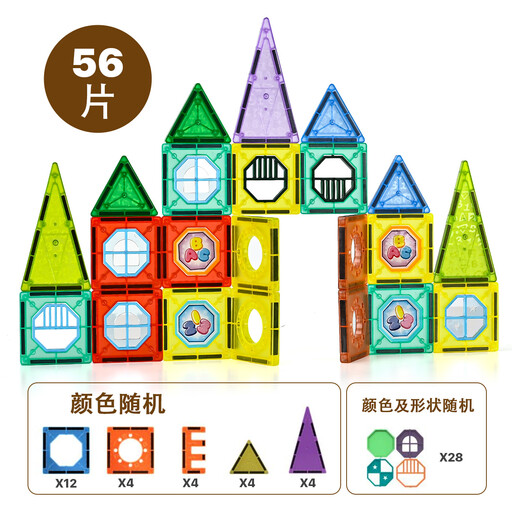
Why this product suits this profile: With 56 pieces, this set offers a manageable introduction to magnetic construction toys for children aged 3 and over, without requiring you to buy a particularly large set straight away.
The number of pieces and the ABS material are clearly stated. Smooth edges and enclosed magnets are also described.
56 pieces, no batteries required, transparent design and compatibility with common magnetic building blocks according to the product description.
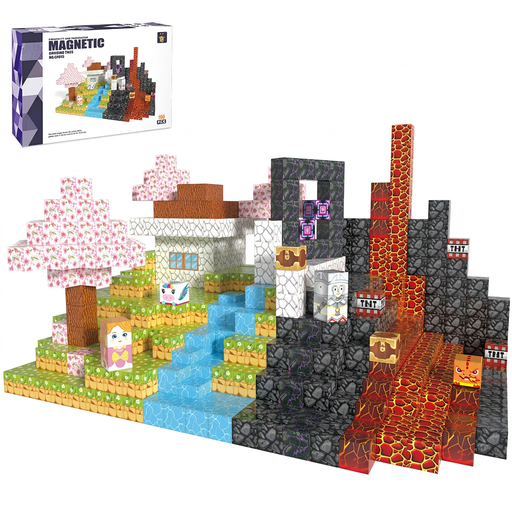
Why this product suits this profile: This set is an appealing choice for households or settings where several children want to build together using geometric shapes.
The product information specifies 100 pieces, a size of 2.5 cm, ultrasonic welding and an included storage bag.
ABS plastic, rounded edges, no batteries required and CPC and ASTM certifications according to the manufacturer’s information.
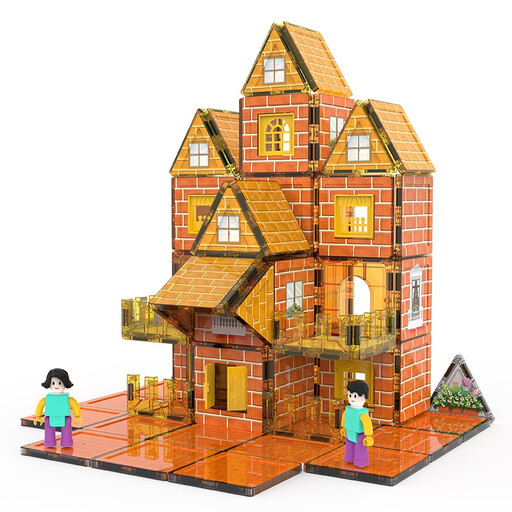
Why this product suits this profile: The larger 7.5 cm pieces are designed for villa-style buildings and larger constructions, making them suitable for group activities.
The different piece size is clearly stated. The set contains 81 pieces and a storage bag; the magnets are intended to be enclosed by welding.
81 pieces, a villa-themed world and compatibility with other 7.5 cm sets according to the product information.
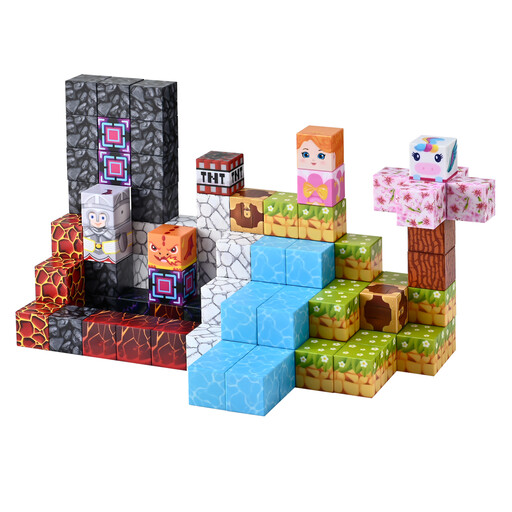
Why this product suits this profile: Pixel-style shapes and themed pieces appeal to children who want to create characters, landscapes and scenes rather than purely geometric buildings.
The product details specify the number of pieces, the 2.5 cm size and the ABS material used. Damaged casings should be removed from use for safety reasons.
100 pixel pieces, themed design, colourful packaging and no batteries required.
We have put together a complete, regularly updated list of products that fully meet these strict selection criteria and the safety regulations applicable in the EU.
For beginners, it is advisable to play together for the first session. Show your child how to connect and separate the pieces without throwing them or pulling them apart by force. Once playtime is over, count all the building blocks and put them away in the bag or box.
As STEM toys for children, magnetic tiles can encourage simple conversations about shapes, stability and symmetry. However, toys are not a substitute for educational guidance. Terms such as Montessori construction toys describe a particular approach to play, but do not automatically prove any educational benefit.
According to the product information, many sets are intended for children aged 3 and over. This recommendation applies only when the product is used as intended and the warnings are followed. Because the sets contain small parts and magnets, regular checks and supervision are particularly important.
Their lifespan depends on the material, workmanship and how they are handled. Store the pieces in a dry place, avoid heavy impacts and check them regularly for cracks, loose magnets or damaged edges. Any visibly damaged piece should be disposed of.
As the sets work manually and do not require batteries, they have no ongoing energy costs during normal use. However, you should take possible replacement purchases into account if pieces are lost or can no longer be used because of damage.