
Lieferung heute & morgen

Qualitätsgarantie

Willkommens-Angebote freischalten: KOSTENLOSE Lieferung | Bis zu 80 % RABATT | Kostenlose 30-Tage-JoyPlus-Testphase
App herunterladen
A magnetic car mount with 15W wireless charging combines two functions: your smartphone remains securely visible while you drive and can be charged wirelessly at the same time. In practice, however, everyday usability depends on more than the stated wattage. Smartphone compatibility, how the mount attaches to your vehicle and the quality of the power supply are all important factors.
Anyone buying a magnetic phone holder for their car should also be aware of common marketing pitfalls. A high charging output does not automatically mean that every device will actually charge at 15 W. Nor can a powerful magnet replace a suitable phone case and a stable mount.
The maximum output depends on the smartphone, charging standard, power adapter and cable. iPhones with MagSafe support, Qi-compatible Android devices and Qi2 smartphones may use different charging profiles. Some devices automatically reduce the charging output.
To achieve the full output, you will generally need a suitable USB-C power adapter with sufficient capacity. For example, the PAVAREAL CH70 requires a Quick Charge or PD adapter. A basic USB port in the vehicle may not be powerful enough.
A MagSafe car mount is designed for compatible iPhone models and magnetic cases. With other Qi devices, you will often need to attach a metal or magnetic ring to the case. The ring should be positioned correctly over the charging coil. Otherwise, the smartphone may not be held securely or may charge unreliably.
Metal objects between the charging surface and the smartphone can cause heat to build up. Keys, coins and unsuitable cards should therefore never be placed between the device and the charging pad.
A mount for an air vent must be compatible with the vehicle’s slats. Very thin, movable or damaged slats may give way under the weight of the phone. For dashboard or windscreen models, a clean surface and a correctly locked suction cup are essential.
The mount must not obstruct your view or interfere with airbags, controls or the climate-control settings.
Pay attention to the combination of Qi, Qi2, MagSafe compatibility and maximum output:
Also check the stated charging distance. Thick or unsuitable cases can interfere with energy transfer. On some models, the permitted distance is around 4 to 6 mm.
A phone holder for an air vent saves space and can be fitted quickly. A dashboard or windscreen mount often gives you more freedom when choosing its position, but it requires a flat, clean surface.
Useful features include:
Before your first journey, check that the mount is firmly secured without the smartphone attached. If it vibrates or feels loose, a different mounting position may be more suitable.
For a wireless car charger mount, you will generally need a USB-C cable and a suitable 12-volt adapter or USB port. Not every product includes both. Information about overvoltage, overcurrent, short-circuit and overheating protection is an important factor when choosing a product.
Some models also feature foreign-object detection. This can help interrupt charging if metal objects are placed on the charging surface. If the smartphone becomes unusually hot, disconnect the power supply and investigate the cause.
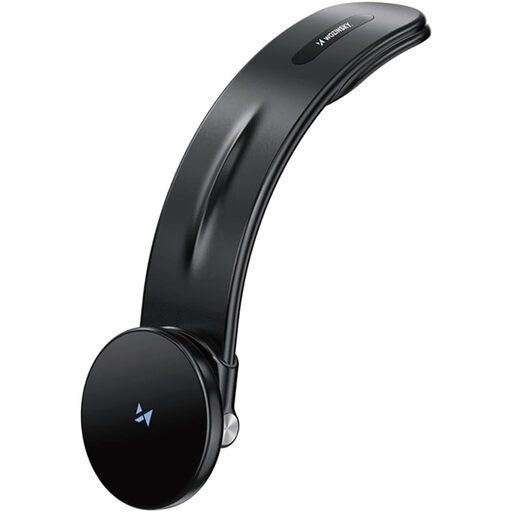
Why this product suits this profile: The combination of a magnetic mount, flexible arm and 360-degree rotation is ideal for everyday navigation and hands-free use. A metal ring is included for Qi devices without an integrated magnetic function.
Compatibility is not limited to MagSafe: Qi smartphones can be used with the included ring. The charging outputs are specified as 5 W, 7.5 W, 10 W and 15 W.
20 N52 magnets, a USB-C port and mounting for the dashboard or windscreen.
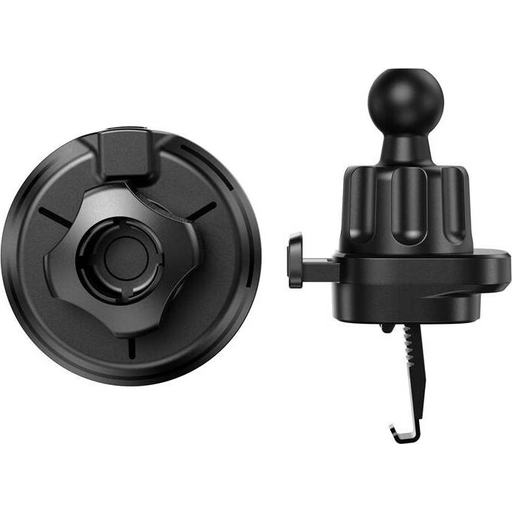
Why this product suits this profile: Qi2 certification, the N55 magnet and 360-degree rotation are ideal for users who value a clearly specified standard and flexible viewing angles.
Specifying Qi2 with Magnetic Power Profile makes the technical classification clearer than a generic advertising claim about “fast” charging. A suitable power adapter is recommended for 15 W.
USB-C port, N55 neodymium magnets and portrait or landscape alignment for standard air vents.
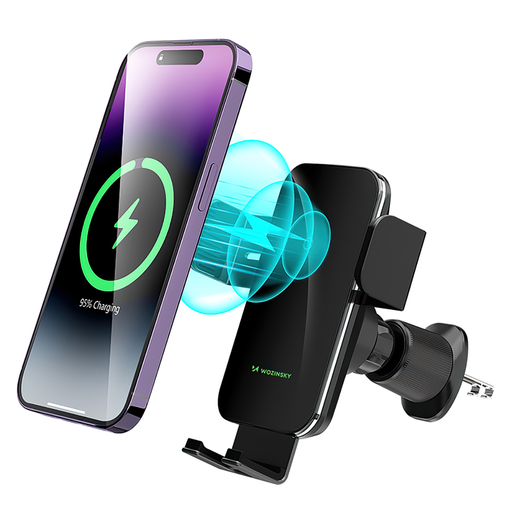
Why this product suits this profile: The automatic clamp mount is suitable for people who use different Qi smartphones or do not want to attach a magnetic case.
The mount uses clamping arms rather than a magnetic ring. This removes the question of whether the back of the smartphone is magnetically compatible.
Qi support for smartphones from 4.7 to 6.9 inches, double hooks for the air vent and 360-degree adjustment.
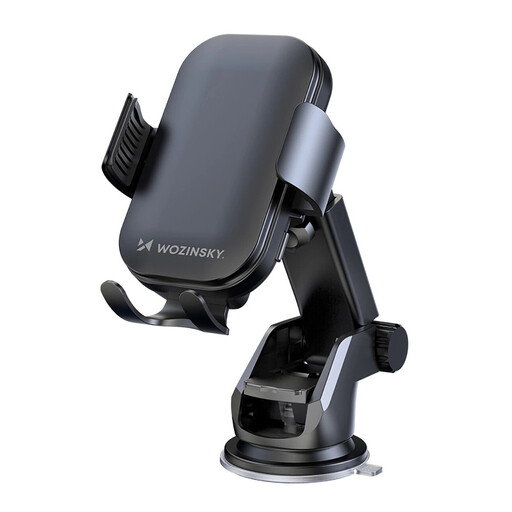
Why this product suits this profile: The suction-cup mount is a good choice for vehicles whose air vents do not allow secure attachment. The adjustable arm lets you position it exactly where you want it.
The intended mounting surface is the dashboard. Before use, you can check that the suction cup is firmly attached; if the device overheats, stop using it.
Automatic clamping, adjustable arm length and stated temperature monitoring during wireless charging.
We have put together a complete, regularly updated list of products that fully meet these strict selection criteria and the safety regulations applicable in the EU.
Not automatically. The smartphone, case, charging standard and power adapter must all work together. With iPhones and compatible MagSafe cases, magnetic alignment is supported. Even so, the charging output actually achieved may be lower.
Qi2 models are generally designed for Qi2-compatible devices. An Android smartphone using an older Qi standard may be able to charge wirelessly, but it may not attach securely to the mount magnetically. You should therefore check both the charging standard and the magnetic attachment.
The power comes from the vehicle battery or 12-volt system. While driving, the additional consumption is usually small compared with the vehicle’s overall operation. For your purchase decision, a suitable adapter, a working cable and secure mounting are therefore more important. When the engine is switched off, avoid leaving the charger connected unnecessarily for long periods.