
Lieferung heute & morgen

Qualitätsgarantie

Willkommens-Angebote freischalten: KOSTENLOSE Lieferung | Bis zu 80 % RABATT | Kostenlose 30-Tage-JoyPlus-Testphase
App herunterladen
A magnetic car mount with wireless charging combines two functions: your smartphone stays securely visible for navigation or hands-free calls, while being powered without a charging cable. To ensure this combination works reliably every day, however, drivers should look beyond a “15W” specification or a modern-looking product image.
“15W fast charging for cars” generally refers to the maximum possible output power. In practice, charging speed depends on the smartphone, the standard used, the power adapter and the temperature. A Qi-compatible device, for example, may charge at a different power level from a MagSafe-enabled iPhone.
The mount also needs a sufficient power supply. Certain models require a QC- or PD-compatible car adapter. An existing USB port in the vehicle may therefore not be enough to deliver the maximum charging power.
Qi enables wireless charging, but does not automatically provide magnetic attachment. Smartphones without an integrated magnetic ring may require a suitable magnetic case or a supplied metal ring. Before buying, you should therefore check:
An iPhone car mount with MagSafe functionality is therefore not automatically suitable for every Android smartphone.
A phone holder for the air vent may work with horizontal and vertical slats, but it is not suitable for every type of vent. Heavy smartphones can put strain on the slats or cause the mount to move when driving over uneven roads.
Suction-cup models for the dashboard or windscreen, on the other hand, require a clean, smooth surface. Dust, grease and textured materials can reduce adhesion. A secure mount is more important than positioning it as flexibly as possible.
Look out for the stated levels, such as 5W, 7.5W, 10W and 15W. These values show which output powers are supported, but do not guarantee a particular charging speed. To achieve maximum power, a car charger with Quick Charge 3.0 or USB Power Delivery may be required.
When buying a wireless car charger, you should also consider the cable type and connection. Many current models use USB-C. A suitable car adapter is not always included.
Holding strength does not depend solely on the number of magnets. The following factors are also important:
Some products, for example, specify 20 or 22 neodymium magnets. This is a verifiable feature, but it does not replace checking your individual smartphone case.
A 360° rotatable car mount allows you to position your phone in portrait or landscape format. Nevertheless, the phone mount must not obstruct your view of the road, controls or safety-related displays. With air-vent models, you should also check whether the airflow hits the device directly or whether the slats provide sufficient support for the mount.
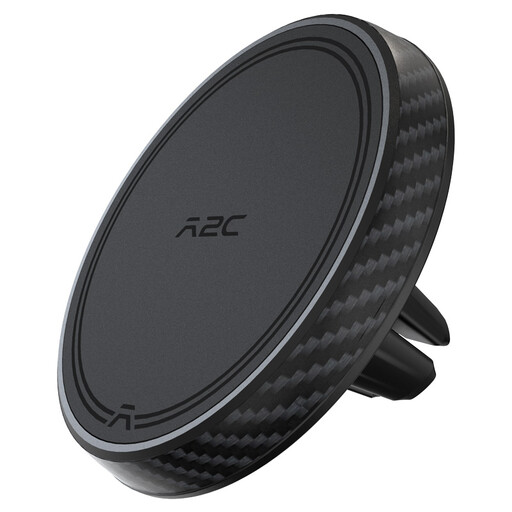
Why this product suits this profile: The model is designed for smartphones from 4.0 to 7.2 inches and can be used on standard horizontal or vertical air vents, as well as smooth dashboard or windscreen surfaces.
The product description explicitly advises checking Qi and magnetic compatibility before buying. For suction-cup mounting, the surface should be cleaned with the supplied alcohol wipe and the locking knob tightened.
Wide size range from 4.0 to 7.2 inches and several mounting options for different types of vehicle.
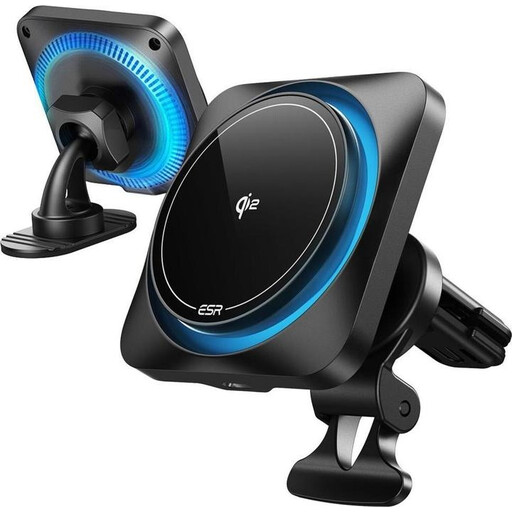
Why this product suits this profile: The model supports the Qi2 standard, MagSafe-compatible devices and two mounting options: air vent or dashboard. A cooling surface is integrated for its intended use.
The specifications distinguish the Qi2 standard from MagSafe functionality. A compatible smartphone or suitable case is required for magnetic attachment.
Qi2 support, USB-C connection, 100-cm cable, plus adapters for air vents and dashboards.
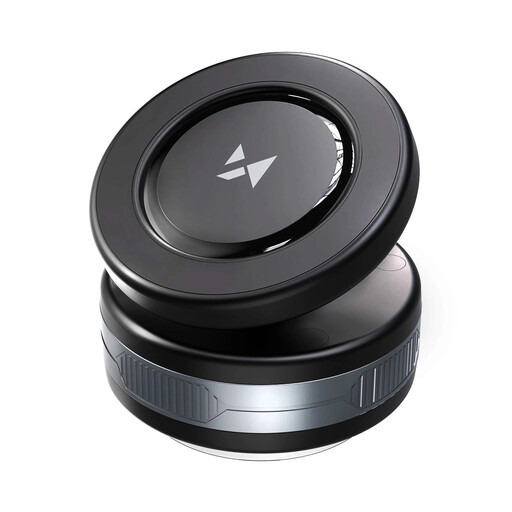
Why this product suits this profile: The suction-cup mount is designed for the windscreen or dashboard and can be adjusted through 360°. It is suitable for users who also want to attach their smartphone to smooth surfaces outside the car.
It mounts on a smooth surface rather than on potentially unsuitable air-vent slats. Smartphones without integrated magnetic functionality require a compatible magnetic ring.
Qi charging up to 15W, N52 magnet, 360° adjustment and USB-C cable included.
We have put together a complete, regularly updated list of products that fully meet these strict selection criteria and the safety regulations applicable in the EU.
Before mounting, clean the contact surface and attach the mount according to the instructions. Depending on the design, a suction cup may need to be lightly moistened or cleaned again; do not use unsuitable cleaning products.
Please also note:
The actual running costs are usually limited to the electricity used by the wireless charger and, where necessary, the purchase of a suitable car adapter. Heat, mechanical strain, moisture and a mount that remains loose over time are the main factors affecting service life.
No. The smartphone will generally need to support Qi, and magnetic attachment requires a compatible magnetic case or metal ring. You should also check the device size and permitted charging power.
Maximum power is only achieved when the smartphone, mount, cable and power adapter are compatible with one another. High temperatures, a thick case or imprecise alignment can also reduce charging power.
That depends on the vehicle and your preferred position. An air-vent clip saves space, but may affect the stability of the slats. A suction cup on the dashboard requires a smooth surface and should be positioned so that your view and access to the controls remain unobstructed.