
Lieferung heute & morgen

Qualitätsgarantie

Willkommens-Angebote freischalten: KOSTENLOSE Lieferung | Bis zu 80 % RABATT | Kostenlose 30-Tage-JoyPlus-Testphase
App herunterladen
A magnetic car phone holder with wireless charging combines three functions: securing your smartphone, charging it wirelessly and keeping it clearly visible for navigation or hands-free calls. In practice, however, the stated charging power alone does not determine whether a holder is suitable for your vehicle and smartphone.
Typical unsuitable purchases result from three points:
Qi is the standard for wireless charging. Many Android smartphones and iPhones support Qi, but they require a magnetic case or ring for magnetic attachment.
MagSafe is Apple’s magnetic attachment technology. It is particularly relevant for compatible iPhone models. A MagSafe car holder can align the smartphone magnetically; whether it also delivers the maximum charging power depends on the device and charger in question.
Qi2 uses the Magnetic Power Profile, or MPP for short. With a Qi2-certified device, magnetic alignment can be more precise. One example is the 3MK Hardy AeroCharger with Qi2 and up to 15 W. Nevertheless, check whether your smartphone or case supports the stated standard.
A 15W wireless charger car holder requires a suitable power source. A USB-C cable is often included, but the appropriate car adapter is not. Some models require a power adapter with QC or PD support to reach the stated maximum power.
So pay attention to:
Heat can slow down the charging process. A holder with temperature control or active cooling can be useful on longer journeys, but it does not replace a suitable power supply.
A magnetic air vent phone holder saves space on the dashboard. Before buying, compare the shape of the slats with the retaining clip. For heavier smartphones or large cases, a dashboard or suction-cup holder may be a more suitable solution.
A 360° rotating car holder allows you to position the phone in portrait or landscape orientation. The key factor is that the joint remains stable after adjustment. Mount the holder so that it does not obstruct your view, controls or the deployment of airbags. Adjustments and attaching the smartphone should only be carried out when the vehicle is stationary.
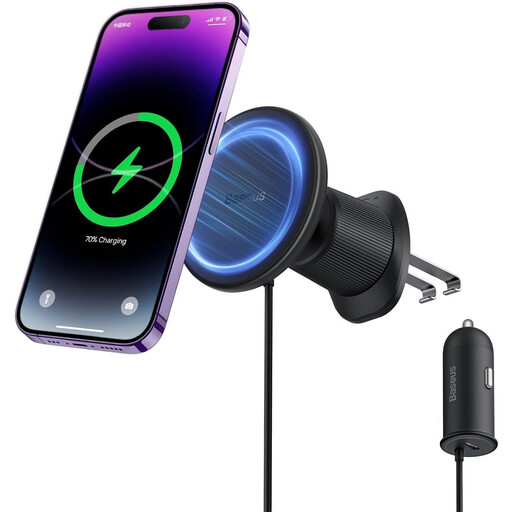
Why this product suits this profile: The combination of a magnetic air vent holder and car charging adapter is ideal for users looking for a compact solution with a straightforward package.
The specifications distinguish between magnetic charging of up to 15 W and the separate USB-C output of up to 25 W. This makes it easier to assess the power supply.
Magnetic air vent holder, USB-C cable included and up to 40 W in total according to the product description.
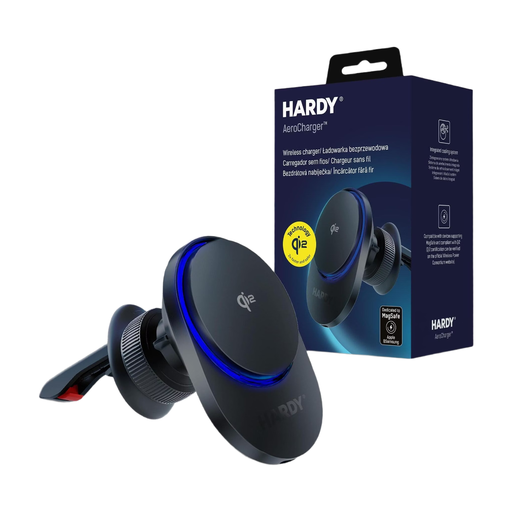
Why this product suits this profile: Ideal for users who prefer Qi2, magnetic alignment and robust construction in a single charging surface.
The product specifications explicitly state the Qi2 standard with Magnetic Power Profile. This makes the technical basis for the magnetic alignment easier to understand than an unspecified magnetic claim.
Up to 15 W wireless charging, Qi2 support and a robust build according to the manufacturer. For thick cases, checking charging and magnetic compatibility is recommended.
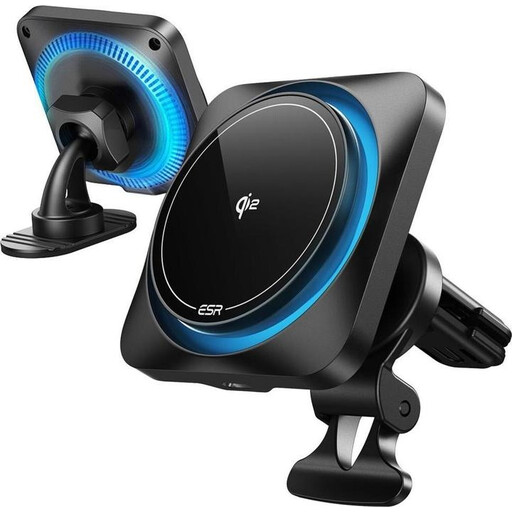
Why this product suits this profile: This holder is designed for frequent journeys and users who want to choose between air vent and dashboard mounting.
According to the product description, the cooling surface is designed to remain unobstructed. This addresses the common issue that heat generated during wireless charging can affect charging speed.
Qi2 and MagSafe compatibility, two mounting options and a CryoBoost cooling system according to the manufacturer. A USB-C to USB-C cable is listed as included.
We have put together a complete, regularly updated list of products that fully meet these strict selection criteria and the safety regulations applicable in the EU.
No. The smartphone must be Qi-compatible. Magnetic attachment also requires an integrated magnetic structure, a MagSafe case or a suitable ring. The specifications of the device and holder should be compared with one another.
15 W is a maximum value. The smartphone model, charger, cable, temperature, case and alignment of the coils all affect the actual power. If the temperature becomes too high, the device may automatically reduce the charging current.
That depends on the vehicle. An air vent holder saves space and is easy to access, but it can be put under strain by heavier smartphones. A dashboard holder often offers more freedom when positioning it, but requires a suitable smooth surface and must not obstruct your view.