
Lieferung heute & morgen

Qualitätsgarantie

Willkommens-Angebote freischalten: KOSTENLOSE Lieferung | Bis zu 80 % RABATT | Kostenlose 30-Tage-JoyPlus-Testphase
App herunterladen
A magnetic car phone holder with wireless charging combines three functions: securing your smartphone, positioning the display for navigation and charging the battery wirelessly while you drive. In practice, however, the stated wattage is not the only factor that determines suitability. The mounting method, magnetic compatibility, power supply and heat generation all affect whether the holder performs reliably in everyday use.
The specification 15 W wireless car charger usually describes the maximum output power. In practice, the smartphone may charge at 5 W, 7.5 W, 10 W or 15 W, depending on its model, operating system, charging protocol and temperature. The 12-volt adapter being used must also provide sufficient power. For example, the Joyroom JR-ZS341 is specified as supporting 5 W, 7.5 W, 10 W and up to 15 W; a QC 2.0/3.0 or PD-compatible adapter is required to achieve maximum power.
iPhones from the iPhone 12 range onwards may be compatible with a MagSafe car holder. With Android devices, the grip depends on whether the smartphone or its protective case has a suitable magnetic ring. Standard Qi support alone is not enough for magnetic mounting. Before buying, you should therefore check three points:
A vent-mounted phone holder is compact and keeps the dashboard clear. However, not all air vents are equally robust. Heavy smartphones can pull a weak or movable vent downwards. A dashboard phone holder with a suction cup uses a different mounting method, but requires a smooth, clean surface and must not obstruct your view or the vehicle’s controls.
The holder should be positioned so that it does not obstruct your view of the road, airbags or important vehicle functions. While driving, the smartphone should only be operated using a suitable hands-free function.
With a Qi-compatible car holder, the smartphone is charged inductively via a charging coil. The coils need to be aligned as precisely as possible. Magnetic holders make this alignment easier, but they do not replace Qi compatibility.
Qi2 car chargers and MagSafe products use magnetic alignment. Even so, you should check the specific manufacturer’s information, as charging power and magnetic compatibility vary between smartphones. Android devices without an integrated magnetic position may require a suitable ring.
Many holders have a USB-C port but are supplied without a 12-volt adapter. A suitable car charger and cable are therefore part of the total cost. For a smartphone holder with inductive charging, the adapter should support the required charging protocol. An adapter with a high maximum output does not automatically guarantee that the holder will draw that level of power.
Look for:
During longer navigation sessions, the smartphone and charger may become warm. If the device becomes unusually hot, stop charging and investigate the cause.
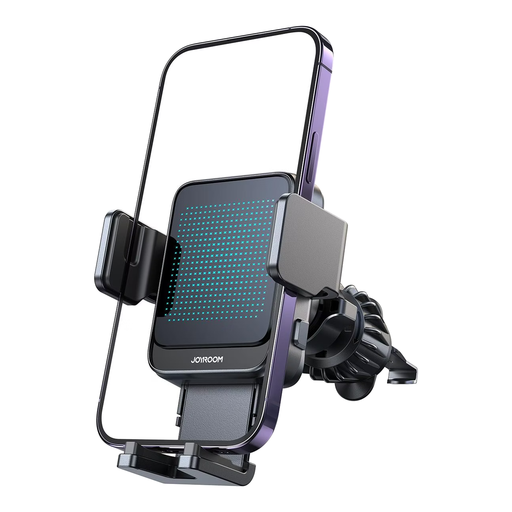
Why this product suits this profile: The compact vent-mounted holder combines automatic clamping with Qi charging and supports smartphones from 4.7 to 6.8 inches.
The required power supply and maximum charging profiles are clearly specified. The special hook is designed for mounting on the air vent.
USB-C input, automatic locking and charging outputs from 5 W to a maximum of 15 W.
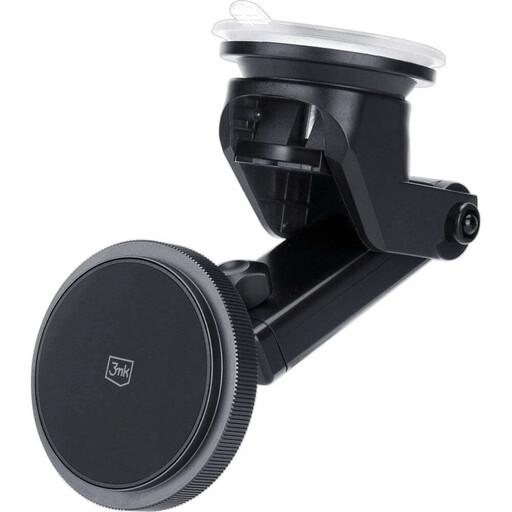
Why this product suits this profile: The holder is designed for MagSafe-compatible iPhones and magnetic cases, and features a 360-degree joint.
The product specifications state MagSafe compatibility, Qi output of up to 15 W, as well as protection against overcurrent, overvoltage and overheating.
360-degree adjustment, USB-C connection and universal vent clip.
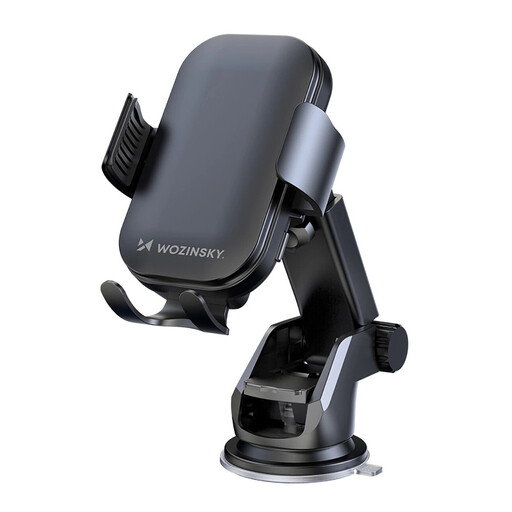
Why this product suits this profile: For regular journeys using navigation, the dashboard suction-cup holder is a suitable choice, provided the surface is smooth and appropriate.
The mounting position is not left to the air vent. According to the product description, intelligent temperature monitoring is integrated.
Automatic holding arms, adjustable arm length, suction cup and charging profiles of up to 15 W.
We have put together a complete, regularly updated list of products that fully meet these strict selection criteria and the safety regulations applicable in the EU.
No. The smartphone must support Qi, and magnetic mounting requires an integrated magnet, a compatible ring or a magnetic case. You should check the compatibility of the specific device and case before buying.
No. 15 W describes the possible charging power, while Qi2 refers to a specific charging and alignment protocol. A holder can offer up to 15 W according to the Qi standard without being described as a Qi2 device.
That depends on the vehicle and the viewing angle you want. A vent-mounted holder saves space but can put strain on the slats. A dashboard or windscreen holder offers greater positioning flexibility, but requires a suitable surface and must not restrict your view.