
Lieferung heute & morgen

Qualitätsgarantie

Willkommens-Angebote freischalten: KOSTENLOSE Lieferung | Bis zu 80 % RABATT | Kostenlose 30-Tage-JoyPlus-Testphase
App herunterladen
A magnetic phone holder for your car should keep your smartphone secure, make navigation easy to see and be simple to use without fiddly clamps. In practice, problems are often caused not by the magnet alone, but by an unsuitable mounting surface, an incompatible case or overestimated charging speeds.
If you’re looking for a magnetic car phone holder for your commute, longer journeys or everyday navigation, consider the technical specifications alongside where you’ll install it. The points below will help you distinguish marketing claims from product features that really matter.
A magnet can only hold securely if your smartphone or case has a suitable magnetic ring or metal plate. MagSafe-compatible iPhones and cases are designed for compatible holders. Many Android smartphones, on the other hand, need a separately attached metal plate or a MagSafe-compatible case.
Thick, especially rugged cases can also weaken the connection. So it’s not just the magnet specification that matters, but the combination of device weight, case thickness, magnet position and mounting angle.
A phone holder for an air vent is compact and usually quick to install. However, vent grilles vary considerably: some slats are very narrow, while others move or aren’t designed to support extra weight. A simple clip can come loose on bumpy roads or put lasting strain on the slats.
Models with an additional locking mechanism, such as the A2C holder with a metal clip and twist lock, offer a more secure design. Even so, check that the clip shape is suitable for your car before buying.
A car phone holder with wireless charging needs a power supply via USB-C or the 12-volt socket. The advertised charging speed also depends on your smartphone, power adapter, cable and the standard used.
For a Qi car charging holder, specifications such as “up to 15 W” should be understood as the product’s maximum output. It doesn’t mean every device will charge at that speed all the time. A magnetic holder without charging may be a better choice if you already use a cable or want to minimise heat.
A dashboard phone holder shouldn’t unnecessarily restrict your view. Before fitting it, check the final position while the car is stationary and the navigation is switched off.
Check whether the holder is clearly specified for MagSafe, a universal metal ring or a supplied metal plate. For Android devices, “universal” often only applies when you use a suitable plate or case.
Metal plates can block wireless charging. If you’re choosing a Qi model, check whether the plate can be positioned outside the charging zone or whether you’ll need a suitable magnetic case.
A 360-degree car phone holder lets you position your phone in portrait or landscape orientation. It’s important that the ball joint stays firmly in place once adjusted, so the viewing angle doesn’t shift while you’re driving.
Stability also depends on a suitable contact surface, an appropriate weight limit and a securely fitted base. The “N52” designation describes the magnet grade used, but doesn’t replace checking the overall design.
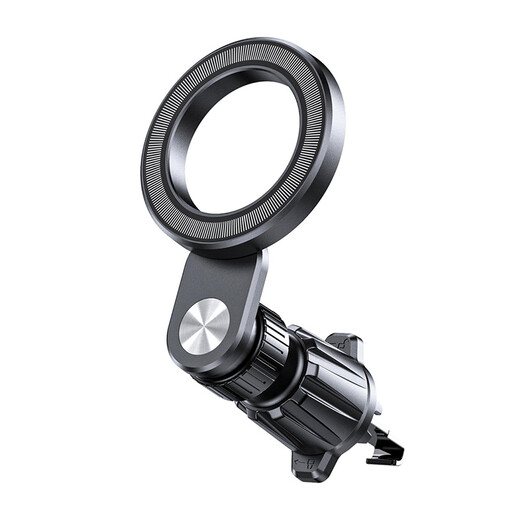
Why this product suits this profile: This compact air vent holder is ideal if you prefer simple installation without an adhesive pad. It supports MagSafe devices and smartphones with a metal ring.
The metal clip is secured with an additional twist lock, so the holder doesn’t rely on a simple spring clip alone.
N52 magnet according to the product information, 360-degree rotation and dimensions of 13 × 9,1 × 5 cm.
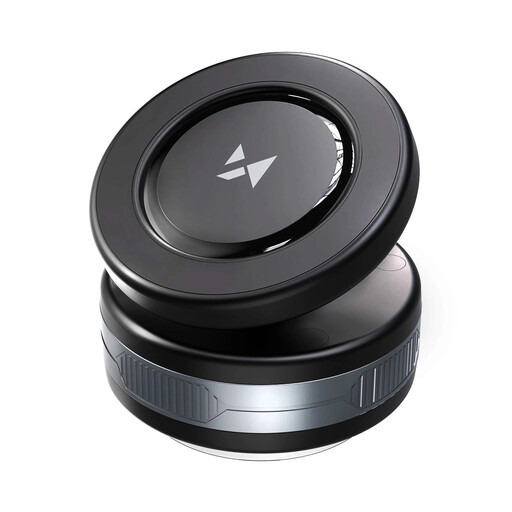
Why this product suits this profile: If you want to combine a phone holder with wireless charging, this suction cup model can be positioned flexibly on the windscreen or dashboard.
The charging function is designed for Qi devices and magnetic cases. Before buying, you can check that your smartphone, case and power supply are compatible.
Qi output up to 15 W according to the product information, USB-C input and 360-degree adjustment.
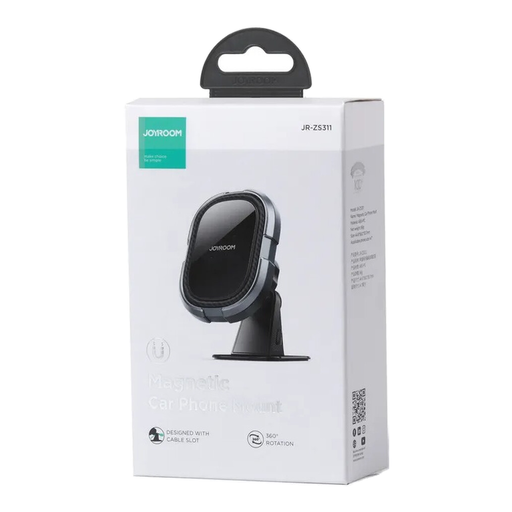
Why this product suits this profile: This dashboard holder is suitable if you want a fixed position, portrait and landscape orientation, and a stated smartphone size range of 4 to 7 inches.
Installation with 3M nano tape requires a clean, suitable surface and 24 hours to set. This helps prevent the holder from being put under strain immediately after fitting.
360-degree rotation, two metal plates and two cleaning kits according to the product description.
Before fitting the holder, make sure the surface is free from dust and grease. Depending on the manufacturer, adhesive mounts may need time to set before you attach your smartphone. Suction cups need a smooth surface, and their grip should be checked regularly.
The holder must not block your field of vision, airbag deployment areas or vehicle controls. Don’t adjust the viewing angle while driving. Keep magnetic components away from bank cards, hotel key cards and devices that are sensitive to magnets. If you have a medical implant, follow the relevant manufacturer’s guidance.
We’ve put together a complete, regularly updated list of products that meet these strict selection criteria and fully comply with the safety regulations in force in the EU.
That depends on the magnetic connection, device weight, case and mounting base. An N52 magnet alone doesn’t guarantee a secure hold. Check the fit while the car is stationary and regularly inspect the clip, adhesive pad or suction cup.
Only models with a built-in charging unit support this feature. Your smartphone must support the relevant Qi or MagSafe standard, and the power supply must be powerful enough. Metal plates between the charging surface and the device can prevent charging.
There’s no set lifespan that applies to every holder. Heat, direct sunlight, frequent adjustments and the type of mounting surface all affect how long it lasts. Loose joints, damaged magnets or a weakening grip are signs that it’s time to replace the holder.