
Lieferung heute & morgen

Qualitätsgarantie

Willkommens-Angebote freischalten: KOSTENLOSE Lieferung | Bis zu 80 % RABATT | Kostenlose 30-Tage-JoyPlus-Testphase
App herunterladen
A magnetic car phone mount can make navigation, hands-free calls and music control in your vehicle much more convenient. However, the stated magnetic strength alone isn't the deciding factor. The mounting surface, smartphone compatibility and position inside the cabin determine whether the mount will work reliably in everyday use.
A universal car phone mount may be designed to fit many smartphone sizes. But that doesn't tell you much about the actual attachment method. A model for the air vent won't necessarily fit round or very deep-set slats. A mount for the dashboard, on the other hand, needs a sufficiently smooth, clean and load-bearing surface.
Your phone case also plays a role: thick, heavily textured or metallic cases can interfere with the magnetic connection and, when wireless charging, also reduce energy transfer.
A car phone mount with 360° rotation can usually be adjusted to portrait or landscape orientation. However, the rotation mechanism must be sturdy enough to stop your smartphone from drooping during corners, braking or on uneven roads. Likewise, the mount must not obstruct your field of vision, controls or the area where an airbag might deploy.
With a wireless charging car mount, you need to check several specifications: Qi compatibility, maximum charging power, the required power adapter and the connection cable. A stated output of up to 15 W depends on a compatible smartphone, a suitable power supply and correct alignment, depending on the model. Heat, direct sunlight and a thick case can all reduce charging performance.
iPhones with built-in MagSafe, or a MagSafe-compatible case, can be attached directly. Many Android smartphones and older iPhones, however, require a supplied metal plate or magnetic ring. The plate should be positioned on the smartphone or inside the case according to the manufacturer's instructions.
Before you drive, check that the phone is fully seated and not pushed away from the magnet by the case. Keep credit cards, access cards and magnetically sensitive data storage away from the magnetic area. For medical devices, always follow the relevant manufacturer's guidance.
A Qi car phone mount needs a power source, usually via USB-C or USB-A. To achieve the advertised maximum power, you may need a suitable car charger with sufficient output. Safety features such as overcurrent, overvoltage, short-circuit or temperature protection are reassuring extras, but they don't replace correct usage.
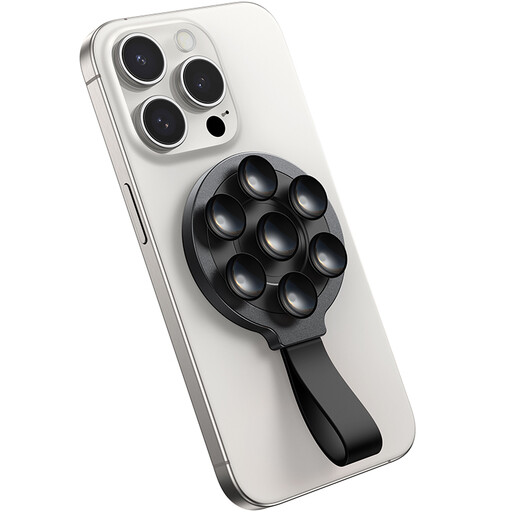
Why this product fits the profile: The suction cup mounting is ideal for users looking for a magnetic car phone mount without a permanent dashboard installation.
The specifications point to secure alignment and avoiding very rough or uneven surfaces. This helps reduce the common problem of grip loss on an unsuitable mounting surface.
Magnetic attachment and suction cup mounting in a compact design.
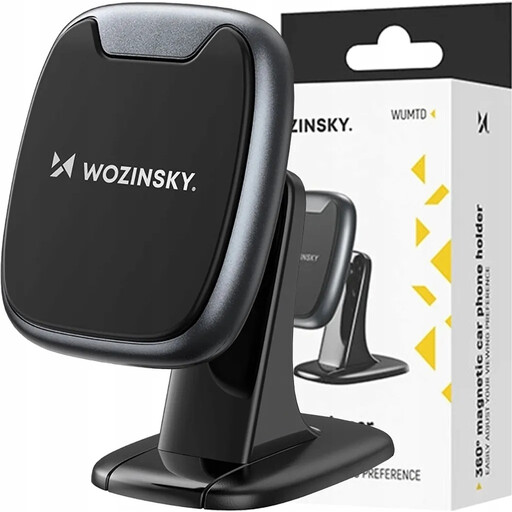
Why this product fits the profile: This model is designed for dashboard mounting and offers 360-degree adjustment plus a silicone coating.
The stated compatibility of 3.5 to 6.5 inches clearly narrows down your choice. The advice to check stability regularly addresses the often-overlooked ageing of the attachment.
360-degree adjustment, dashboard mounting and silicone coating according to product specifications.
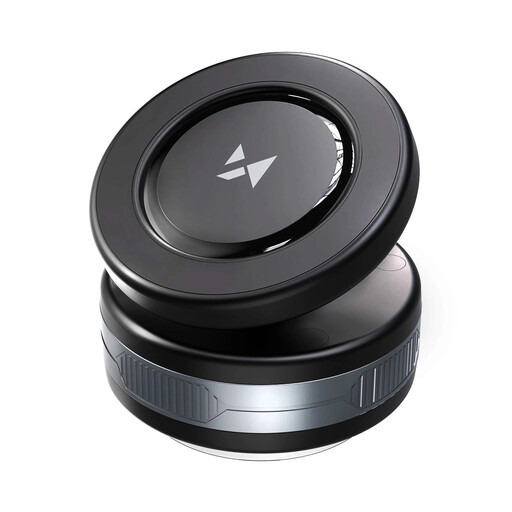
Why this product fits the profile: For commuters and frequent drivers who want to combine navigation and charging, this model offers Qi charging up to 15 W plus 360° adjustment.
The product specifications clearly state Qi compatibility, USB-C power supply and the potential impact of heat. This makes it easier to check your smartphone, cable and installation location.
Up to 15 W Qi charging power, N52 magnetic ring and suction cup for windscreen or dashboard.
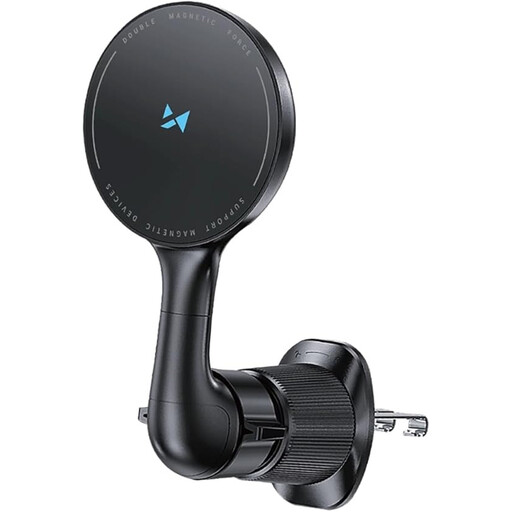
Why this product fits the profile: This model combines an air vent mount with Qi charging up to 15 W and is suitable for compatible iPhones as well as other Qi-enabled smartphones.
Before use, you need to check that the clip sits securely on your existing vent slats. The USB-C power supply and the included magnetic ring make the technical requirements clearer.
18 stated N52 magnets, 360° joint and Qi charging function up to 15 W.
We've put together a complete, regularly updated list of products that fully meet these strict selection criteria and the safety regulations in force in the EU.
With normal use of modern smartphones, there is no general risk of damage. However, magnetic components can affect cards with magnetic stripes, certain data storage media or sensitive medical devices. You should follow the relevant manufacturer's instructions. For cameras or compass functions, an unfavourable position may cause temporary interference.
That depends on your vehicle and the model. A clean, smooth surface is suitable for suction cups or adhesive bases. Air vents need compatible slats and must not become unstable under the weight of the smartphone. Before you set off, check the attachment by gently testing it.
No. Very thick, metallic or heavily textured cases can reduce the magnetic strength and Qi charging transfer. For non-magnetic smartphones, a suitable magnetic ring is often required. To achieve the stated charging power, your smartphone, charging mount, cable and car charger must all be compatible.