
Lieferung heute & morgen

Qualitätsgarantie

Willkommens-Angebote freischalten: KOSTENLOSE Lieferung | Bis zu 80 % RABATT | Kostenlose 30-Tage-JoyPlus-Testphase
App herunterladen
A magnetic car phone mount can make navigation, hands-free calling and music control easier. However, keeping your smartphone securely positioned while driving depends on more than magnetic strength alone. The mounting location, device compatibility and load capacity all determine whether the mount performs reliably in everyday use.
Many models are marketed as universal car phone mounts. Even so, thick protective cases, metal rings or a heavy smartphone can weaken the connection. iPhones with MagSafe already have an integrated magnetic ring. Many Android smartphones and older iPhones, on the other hand, require a metal plate or compatible case.
Before buying, you should therefore check:
A magnet can hold your smartphone securely against the mounting head. However, if the clip on the air vent or the suction cup on the dashboard does not grip firmly enough, the entire magnetic car phone mount may move out of position.
For an air-vent mount, you should consider the design of the vent slats. Very thin, movable or rounded slats may provide less support. A suction-cup mount requires a clean, smooth surface. Adhesive surfaces should be degreased before installation and generally need time to cure.
A magnetic mount usually only holds the smartphone mechanically. A wireless charging car mount also requires a charging coil, a power supply and a compatible smartphone. Read specifications such as “15 W” or “40 W” carefully: these figures may refer to different outputs or the maximum total power.
A magnetic smartphone mount should either work with MagSafe or a compatible magnetic ring, or include a suitable metal plate. The plate may cover the smartphone’s charging area. With wireless charging, it may need to be removed before charging.
Magnets can affect magnetic-strip cards, access cards and certain medical devices. The mount, magnetic ring and metal plate should therefore be kept away from such items. Small magnets and plates should be kept out of the reach of children.
The mount must not obstruct your view of the road or interfere with controls, the steering wheel or airbag areas. Position your smartphone so that you can glance briefly at navigation directions without compromising safe driving. The device should be attached and adjusted before setting off.
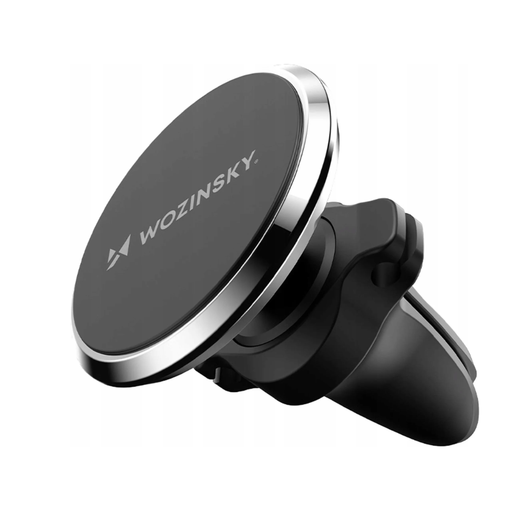
Why this product suits this profile: The air-vent attachment is ideal for commuters looking for a compact solution without a suction cup or adhesive pad. According to the product specifications, it is designed for smartphones measuring 3.5 to 6.5 inches and weighs 0.068 kg.
The stated device size makes the selection process clearer. Before buying, you should still check whether your vehicle’s air-vent slats can support the clip securely.
Air-vent mounting, a black housing and low weight. A metal plate is required for non-magnetic smartphones.
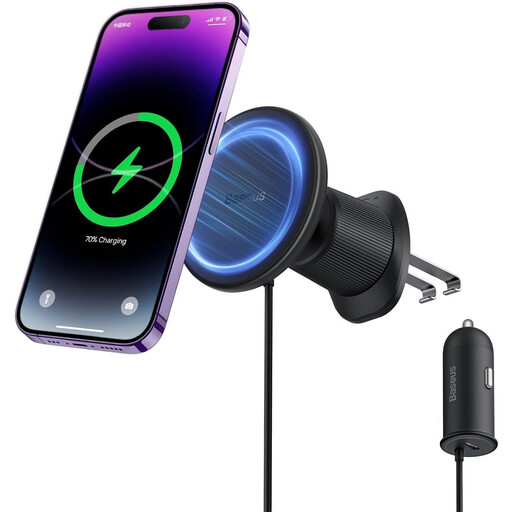
Why this product suits this profile: If you use navigation and want to power your smartphone at the same time, this product combines a magnetic mount with a car charger.
The product specifications distinguish between the charging outputs: up to 15 W through the magnetic charging surface and up to 25 W via USB-C. The actual output depends on the smartphone and power adapter.
Air-vent mount, USB-C cable and clearly specified charging outputs. Its intended use is particularly straightforward for MagSafe-compatible devices.

Why this product suits this profile: The combination of a suction cup, 360-degree ball head and two mounting locations is ideal for drivers who want to switch between the dashboard and windscreen.
The stated compatibility range of 4.0 to 7.0 inches narrows down the selection. Before every journey, check that the suction cup, locking mechanism and magnetic plate are securely attached.
74 mm suction cup, 360-degree adjustment and soft silicone padding according to the product description. A metal plate is provided for non-magnetic devices.
We have put together a complete, regularly updated list of products that fully meet these strict selection criteria and the safety regulations applicable in the EU.
That depends on the model and case. Many Android devices do not have an integrated magnetic ring. In this case, you will need a metal plate, a compatible magnetic ring or a MagSafe-compatible case. Before buying, you should also check whether the plate affects wireless charging.
Depending on the vehicle, suitable locations include a sturdy air vent, a level area on the dashboard or an appropriate section of the windscreen. The driver’s field of vision, airbag areas and controls must remain unobstructed. Avoid positioning the mount directly in front of safety-critical displays or within an airbag’s deployment area.
There is no standard service life that applies in every case. Grip and stability depend on the materials, temperature, vehicle vibrations and installation. Clean the contact surfaces, avoid excessive heat and replace the mount if you notice visible damage or a weakening connection.