
Lieferung heute & morgen

Qualitätsgarantie

Willkommens-Angebote freischalten: KOSTENLOSE Lieferung | Bis zu 80 % RABATT | Kostenlose 30-Tage-JoyPlus-Testphase
App herunterladen
As a Joybuy Product Recommendation Officer, I see how charging technology evolves daily. A magnetic charger promises convenience and a tidy setup—no more cable clutter, no more fumbling to plug in. But the market is flooded with products whose marketing claims often fall short in practice. Many users invest in solutions that quickly prove to be impractical or even harmful to their devices.
This guide will help you identify the crucial features. We'll show you how to avoid common pitfalls and find a charging solution that truly fits your daily life.
Before you make a decision, you should be aware of the typical problems that arise with low-quality products. These often lead to frustration and unnecessary expense.
To avoid these pitfalls, focus on objective, technical features. These three parameters are essential for a reliable and efficient charging experience.
The rating in watts (W) describes the maximum power output. However, the supported charging standard is more important.
Check carefully which devices the charging solution is designed for.
For a MagSafe power bank, the capacity in milliampere-hours (mAh) indicates how much energy it can store. Be realistic: due to energy loss during conversion, a 5,000 mAh power bank can typically only fully charge a modern smartphone (e.g., iPhone 15 Pro with approx. 3,274 mAh) about once.
Instead of making a one-size-fits-all recommendation, we have selected products tailored to specific use cases.
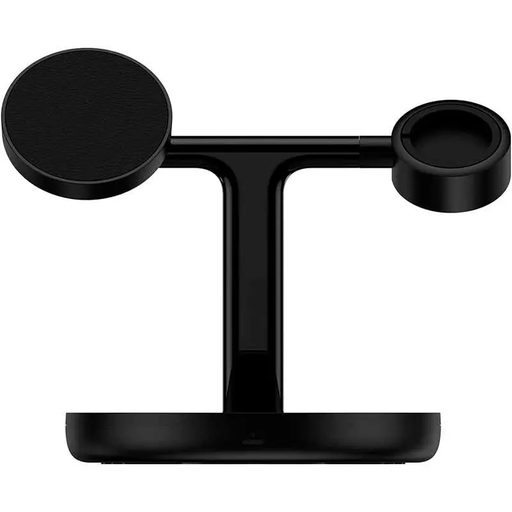
Why it's a good fit: Ideal for users who want to charge their MagSafe iPhone, Apple Watch, and AirPods in one central location. It tidies up your desk or nightstand and eliminates the hassle of fumbling with three separate cables.
The station is designed as a complete system. The integrated magnets are specifically calibrated for Apple devices, ensuring a stable connection and efficient charging, thus avoiding the weak magnet pitfall.
Charges three devices simultaneously with just one power adapter. The adjustable viewing angle for the iPhone is a practical bonus feature.
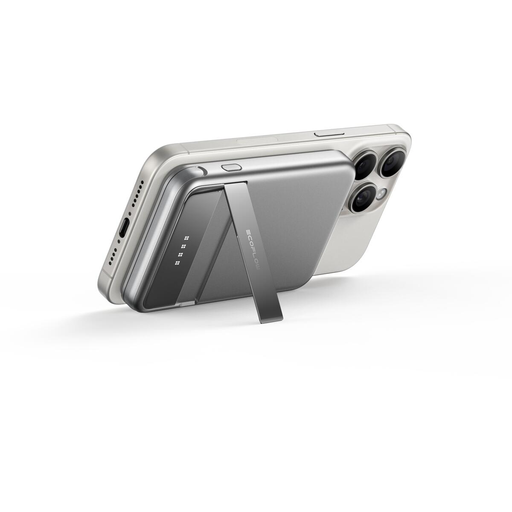
Why it's a good fit: This compact power bank is designed for mobile use. It's lightweight, attaches magnetically to your smartphone, and has an integrated USB-C cable, making it a self-contained companion for on the go.
The Qi2 certification guarantees strong magnetic alignment and optimized 15W charging efficiency. This prevents charging interruptions and excessive heat buildup—two common problems with non-certified magnetic power banks.
Combines 15W wireless Qi2 charging with 30W fast wired charging via the integrated cable. The built-in kickstand is handy for video calls or media viewing.
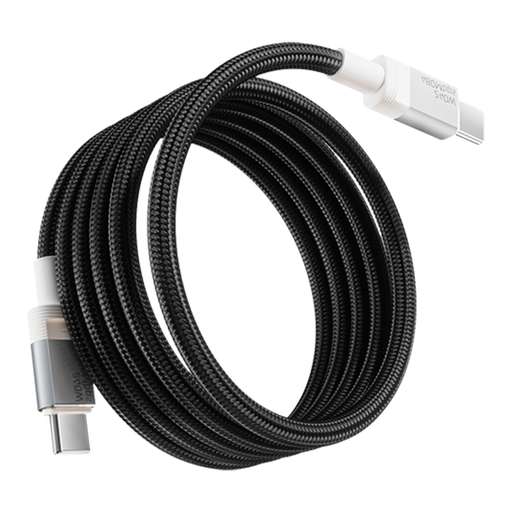
Why it's a good fit: For users who need maximum performance for their USB-C devices like laptops, tablets, and modern smartphones. The magnetic coiling system also keeps your bag and desk tidy.
This cable avoids the misleading power rating pitfall thanks to its integrated E-Marker Pro chip. This chip communicates with the power adapter and the device to safely and intelligently negotiate the charging power, delivering the advertised 240W under the right conditions.
Support for the PD3.1 standard up to 240W makes it future-proof and capable of charging even the most demanding laptops at maximum speed. The tangle-free design is an added convenience.
We have compiled a complete, up-to-date list of products that fully meet these strict selection criteria and safety regulations.
1. Is every magnetic charger compatible with MagSafe? No. "MagSafe" is a standard developed by Apple that uses magnets as well as special communication components for optimal charging performance. Many products are merely "magnetic," meaning they stick but don't offer full MagSafe functionality. For guaranteed compatibility and performance, look for products explicitly certified as "MagSafe-compatible" or compliant with the new Qi2 standard.
2. Does wireless charging reduce my battery's lifespan? Not necessarily. The critical factor for battery health is heat. Certified chargers (e.g., those compliant with the Qi or Qi2 standard) have built-in temperature monitoring systems to prevent overheating. However, using uncertified, cheap chargers that generate excessive heat can indeed shorten your battery's lifespan.
3. How much capacity (mAh) do I need in a power bank? That depends on your individual needs. A 5,000 mAh power bank is compact and generally sufficient for one full charge of most current smartphones. A 10,000 mAh model offers about two charges and strikes a good balance between capacity and portability for short trips. For longer journeys or for charging larger devices like tablets, capacities of 20,000 mAh and above are practical, but they are correspondingly larger and heavier.