
Lieferung heute & morgen

Qualitätsgarantie

Willkommens-Angebote freischalten: KOSTENLOSE Lieferung | Bis zu 80 % RABATT | Kostenlose 30-Tage-JoyPlus-Testphase
App herunterladen
A good magnetic car phone mount should be a discreet assistant, holding your smartphone securely in place for navigation or calls. For many drivers, however, the reality is different: the smartphone falls to the floor at the first pothole, the adhesive mount peels off the dashboard in the summer sun, or the advertised charging function barely maintains the battery level.
These are not isolated incidents but often the result of overlooked design flaws and exaggerated marketing claims. This guide focuses on the critical factors you should check before buying to find a reliable and durable solution for your vehicle. We'll highlight common pitfalls and explain which technical features truly matter.
Before choosing a model, it's helpful to know the typical weaknesses that often only become apparent after a few weeks of use.
To avoid these problems, you should carefully examine three core parameters: the mounting type, the magnet technology, and the specifications of any additional features.
The choice of mounting location depends on your car's cockpit layout and your personal preferences.
The type of magnetic connection is another important factor.
If you opt for a car mount with a charging function, two technical specifications are important:
Based on these criteria, we have identified a few models that are suitable for different user profiles and needs.
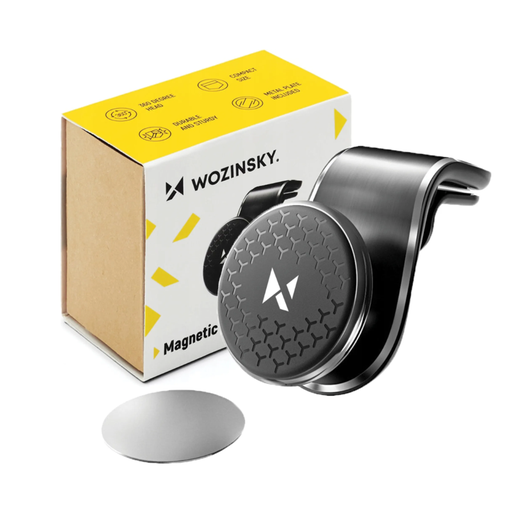
Why this model is a good fit: Ideal for drivers looking for a straightforward, reliable, and affordable solution. The focus is on the core function: securely holding the smartphone in the air vent without unnecessary extra features.
The model relies on the proven metal plate system. This provides reliable holding power and bypasses the problem of vague "super magnet" promises with a simple and effective mechanism.
The 360-degree rotation allows for flexible screen orientation. Installation is tool-free and completed in seconds.
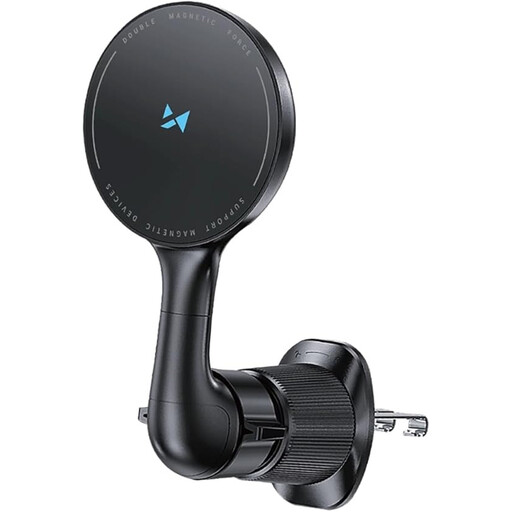
Why this model is a good fit: For users who want seamless integration with their modern smartphone (especially MagSafe-compatible iPhones) and efficient charging on the go.
This model addresses the overheating problem with active cooling. Furthermore, the charging power is clearly specified at 15W, which prevents inefficient charging. The use of 18 N52 magnets provides a concrete metric for its holding power.
Combines a strong, MagSafe-compatible hold with fast wireless charging and thoughtful heat management for consistent performance.

Why this model is a good fit: A great choice for vehicles where an air vent mount is not possible or desired (e.g., with round air vents). It offers flexible placement on the dashboard.
It addresses the "weak adhesive" weak point by being designed for flat surfaces and recommending a 24-hour curing time, which is crucial for a stable bond. The specification of eight built-in magnets provides a concrete metric for its holding power.
Flexible positioning on any suitable flat surface in the car, at home, or in the office. The compact design is discreet and doesn't disrupt the cockpit's aesthetic.
We have compiled a complete, up-to-date list of products that fully meet these strict selection criteria and local safety regulations.
The lifespan depends on the build quality. The magnets themselves (e.g., neodymium magnets) lose their strength very slowly over many years and are rarely the weak point. The mechanical parts are more prone to failure: the clamp for the air vent, the swivel joint, or the adhesive on a dashboard mount. A well-constructed mount made from durable materials like aluminium and robust ABS plastic can last for several years.
Modern smartphones are designed so that they are not affected by the small magnets in car mounts. Components like GPS, Wi-Fi, Bluetooth, and the battery are immune to these magnetic fields. Only the compass function might be temporarily inaccurate while the phone is on the mount. However, sensitive items like credit cards with magnetic strips should not be placed between the phone and the mount.
Yes, but only with a compatible case. For the magnetic connection to be strong enough, you need either a case that is specifically designed for MagSafe (with its own integrated magnets) or a very thin case (usually under 2 mm) that doesn't significantly weaken the magnetic force. For non-MagSafe phones, many magnetic mounts include a metal ring that can be attached to the outside of a standard case.