
Lieferung heute & morgen

Qualitätsgarantie

Willkommens-Angebote freischalten: KOSTENLOSE Lieferung | Bis zu 80 % RABATT | Kostenlose 30-Tage-JoyPlus-Testphase
App herunterladen
Magnetic tiles have become a staple in playrooms across the country. They foster creativity and an understanding of engineering, but the market can be overwhelming. Many parents invest in a set, only to find it gathering dust after a short time. Often, the problem isn't the child, but hidden flaws in the product. This guide highlights the most common pitfalls and explains the objective criteria you should look for to make an informed decision.
Before you buy a magnetic building set, you should be aware of the typical issues that can lead to frustration and safety concerns.
To avoid these pitfalls, focus on verifiable product features. These three parameters are crucial for safety, durability, and play value.
A high-quality construction toy for children must meet strict safety standards. Look for the following features:
The functionality of a set depends directly on its magnets and dimensions.
A good creative toy is more than just entertainment. Magnetic building sets are an ideal STEM toy, as they playfully promote skills in science, technology, engineering, and mathematics. Children develop an intuitive understanding of geometry, spatial reasoning, statics, and problem-solving skills. This makes them a valuable educational toy for ages 3 and up.
Here are some recommendations tailored to different needs and use cases.
Why it's a great fit: Ideal for getting started, as it includes themed animal elements alongside basic geometric shapes. This sparks the imagination and makes it easy to begin creating farm scenes.
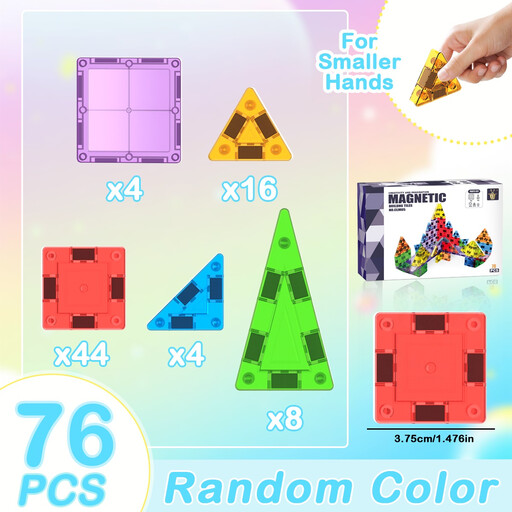
The set is made of non-toxic ABS plastic with ultrasonically sealed magnets. The 3.75 cm standard size ensures compatibility with other sets of this format for future expansions.
Combines free-form building with role-playing through animal motifs. The manufacturer states compliance with CPC and ASTM safety standards.
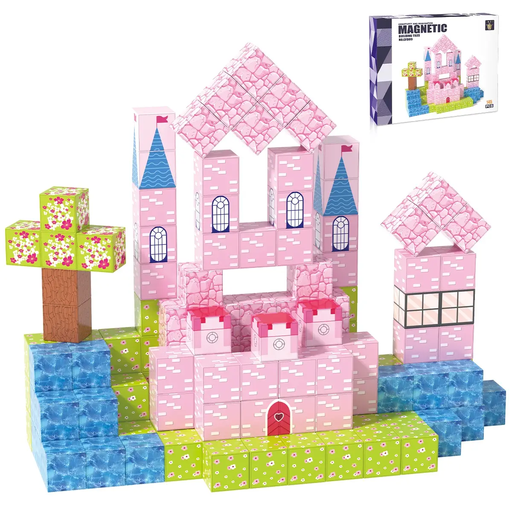
Why it's a great fit: With 145 pieces, including magnetic balls, this set is aimed at children who want to build large and complex structures. It provides enough material for ambitious projects.
The manufacturer states that it uses reinforced magnets for high stability. Ultrasonic welding secures the magnets inside. Compatibility is ensured with other 2.5 cm systems.
High piece count for large-scale building projects. The combination of tiles and balls allows for dynamic and flexible constructions.

Why it's a great fit: With its princess castle theme and large components, this set is specifically designed for imaginative role-playing. The large tiles are also easy for younger children to handle.
The large 7.5 cm tiles are a common standard and compatible with many other systems of this size. The manufacturer points to production from non-toxic ABS plastic and CPC/ASTM certification.
The large components allow for quick building success and stable structures, which is particularly motivating for children aged 3 and up. The clear theme specifically encourages storytelling.
We have compiled a complete, up-to-date list of products that fully meet these strict selection criteria and safety regulations.
At what age are magnetic tiles suitable? Most manufacturers recommend their products for children ages 3 and up. They are generally not suitable for children under 36 months due to small parts that can pose a choking hazard. It is important to follow the manufacturer's age recommendation and always supervise younger children during play.
Are magnetic tiles from different brands compatible with each other? Not necessarily. Compatibility primarily depends on the size of the tiles. Many brands adhere to common standard sizes (e.g., squares with 7.5 cm or 5.5 cm edge lengths). Before buying an expansion set, always check the exact dimensions in the product description to ensure the pieces will fit together.
How do you clean a magnetic building set properly? To clean the tiles, simply wipe them with a soft, slightly damp cloth. Avoid full immersion in water or using harsh cleaning agents, as moisture can damage the internal magnets and lead to rust. Allow the pieces to air-dry after cleaning.