
Lieferung heute & morgen

Qualitätsgarantie

Willkommens-Angebote freischalten: KOSTENLOSE Lieferung | Bis zu 80 % RABATT | Kostenlose 30-Tage-JoyPlus-Testphase
App herunterladen
Magnetic tiles are more than just a toy. They are a tool that fosters creativity, spatial reasoning, and fundamental STEM (Science, Technology, Engineering, and Mathematics) skills. However, the market is flooded with options, and not all of them live up to their promises. The wrong purchase often leads to frustration for children and safety concerns for parents.
As your Joybuy Product Recommendation Officer, I'll help you identify the common pitfalls and make an informed choice. This guide focuses on the objective criteria that truly matter.
Before we dive into the features of a great set, it's important to understand the most prevalent issues that can lead to disappointment.
To avoid these traps, you should focus on three central parameters. These define the safety, play value, and longevity of magnetic construction toys.
A high-quality STEM toy must, above all, be safe. Look for products made from ABS plastic. This material is robust, shatterproof, and free of harmful substances. The manufacturing process is crucial: the magnets must be firmly and permanently sealed inside the plastic tiles using ultrasonic welding. This prevents them from coming loose, even during intense play. Products that meet standards like EN 71 (European Standard for Toy Safety) offer a reliable benchmark.
The magnetic pull determines the stability of the structures. Strong magnets allow for taller and more complex creations. Equally important is the size of the magnetic building tiles. Larger tiles (e.g., 7.5 cm) are often easier for younger children to grasp and allow for the rapid construction of large surfaces. Smaller tiles (e.g., 3.75 cm or 5.5 cm) are suitable for older children to build more detailed and intricate models, further training their fine motor skills.
Not every magnetic toy for kids is the same. The main types are:
Before buying, check if a set is compatible with any building blocks you already own. Many manufacturers use standard sizes, which allows for expanding existing collections.
Here are some recommendations tailored to different needs and user profiles.

Why This Fits Their Persona: With 40 pieces, this set offers an ideal entry into the world of magnetic tiles without breaking the bank. It's perfect for testing a child's interest and gathering initial building experiences.
The set consists exclusively of magnetic components, avoiding the trap of a misleading piece count. According to the manufacturer, the magnets are securely sealed within the ABS plastic.
The standard 7.5 cm size ensures compatibility with many other sets, making future expansions easy. The diamond surface provides an appealing visual texture.
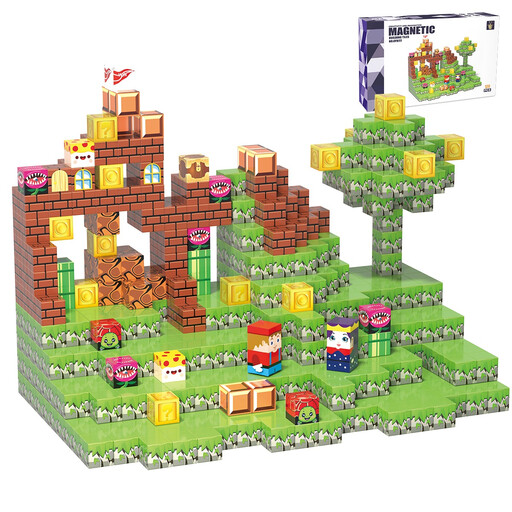
Why This Fits Their Persona: With 120 pieces, including magnetic balls as flexible connectors, this set is aimed at advanced builders who want to create complex and dynamic structures.
The combination of tiles and balls bypasses the problem of unstable builds, as the balls act as joints and improve structural integrity. This counteracts the frustration caused by weak magnetic connections.
Its high versatility promotes an understanding of advanced STEM concepts like joints, movement, and statics. The set provides long-lasting play appeal for ambitious projects.
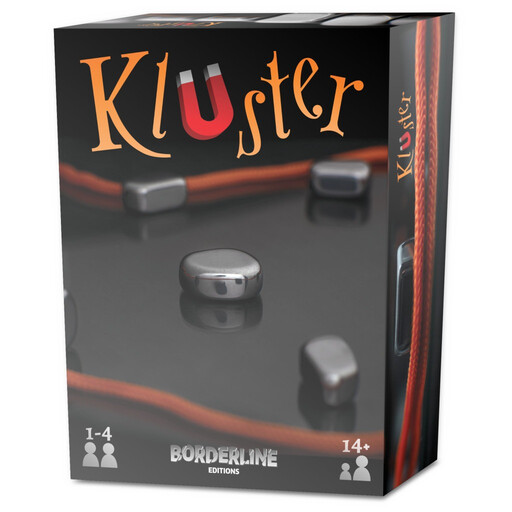
Why This Fits Their Persona: Kluster is not a building toy, but a fast-paced, strategic dexterity game for up to four players. It's an excellent choice for teens and adults looking for a fun and engaging activity for game nights.
Since it's not a construction toy, pitfalls like unstable builds are irrelevant. The focus is on the quality and strength of the magnetic stones, which are crucial for the suspenseful gameplay.
Simple rules, quick rounds (approx. 10 minutes), and high portability make it an easy-to-bring-along companion. It promotes concentration, dexterity, and tactical thinking.
We have compiled a complete, up-to-date list of products that fully meet these strict selection criteria and German safety regulations.
1. From what age are magnetic building blocks suitable? Most manufacturers recommend their products for children ages 3 and up. This is mainly due to small parts that could pose a choking hazard for younger children. These toys are not suitable for children under 36 months. When used by three-year-olds, adult supervision is recommended to ensure that the pieces are not put in their mouths.
2. How do you clean magnetic building blocks properly? Clean the surface of the blocks with a slightly damp cloth. Never fully submerge the tiles in water or use harsh cleaning agents, as this can damage the magnets inside or attack the plastic. After cleaning, the parts should be left to air dry completely.
3. Are magnetic building blocks from different brands compatible with each other? Compatibility depends on the size and shape of the tiles. Many brands use standard dimensions like 7.5 cm or 3.75 cm for the edge length of their squares. Sets with the same dimensions are often compatible with each other, allowing for cost-effective expansion. However, there is no guarantee, as magnet arrangement and strength can vary. It is advisable to check this before purchasing if you plan to expand your collection.