
Lieferung heute & morgen

Qualitätsgarantie

Willkommens-Angebote freischalten: KOSTENLOSE Lieferung | Bis zu 80 % RABATT | Kostenlose 30-Tage-JoyPlus-Testphase
App herunterladen
Magnetic tiles have become a staple in children's playrooms. They foster creativity, spatial reasoning, and foundational engineering skills. However, the market is crowded, and not every set delivers on its promise. As a Joybuy Product Recommendation Officer, I'm here to analyse what truly matters, ensuring the joy of building lasts and helping you make an informed purchasing decision.
Many parents invest in a supposedly large set, only to find their children frustrated or the toy gathering dust in a corner shortly after. This is often due to three common problems that can be avoided with a closer look.
To avoid these pitfalls, you should check three key aspects before buying. These features separate durable, safe construction toys from short-lived trinkets.
Your child's safety is the top priority. The material of choice for durable magnetic tiles is ABS plastic. This material is robust, impact-resistant, and free of harmful plasticisers.
However, the crucial detail is how the tiles are assembled. Look for the term "ultrasonically welded". In this process, the two halves of the plastic tile are fused together permanently using high-frequency vibrations. This ensures the magnets are securely encapsulated inside and cannot fall out, even during intense play. Products that comply with the European toy safety standard EN 71 offer a reliable benchmark.
The strength of the magnets determines how complex and stable the structures can be. Strong neodymium magnets are the standard for good magnetic toys. They allow children to let their imagination run wild without their creations collapsing at the slightest touch.
Also, pay attention to the size of the tiles. Many sets are based on a standard square size of 7.5 cm. This has the advantage that sets from different manufacturers are potentially compatible with each other, making future expansions easier. Smaller formats or special pixel blocks offer other creative possibilities but are often a closed system.
A good set of magnetic building blocks is more than just a toy—it's a tool for STEM development. Consider which skills you want to encourage:
Instead of making a one-size-fits-all recommendation, we've selected products that suit different needs and budgets.
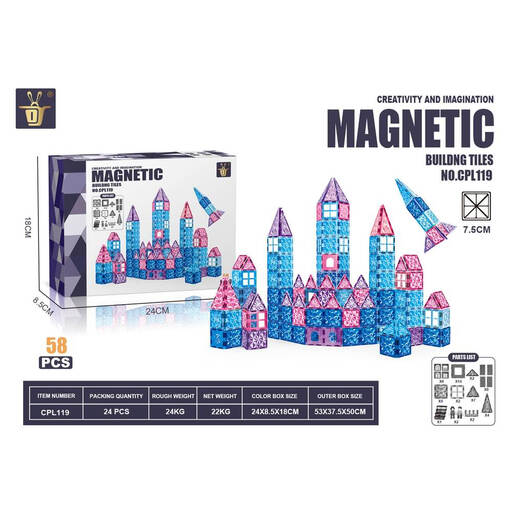
Why it's a great fit: With 58 pieces, this set provides a solid foundation for first building projects. It's ideal for learning the principles of magnetic construction without a huge initial investment. The included storage bag is handy for everyday family cleanup.
According to the manufacturer, the magnets are securely sealed in the ABS plastic using ultrasonic welding technology. The piece count focuses on essential building shapes, avoiding unnecessary filler pieces.
The large 7.5 cm tile size is easy for small hands to grip. The diamond-patterned surface provides an interesting look and tactile feel.
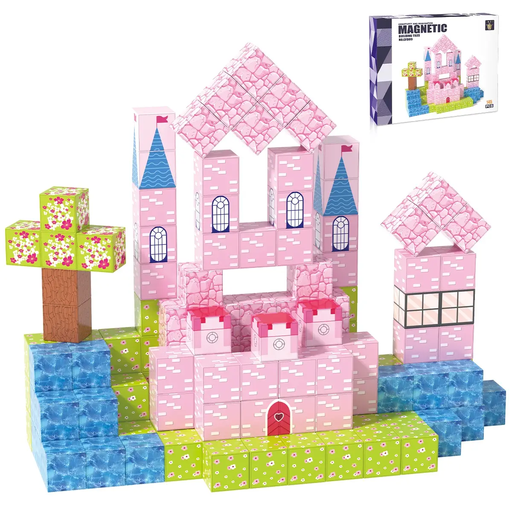
Why it's a great fit: For children who already have experience with magnetic tiles and are looking for a new challenge. The combination of classic tiles and magnetic balls allows for building marble runs and dynamic structures, significantly enhancing the play value.
The high piece count of 145 offers real added value through its variety of elements (balls, tiles). The manufacturer specifies reinforced magnets for stable connections and secure ultrasonic welding.
Enables the construction of marble runs, adding a dynamic component to static building. It promotes an understanding of cause and effect.
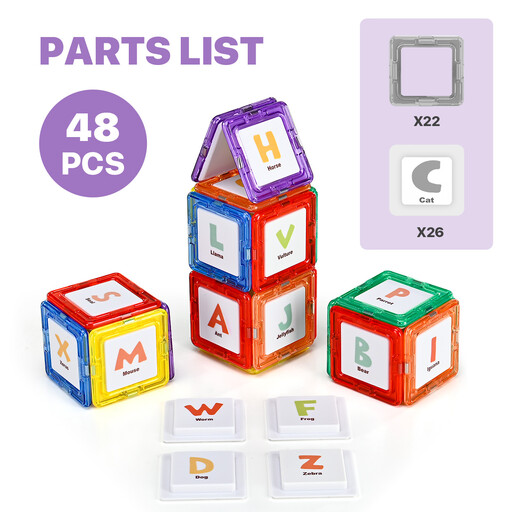
Why it's a great fit: This set is specifically designed for parents and educators who prioritise playful learning. It directly combines the fun of magnetic construction with letter recognition and naming—a classic example of a well-designed STEM toy.
The value of this set lies not in its sheer quantity but in its specific educational function. It is made from safe ABS material, and according to the manufacturer, its strong magnets ensure stable constructions.
Combines building with letter learning. It playfully promotes early literacy skills.
We have compiled a complete, up-to-date list of products that meet these strict selection criteria and UK/EU safety regulations.
Most manufacturers recommend their products for children aged 3 and up. This age recommendation is primarily for safety reasons (choking hazard from small parts if a tile were to break). However, even younger children can lay out simple 2D shapes on the floor under supervision. Building complex 3D structures, which requires spatial reasoning, usually begins around the age of 4 to 5.
Clean the tiles exclusively with a slightly damp cloth. Never fully submerge them in water or wash them in the dishwasher. Water can seep inside the tiles and cause the magnets to rust, making them lose their strength. Harsh cleaning agents can also damage the plastic.