
Lieferung heute & morgen

Qualitätsgarantie

Willkommens-Angebote freischalten: KOSTENLOSE Lieferung | Bis zu 80 % RABATT | Kostenlose 30-Tage-JoyPlus-Testphase
App herunterladen
Magnetic tiles have become a staple in many playrooms. They promote creativity, spatial reasoning, and fine motor skills. However, the market can be overwhelming, and not every set delivers on its promise. As a Joybuy Product Recommendation Officer, I'll help you navigate the common pitfalls and choose a durable, safe, and educationally valuable magnetic toy for children.
Many parents report three key problems after their purchase:
This guide will show you which objective criteria to look for to make an informed decision.
To avoid disappointment, you should check three technical aspects before buying. These define the quality, safety, and long-term play value of a magnetic tile set.
The choice of material is crucial for durability and safety. Look for products made from ABS plastic. This material is known for its robustness, impact resistance, and health safety. It is free of harmful plasticisers and more resistant to breakage than cheaper types of plastic.
Another important detail is the finish of the edges and how the magnets are sealed. High-quality magnetic building plates are sealed using an ultrasonic welding process. This technique ensures that the magnets are firmly and securely enclosed within the plastic casing and cannot come loose, even with intensive use. Smooth, burr-free edges also minimise the risk of injury.
The stability of a structure depends directly on the strength of the magnets used. Manufacturers of high-quality sets use reinforced magnets that ensure a reliable hold. This allows for taller and more complex constructions to be built without them collapsing immediately.
Compatibility between different sets is another important point, especially if you want to expand an existing collection. Most manufacturers adhere to standard sizes. Common formats for square tiles, for example, are 7.5 cm or 3.75 cm. Check the dimensions in the product description to ensure that new sets will fit with ones you already own.
A safe construction toy must comply with legal standards. In Europe, the EN 71 toy safety standard is key. Certifications like CPC or ASTM are also indicators of tested safety. These standards ensure that the product has been tested for harmful chemicals and mechanical hazards.
Always pay attention to the manufacturer's age recommendation. Magnetic tiles are generally classified as a STEM toy for ages 3 and up. The reason for this is the danger posed by small parts that can be swallowed. The warning "CAUTION: Contains small magnets" is required by law and should be taken seriously. If multiple magnets are swallowed, there is a serious medical risk. Adult supervision is therefore recommended, especially for younger children.
Based on the quality criteria mentioned, we have compiled a few products for different user profiles.

Why It's a Match: Ideal for a first introduction to magnetic construction toys. The manageable number of pieces isn't overwhelming, and the sturdy tin box makes it the perfect companion for on-the-go, whether in the car or at a restaurant.
The set is made from safe ABS plastic, and the magnets are securely enclosed. The piece count is transparent and focuses on the essentials, without unnecessary filler elements.
The included tin box serves as both durable packaging and a practical storage solution, which minimises the loss of pieces.
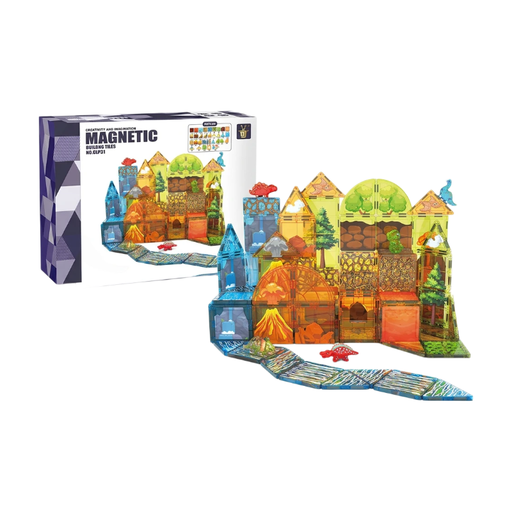
Why It's a Match: Perfect as a gift for children fascinated by dinosaurs. The thematic design specifically sparks the imagination and inspires role-playing in prehistoric worlds, making it an ideal educational toy.
Despite the themed printing, this set makes no compromises on quality. It uses certified, non-toxic ABS plastic and strong magnets that keep even themed structures stable.
The 7.5 cm tiles are compatible with other common systems of this size, and the set includes an idea booklet to help get started in the world of dinosaurs.
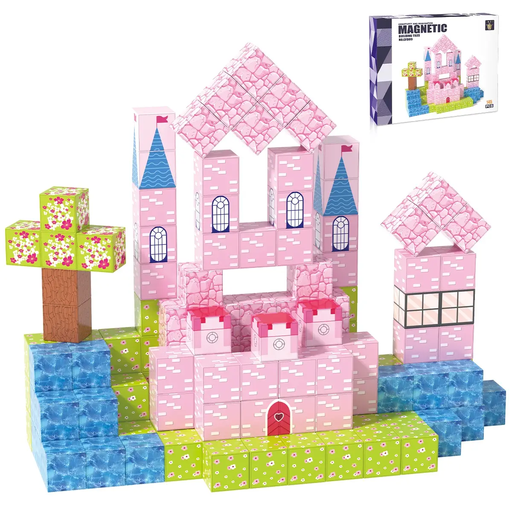
Why It's a Match: For children who are growing beyond simple towers. The large number of pieces combined with magnetic balls opens up entirely new construction possibilities, such as moving joints or complex geometric shapes.
This set relies on reinforced magnets to ensure the stability of the dynamic structures made possible by the balls. All parts are certified to CPC/ASTM standards and are safely manufactured.
The combination of classic magnetic tiles and magnetic balls playfully promotes an understanding of advanced principles of physics and engineering.
We have compiled a complete, up-to-date list of products that fully meet these strict selection criteria and German safety regulations.
Compatibility mainly depends on the size of the tiles. Many manufacturers produce tiles in standard sizes like 7.5 cm x 7.5 cm or 3.75 cm x 3.75 cm for squares. Sets with the same tile size are generally compatible with each other, even if they are from different brands. It is advisable to check the product description carefully to compare the dimensions.
To clean the tiles, they should only be wiped with a soft, slightly damp cloth. Avoid full immersion in water or the use of harsh cleaning agents, as moisture can penetrate the inside of the tiles and damage the magnets or cause them to rust. After cleaning, the parts should be left to air dry completely.
Most manufacturers recommend their magnetic tiles for children aged 3 and up. This age recommendation is based on safety considerations, as the sets may contain small parts that pose a choking hazard for younger children. Additionally, the tiles contain strong magnets. Handling them responsibly requires a certain level of maturity, which is why playing under adult supervision is generally recommended, especially for children between the ages of 3 and 4.