
Lieferung heute & morgen

Qualitätsgarantie

Willkommens-Angebote freischalten: KOSTENLOSE Lieferung | Bis zu 80 % RABATT | Kostenlose 30-Tage-JoyPlus-Testphase
App herunterladen
A magnetic wireless car mount can combine navigation, hands-free calling and smartphone charging in one convenient solution. In practice, however, everyday usability depends less on marketing claims and more on three key factors: a reliable magnetic connection, sufficient power delivery and a mounting method that suits your vehicle.
If you only look for “15 W” or “MagSafe-compatible”, you can easily overlook important details. The following advice will help you choose a magnetic phone holder for the car with confidence and avoid costly mistakes.
A 15W wireless car charger only delivers its maximum power when the smartphone, charger, cable and vehicle socket all support it together. On some devices, the charging speed may be lower. A weak USB port or an unsuitable 12-volt adapter can also limit performance.
So check the following:
iPhones with built-in MagSafe can attach directly to compatible mounts. Many Android smartphones and older iPhones, however, require a magnetic ring or a compatible case. Thick, heavily textured or non-magnetic cases can weaken the connection and increase the distance to the charging coil.
With a Qi car charger, wireless charging only works when the coils are correctly aligned. A magnet may hold the device in place, but it doesn’t replace Qi compatibility.
A phone holder for the air vent is space-saving, but it doesn’t suit every type of vent slat. Round, very short or unstable slats can be problematic. What’s more, a heavy smartphone can pull the air vent downwards.
A phone holder for the dashboard or windscreen often offers more mounting flexibility. Suction cups, however, need a clean, smooth surface. On some models, you also need to tighten a locking lever or dial to reduce vibration.
Look for specific details about the magnet system, if the manufacturer provides them. The Wozinsky WCT5-6S2Y, for example, features 18 N52 magnets, while the Wozinsky WCZ2Y2S has 20 N52 magnets. These figures offer an objective comparison point, but they don’t guarantee a specific holding force independently of your smartphone.
Also crucial are:
Qi is the standard for inductive charging. The actual charging speed depends on the device and the power source. Qi2 uses a magnetic alignment system that can make positioning easier. A Qi2 car mount isn’t automatically equally usable with every Android device or every magnetic case.
MagSafe is Apple’s magnetic technology. With Android devices, you’ll often need a case with a magnetic ring or the supplied metal ring. Check before buying whether the ring can be attached to your case and whether it will affect wireless charging.
A 360-degree adjustment makes it easier to use your phone in portrait or landscape mode. However, the screen must never obstruct your view, controls or airbag zones. Always adjust the mount before you start driving.
For the power supply: a USB-C cable alone won’t increase charging speed. The car adapter must deliver the required output. Safety features such as overcurrent, overvoltage, short-circuit and over-temperature protection are worthwhile additions. If you notice unusual heat, stop charging and investigate the cause.
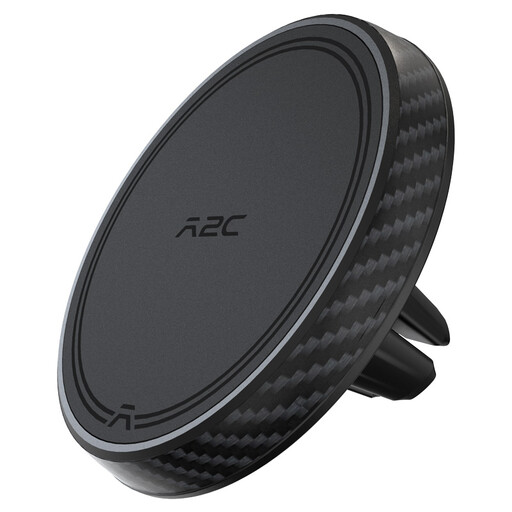
Why this product suits the profile: The mount is designed for smartphones from 4.0 to 7.2 inches and can be fitted to standard air vents as well as smooth dashboard or windscreen surfaces.
The instructions highlight the need to clean the surface and tighten the locking knob before mounting. Check magnetic and Qi support before purchase.
Wide size range and flexible mounting on air vent, dashboard or windscreen.
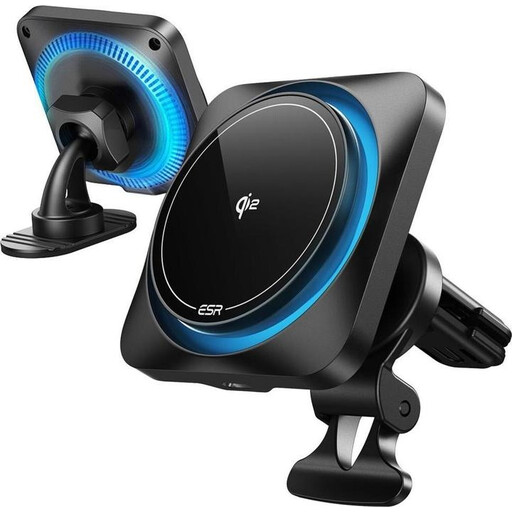
Why this product suits the profile: According to the product specifications, this model supports Qi2 at 15 W and comes with adapters for both air vent and dashboard mounting.
The Qi2 alignment reduces the risk of incorrect positioning. Do not cover the cooling surface to ensure the intended function works properly.
Qi2 support, MagSafe compatibility and two mounting options; USB-C cable is listed as included.
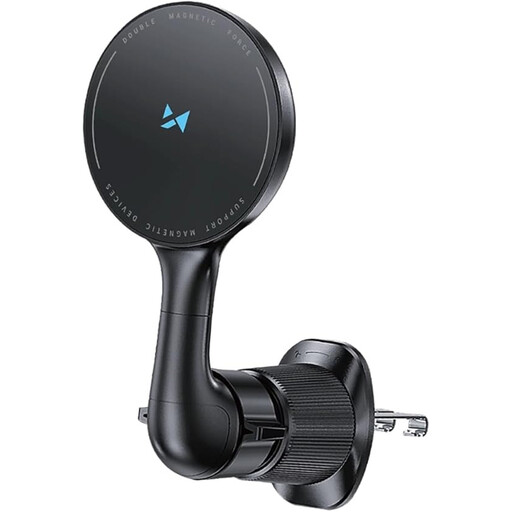
Why this product suits the profile: For regular journeys with a Qi-enabled smartphone, this model offers air vent mounting, 360-degree adjustment and a stated charging power of up to 15 W.
The product specifications mention Qi compatibility, an included magnetic ring and a USB-C port. This allows you to check compatibility and alignment questions in advance.
18 stated N52 magnets, 360-degree joint and support for MagSafe-compatible devices as well as Qi smartphones with a ring.
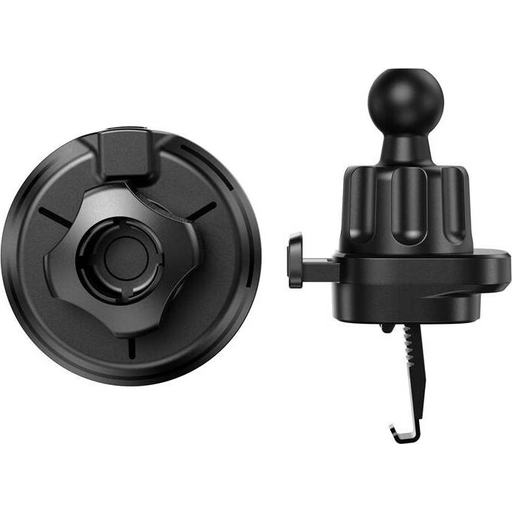
Why this product suits the profile: The mount combines Qi2, 15 W, N55 neodymium magnets and a 360-degree rotation for use on the air vent.
The specifications explicitly state a recommended power supply of at least 15 W and advise checking the air vent before mounting.
Qi2 certification claim, N55 magnets, USB-C port and portrait as well as landscape orientation thanks to 360-degree adjustment.
We’ve put together a complete, regularly updated list of products that fully meet these strict selection criteria and the safety regulations in force in the EU.
It depends on the smartphone and the case. Qi-enabled Android devices can charge wirelessly, but for magnetic attachment they often need a MagSafe-compatible case or a suitable magnetic ring. Check the specifications of your particular model before buying.
There’s no fixed lifespan. Dust, heat, direct sunlight, frequent removal and the weight of your smartphone all affect durability. Clean contact surfaces regularly and check the clip, suction cup, joint and cable for wear.
There are no separate fees for charging itself. The vehicle supplies the power via USB or the 12-volt socket. Additional costs may arise if you need a suitable car adapter, a USB-C cable or a magnetic case.