
Lieferung heute & morgen

Qualitätsgarantie

Willkommens-Angebote freischalten: KOSTENLOSE Lieferung | Bis zu 80 % RABATT | Kostenlose 30-Tage-JoyPlus-Testphase
App herunterladen
A MagSafe car mount promises a streamlined solution: just dock your smartphone, let it charge, and drive away. In practice, however, many models turn out to be a poor investment. Weak magnets, slow charging speeds, and wobbly mounts are common frustrations. This guide highlights the technical details that truly matter and shows you how to find a mount that performs reliably in your daily routine.
Many products overpromise and underdeliver. Watch out for these three common pitfalls to avoid disappointment:
To make an informed decision, you should check three core technical features. These define the performance and reliability of a MagSafe car charger mount.
The maximum charging speed for iPhones via MagSafe is 15 watts. To reach this speed, the mount must support this standard. Also, look for the new Qi2 standard. A Qi2 car mount uses the "Magnetic Power Profile" (MPP), which is based on MagSafe technology and ensures optimized power transfer and perfect magnetic alignment. The power source is also critical: for an in-car wireless charging mount to deliver 15 watts, it almost always requires a car charging adapter with USB-C Power Delivery (PD) and an output of at least 20 watts.
The most common and often most practical option is the air vent phone mount. However, there are significant differences in quality. Models with an adjustable hook that tightens behind an air vent blade offer far more stability than simple clamps. Alternatives include dashboard or windshield mounts that attach with a suction cup. These often offer more flexible positioning but can lose their grip in direct sunlight or on textured surfaces.
A good magnetic car phone mount uses strong magnets, often specified as N52 or N55 magnets, to guarantee a secure hold. The magnet array must precisely match the MagSafe standard so the iPhone automatically snaps into the optimal position for wireless charging. For non-MagSafe smartphones or when using incompatible cases, some manufacturers include a metal ring that can be adhered to the case.
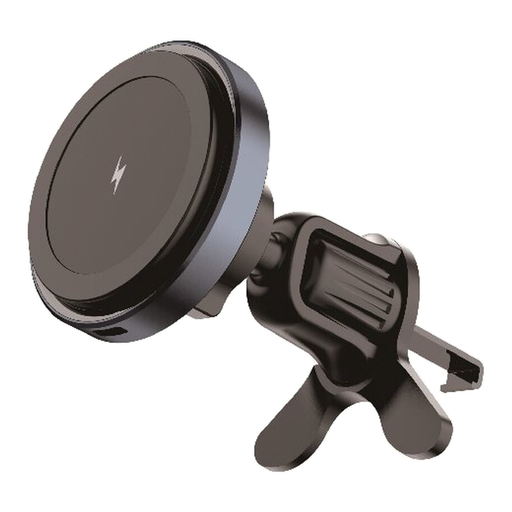
Why This Fits Their Persona: Ideal for drivers looking for a functional and straightforward solution. This model focuses on the core features—a magnetic hold and 15W charging capability—without costly extra frills.
It clearly states a maximum charging power of 15 watts, avoiding the trap of misleading "fast charge" promises with low wattage. The air vent clamp is designed for standard blades.
Supports up to 15W charging (requires a compatible adapter). The 360° ball joint allows for flexible smartphone orientation in portrait or landscape mode.
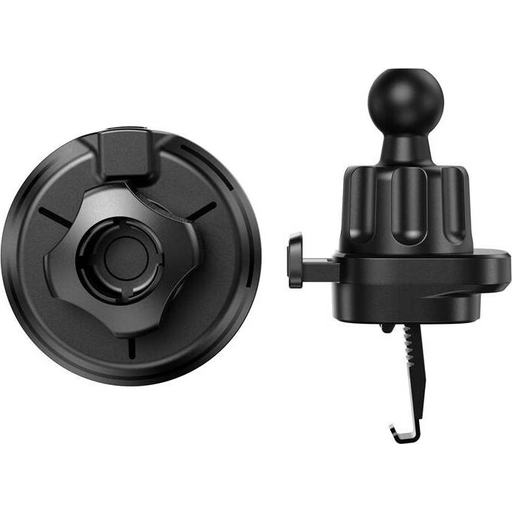
Why This Fits Their Persona: Perfect for users who value the latest technology standards. Its Qi2 certification ensures future-proof compatibility and optimized charging efficiency for the newest generations of smartphones.
The official Qi2 certification guarantees a 15-watt charging output. Its use of strong N55 neodymium magnets addresses the problem of weak mounts and ensures a firm hold.
Certified Qi2 standard for maximum efficiency and compatibility. Strong N55 magnets provide a superior grip, even during dynamic driving.
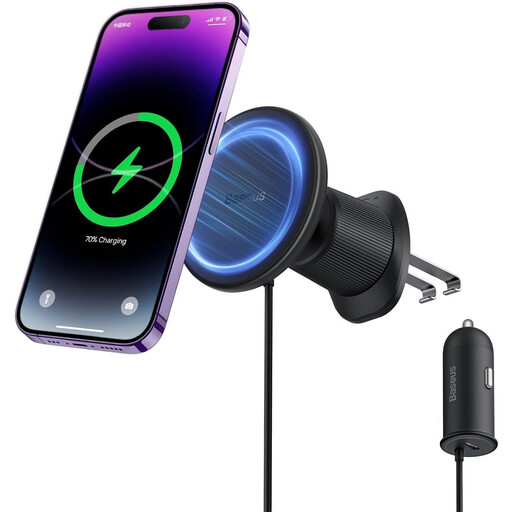
Why This Fits Their Persona: An all-in-one solution for heavy users who prioritize reliability and convenience. Since the required car charging adapter is included in the box, compatibility issues and performance drops are eliminated from the start.
It solves the problem of an inadequate power supply by including a powerful 40W adapter (15W magnetic + 25W USB-C). This ensures the promised 15W charging speed is actually achieved in practice.
All-in-one package includes a powerful car charging adapter. An additional 25W USB-C port allows for charging a second device.
We have compiled a complete, real-time updated list of products that fully meet these strict selection criteria and safety regulations.
Yes, but only with a compatible case. The mount works reliably with official Apple MagSafe cases or third-party cases that also feature a built-in magnetic ring. With standard, non-magnetic cases, the hold is usually too weak to keep the phone secure while driving.
With improper installation or low-quality models, this is a risk. Look for mounts with a rubberized or silicone-coated clamping mechanism to prevent scratches. Models with a hook that braces against the back of a vent blade distribute weight more evenly and reduce the strain on a single blade.
Yes, in most cases, a separate car charging adapter is required. To achieve the full 15 watts of charging power, you need an adapter that supports Power Delivery (PD) via a USB-C port and provides at least 20 watts of output. The standard USB-A port found in many vehicles does not supply enough power.