
Lieferung heute & morgen

Qualitätsgarantie

Willkommens-Angebote freischalten: KOSTENLOSE Lieferung | Bis zu 80 % RABATT | Kostenlose 30-Tage-JoyPlus-Testphase
App herunterladen
A high-quality MagSafe car mount promises a clean and secure solution for holding your smartphone and charging it wirelessly while you drive. But the market is flooded with products whose real-world performance often fails to live up to their promises. Many drivers invest in a mount, only to find it unreliable after a short time. Before you make a decision, it's crucial to understand the most common pitfalls.
The 3 Most Common Problems with Low-Cost Car Mounts:
To make an informed decision, you should check three core technical aspects. These are crucial in determining the functionality and longevity of your wireless charging car mount.
The charging function is more than just a marketing buzzword. The actual speed depends on the supported standard.
The mounting method affects both the stability and the positioning of the smartphone in your line of sight.
A simple magnetic car mount is not enough. The strength and arrangement of the magnets are crucial for the grip and charging efficiency. Products that explicitly state the use of N52 magnets or stronger N55 magnets typically offer a more reliable hold. For mounts with MagSafe or Qi2 compatibility, the integrated magnetic ring automatically ensures correct alignment and a stable connection.
Based on these criteria, we have identified a few models that are particularly well-suited for different user profiles.
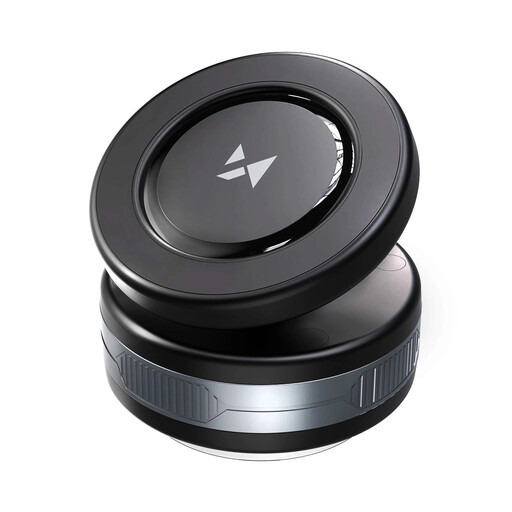
Why this model is a good fit: Ideal for users who want a mount not just for the car, but also for flexible use in other places like a desk or on smooth surfaces at home. The suction cup enables versatile use beyond the vehicle.
Counteracts the "unstable mounting" problem by using a robust suction cup that adheres to various smooth surfaces and isn't limited to a specific type of air vent.
Versatile mounting options for car and home; Strong N52 magnet system for a secure hold.
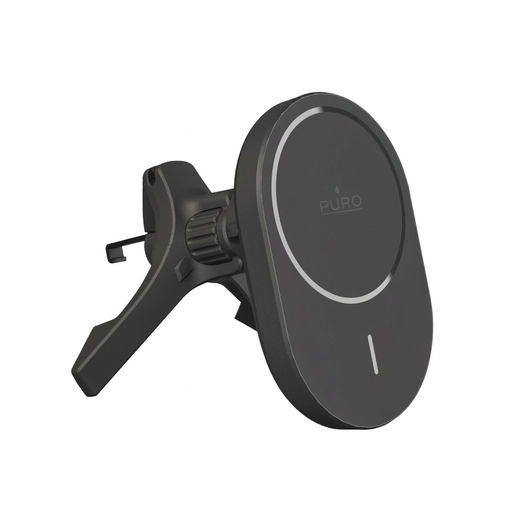
Why this model is a good fit: A modern and reliable solution for the daily commute. It focuses on the essential features: a secure grip on the air vent and efficient charging, thanks to the future-proof Qi2 standard.
Addresses the "insufficient charging power" problem by supporting the efficient 15W Qi2 standard. This ensures the smartphone is actively charged even while using navigation.
Qi2 certification for optimal charging efficiency and magnetic alignment; Stable, adjustable mount for various air vents.
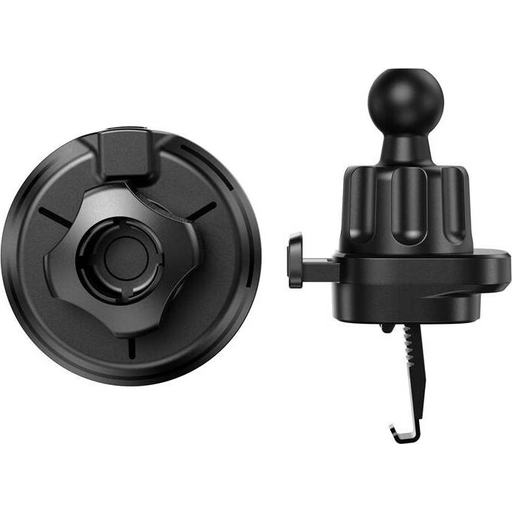
Why this model is a good fit: Offers the latest technology with the Qi2 standard and extra-strong N55 magnets. A great choice for users who value maximum performance and the strongest grip for their high-end smartphone.
Solves the "weak magnetic force" problem by explicitly using powerful N55 neodymium magnets, which, according to the manufacturer, ensure a secure hold even during dynamic driving.
Qi2-certified with 15W charging power; Extra-strong N55 magnets for maximum device grip.
We have compiled a complete, up-to-date list of products that fully meet these strict selection criteria and all relevant safety standards.
Yes, but the magnetic grip works best only with a special MagSafe-compatible case. With very thin standard cases (under 2 mm), the grip may also be sufficient, but charging efficiency could be compromised. For non-MagSafe smartphones or when using thicker cases, many manufacturers include a metal ring that can be attached to the back of the case to establish compatibility.
Yes, in most cases, this is necessary. To achieve the full charging power of 15 watts, you need a car charger adapter (for the cigarette lighter socket) that supports a fast-charging standard like Power Delivery (PD) or Quick Charge (QC) 3.0 with an output of at least 20 watts. The USB cable supplied with the mount is usually sufficient, but the power source is the deciding factor.
No, the magnets used in modern car mounts are designed and positioned so they do not interfere with the smartphone's electronics, GPS reception, or mobile signal. However, you should not place magnetically sensitive items like credit cards with magnetic strips or hotel key cards between your smartphone and the mount.