
Lieferung heute & morgen

Qualitätsgarantie

Willkommens-Angebote freischalten: KOSTENLOSE Lieferung | Bis zu 80 % RABATT | Kostenlose 30-Tage-JoyPlus-Testphase
App herunterladen
A MagSafe car mount promises an elegant solution: dock your smartphone, start navigation, and the device charges wirelessly. In practice, however, three subtle flaws often lead to frustration and a useless product. Before you make a decision, it's crucial to understand the typical weaknesses that manufacturers rarely mention.
As a Joybuy Product Recommendation Officer, I analyze product data daily to provide you with objective decision-making tools. This guide will show you what to look for to find a functional and durable mount that can handle the daily demands of in-car use.
Many products look convincing at first glance but only reveal their weaknesses with use. These three issues are the most common reasons for a bad purchase:
To avoid these pitfalls, you should check three technical features before buying. These define the performance and reliability of a magnetic car phone mount.
The sheer number of magnets is less telling than their type and arrangement. Look for products that explicitly mention N52 or N55 magnets. These are among the strongest neodymium magnets and offer superior holding power. A true MagSafe car mount features a specific magnetic ring that ensures perfect alignment with iPhone 12 series and newer models. For Android devices or older iPhones, an included metal ring is a good solution to establish compatibility with an inductive charging car mount.
For an efficient car phone mount with charging, a charging speed of 15W is a good benchmark. However, check the product description carefully: What input power (Volts/Amps) is required to achieve this speed? A 15W wireless car charger typically requires a car adapter that supports Power Delivery (PD) or Quick Charge (QC) 3.0 with at least 18W of output. Without this adapter, the mount will only charge your smartphone at 5W or 7.5W, significantly slowing down wireless charging in the car.
The choice of mount depends on your vehicle and personal preferences.
Based on these objective criteria, we have identified several models that offer a well-designed solution for specific user profiles.
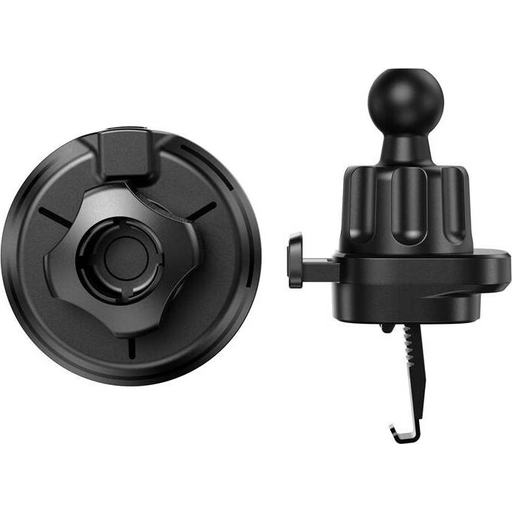
Why This Fits Their Persona: Ideal for the daily commute. This mount focuses on the essentials: a reliable hold and efficient charging. The Qi2 certification ensures optimized charging performance and compatibility with future devices.
The use of N55 neodymium magnets ensures a very strong hold, minimizing the risk of the smartphone falling. The Qi2 certification guarantees standardized and efficient 15W charging, provided a compatible adapter is used.
Future-proof with Qi2 certification. Strong N55 magnets for a secure hold. Simple one-handed operation.
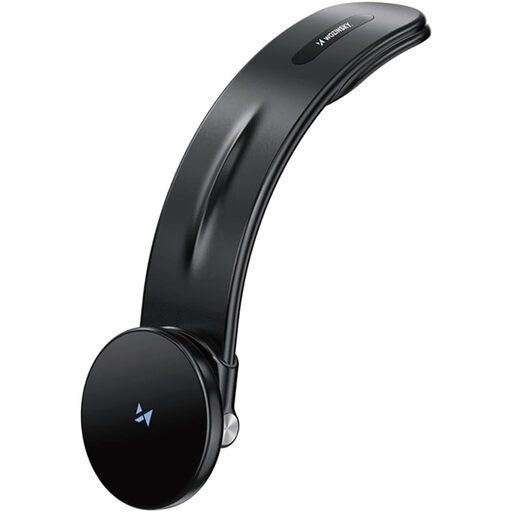
Why This Fits Their Persona: Perfect for drivers who don't want a vent mount or need flexible positioning. The adjustable arm allows for mounting on the dashboard or windshield and precise viewing angle alignment.
Bypasses the problem of unstable vent clips by using a suction cup mount. The 20 N52 magnets provide high holding power. An included metal ring ensures compatibility even for non-MagSafe devices.
Flexible mounting on the dashboard or windshield. Adjustable arm and 360° rotation for optimal alignment. Supports up to 15W charging.
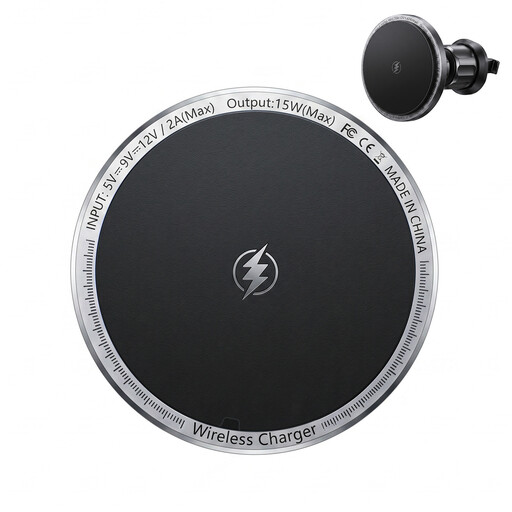
Why This Fits Their Persona: For drivers who value design and technical details. The LED ambient lighting and metal heat sink set this model apart from standard solutions and blend well into a modern vehicle interior.
Addresses the issue of overheating during fast charging with an integrated metal heat sink. The strong magnetic lock is specifically designed for the iPhone 12/13/14 series, ensuring a stable hold.
Efficient heat dissipation for consistent charging performance. Compact design and LED ambient lighting for a modern look.
We have compiled a complete, up-to-date list of products that fully meet these strict selection criteria and relevant safety standards.
Yes, but with some limitations. An original Apple MagSafe case or a third-party case with built-in magnets will generally work without issue. With standard cases that lack magnets, the holding force is often significantly reduced or non-existent. Very thick cases (over 3 mm) can also interfere with or prevent wireless charging.
To achieve the maximum charging speed of 15 watts, you need a USB-C car adapter that supports either Power Delivery (PD) or Quick Charge (QC) 3.0 and provides an output of at least 18W (e.g., 9V/2A or 12V/1.5A). A standard 5V/1A USB-A port will limit the charging speed to 5W.
This is a risk with improper installation or poorly designed mounts. Models with a simple spring clamp can wear out the vent slats with frequent attachment and removal. Look for mounts with a hook mechanism that anchors behind the slat. This distributes pressure more evenly and provides a much more secure and gentle hold. Always install the mount carefully and avoid using force.