
Lieferung heute & morgen

Qualitätsgarantie

Willkommens-Angebote freischalten: KOSTENLOSE Lieferung | Bis zu 80 % RABATT | Kostenlose 30-Tage-JoyPlus-Testphase
App herunterladen
Buying a new case for your smartphone seems simple. But disappointment often sets in after just a few weeks: the clear case turns yellow, the expensive MagSafe charger doesn't hold properly, or the case advertised as "shockproof" provides inadequate protection during a minor fall. As a Joybuy Product Recommendation Officer, I see firsthand every day what features define a good case and which marketing promises often fall short.
This guide will show you the three most common pitfalls when buying a MagSafe case and explain which technical parameters you need to look for to make a durable and functional choice.
Many cases look high-quality at first glance, but only reveal their weaknesses in everyday use. Pay close attention to these three points to avoid making a bad purchase.
To avoid the problems mentioned above, you should check three technical aspects before buying. These are what primarily determine the durability and functionality of your new case.
The choice of material is the foundation of protection and durability. A proven combination is a frame made of flexible Thermoplastic Polyurethane (TPU) and a backplate made of rigid Polycarbonate (PC).
This hybrid construction offers balanced protection without making the case unnecessarily bulky, making it a great choice for a slim phone case that still offers protection.
A functional magnetic case needs more than just a glued-in metal ring. Look for cases where the magnetic ring is precisely integrated into the structure. This ensures perfect alignment with the coils in the iPhone and a strong attachment for accessories. Brands like Spigen or Joyroom often explicitly state that their cases are optimized for full MagSafe compatibility, ensuring a stable connection for chargers, mounts, and wallets.
Good protection is a matter of design, not just material thickness. Two details are particularly important here:
Based on the criteria above, we have selected a few models for different user profiles.
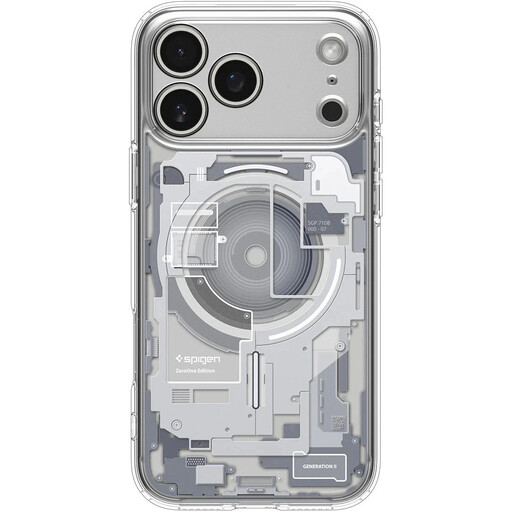
Why This Fits Their Persona: Ideal for users who want to show off the original design of their iPhone 17 Pro without compromising on protection and MagSafe functionality. The "Zero One" design offers a stylized look at the device's internal components.
The case combines a polycarbonate back with anti-yellowing properties and a precisely integrated magnetic ring, preventing a weak magnetic hold.
Uses Spigen's Air Cushion Technology for enhanced drop protection in a slim profile. Full MagSafe compatibility is guaranteed.
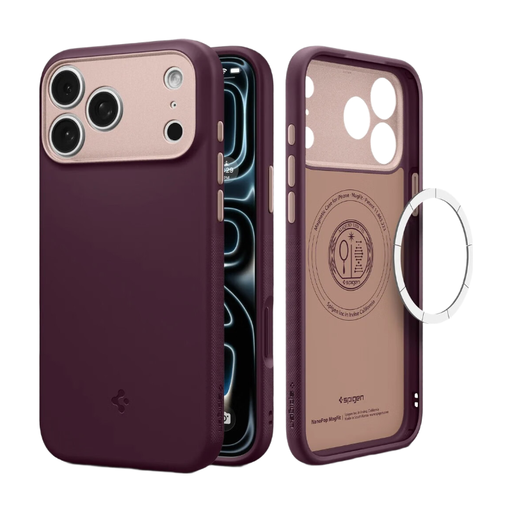
Why This Fits Their Persona: For users whose smartphone is a daily companion for work and leisure. The focus is on durability, grip, and reliable functionality, without sacrificing an appealing design.
It offers verifiable military-grade drop protection based on a solid hybrid TPU and PC construction, rather than being just an empty marketing promise.
The matte finish is resistant to fingerprints and improves grip. The two-tone contrasting ring around the camera adds a stylish visual accent.
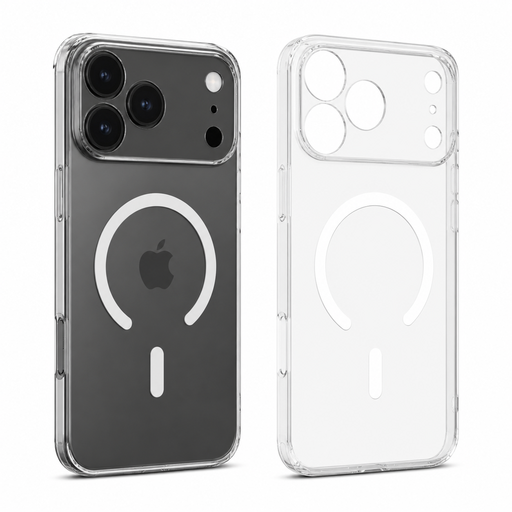
Why This Fits Their Persona: Perfect for anyone looking for a functional and aesthetically pleasing MagSafe solution without breaking the bank. This case delivers the essential features—transparency and magnetic compatibility—in a solid package.
It focuses on reliable MagSafe functionality and a clear TPU+PC construction. It forgoes expensive extra features to deliver solid baseline performance.
Offers excellent value for a fully MagSafe-compatible, clear case. Ideal as an entry point into the MagSafe ecosystem.
We have compiled a complete, up-to-date list of products that fully meet these strict selection criteria and all relevant safety standards.
1. Do all clear cases really turn yellow over time? No, not all to the same degree. While cases made of pure, low-quality TPU yellow quickly, models with a polycarbonate (PC) back or those with special anti-UV coatings are significantly more resistant. A slight change over a very long period is normal for many plastics, but the rapid, unsightly yellowing can be avoided by choosing the right materials.
2. Can I use a MagSafe case with a standard wireless charger (Qi standard)? Yes, that is generally possible without any issues. The magnetic ring in a MagSafe case does not interfere with the standard Qi charging process. You can continue to place your smartphone on conventional wireless charging pads. However, the magnetic lock that ensures perfect alignment only works with a MagSafe-compatible charger.
3. What does "military-grade protection" mean for a phone case? The term usually refers to the MIL-STD-810G standard, a US military standard that outlines test procedures for the durability of equipment under various environmental conditions. For phone cases, the drop test (Method 516.6) is often cited. According to manufacturers like Spigen, this means the device, inside the case, has survived a specified number of drops from a certain height. However, it's important to understand that this is a lab test and not a guarantee for every real-world drop. The case's construction, such as reinforced corners and material mix, is often a better indicator of its actual protective capabilities.