
Lieferung heute & morgen

Qualitätsgarantie

Willkommens-Angebote freischalten: KOSTENLOSE Lieferung | Bis zu 80 % RABATT | Kostenlose 30-Tage-JoyPlus-Testphase
App herunterladen
A dead iPhone battery on the go is more than just an annoyance—it can disrupt your entire day. A 10000mAh MagSafe Power Bank promises a solution: it attaches magnetically to your iPhone, charges it wirelessly, and offers enough capacity for more than one full charge. But the market is flooded with products whose marketing promises often don't hold up in practice. Many users invest in a device that proves to be unreliable, slow, or impractical.
This guide reveals the three most common pitfalls to avoid when buying and explains which technical parameters you need to look for to make an informed decision.
Before you make a purchase, you should be aware of the common issues that plague low-quality models and lead to frustration.
To avoid these pitfalls, focus on the following three technical features. These determine the performance and user experience in everyday life.
The charging standard is the most important factor for speed.
A capacity of 10,000mAh is a good benchmark for most users. It can fully charge a current iPhone model about 1.5 to 1.8 times. Pay attention to the watt-hour (Wh) rating, as this is a more precise measure of the stored energy (typically around 37 Wh for 10,000mAh). Reputable brands like Anker often use higher-quality battery cells that ensure greater efficiency and more charge cycles over the product's lifespan.
Practical extra features can significantly increase a power bank's utility.
Here are three models tailored to different needs that meet the criteria mentioned above.
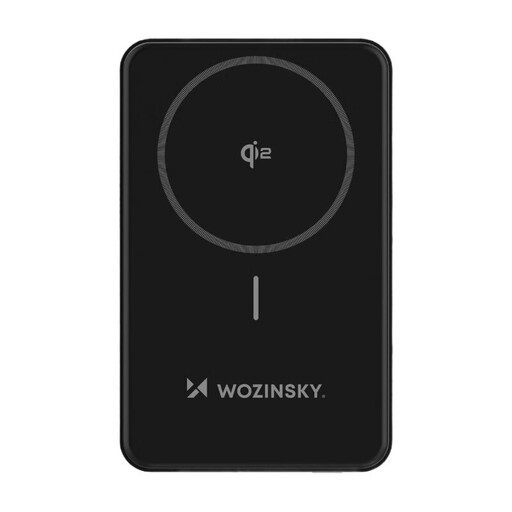
Why This Fits Their Persona: Ideal for users seeking a future-proof charging solution with practical features without paying the premium for big-name brands. Perfect for students and commuters.
Thanks to its Qi2 certification, it delivers a true 15W of wireless power, bypassing the slow-charging trap. The integrated kickstand solves the problem of awkward handling while consuming media.
Qi2 Technology: Delivers fast 15W charging. Integrated Kickstand: Allows for convenient viewing in both portrait and landscape modes. Versatile Ports: Also offers USB-A and USB-C ports for wired charging.
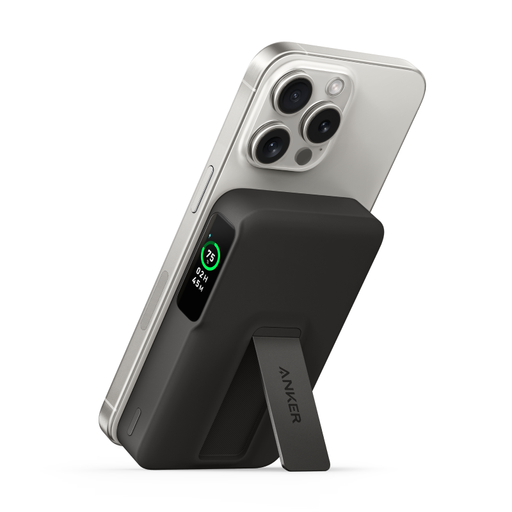
Why This Fits Their Persona: For users who value maximum control, the latest technology, and premium quality. The display provides precise information that goes far beyond simple LED indicators.
The Qi2 certification guarantees full 15W performance. Its informative display provides complete transparency about the actual remaining capacity and charging time, exposing the deception of inaccurate LED indicators.
Informative Smart Display: Shows battery percentage and remaining charge time. High Charging Efficiency: According to Anker, it charges an iPhone 15 Pro to 50% in 44 minutes. Integrated Kickstand: Combines charging with comfortable media viewing.
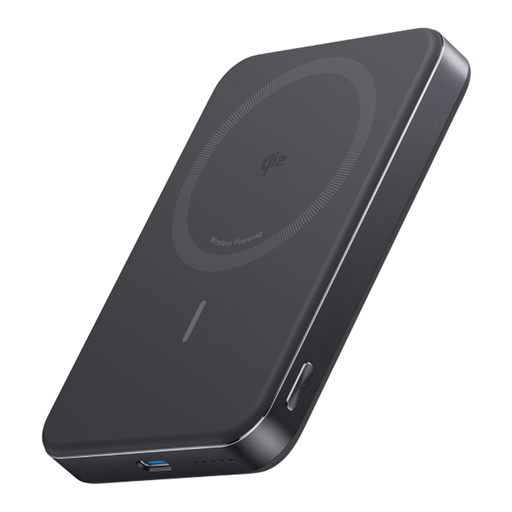
Why This Fits Their Persona: Designed for users who prioritise portability above all else. Its slim design makes it the ideal companion for a jacket or pants pocket, without sacrificing high capacity or fast charging.
This model defies the trade-off between size and power. It's extremely slim and lightweight without compromising on capacity (10,000mAh) or charging speed (15W Qi2), thus solving the problem of bulky, unwieldy power banks.
Slim Design: Highly portable at just 1.47 cm thick. Powerful Performance: Delivers 15W wireless charging and a 30W USB-C port. Ergonomic Shape: The matte finish and metal frame provide a comfortable feel.
While modern smartphones and power banks rely on rechargeable lithium-polymer batteries, many other everyday gadgets, from remote controls to small toys, require specific battery types. If you're also looking for a reliable power source for these devices, you can find a suitable selection here.
We have compiled a complete, up-to-date list of products that meet strict selection criteria and safety regulations.
1. What is the difference between Qi2 and MagSafe in a power bank? Technically, they are very similar. MagSafe is Apple's brand name for its magnetic charging technology. Qi2 is the new, open industry standard built on MagSafe's technology. A Qi2-certified power bank therefore offers the same functionality as a MagSafe power bank for compatible iPhones, including magnetic attachment and charging speeds of up to 15W.
2. How many times can a 10,000mAh power bank charge my iPhone? This depends on the iPhone model and the power bank's efficiency. As a rule of thumb, a high-quality 10,000mAh power bank can charge an iPhone 15 Pro (approx. 3,274mAh battery) about 1.8 times. An iPhone 15 Pro Max (approx. 4,422mAh battery) can be charged about 1.3 times. These figures already account for energy losses during the charging process.
3. Does the heat generated during wireless charging affect my iPhone's battery? Wireless charging inherently generates more heat than charging with a cable. However, certified MagSafe and Qi2 products have safety mechanisms that monitor the temperature. If it gets too warm, the charging power is automatically reduced to protect both the power bank and the iPhone's battery. It is still advisable not to expose the device to direct sunlight while charging.