
Lieferung heute & morgen

Qualitätsgarantie

Willkommens-Angebote freischalten: KOSTENLOSE Lieferung | Bis zu 80 % RABATT | Kostenlose 30-Tage-JoyPlus-Testphase
App herunterladen
A Magsafe power bank promises to make daily life with an iPhone easier: no tangled cables, no fiddly connections—just magnetically snap it on and charge. But the market is flooded with models whose marketing promises often suggest more than the technology can deliver. Many users invest in a device that disappoints after a short time: it charges too slowly, the magnet is too weak, or the advertised capacity isn't even enough for one full charge.
This guide, created by the Joybuy Product Recommendation Officer, helps you identify the critical features. We'll highlight the three most common pitfalls and show you which technical specifications truly matter, so you can make an informed decision.
Before you choose a model, you should be aware of the typical pitfalls that often lead to frustration and poor value for money.
To avoid these pitfalls, focus on three objective criteria that determine the performance and usability of a MagSafe power bank.
Ignore the large mAh number on the packaging and look for the Rated Capacity (or Nominal Capacity) on the spec sheet. This value, usually specified in mAh at 5V, tells you how much energy your smartphone will actually receive.
The charging standard is crucial for speed and compatibility.
The physical characteristics determine how well the power bank integrates into your daily life.
Here are some models that represent a considered choice for specific user groups, based on objective criteria.
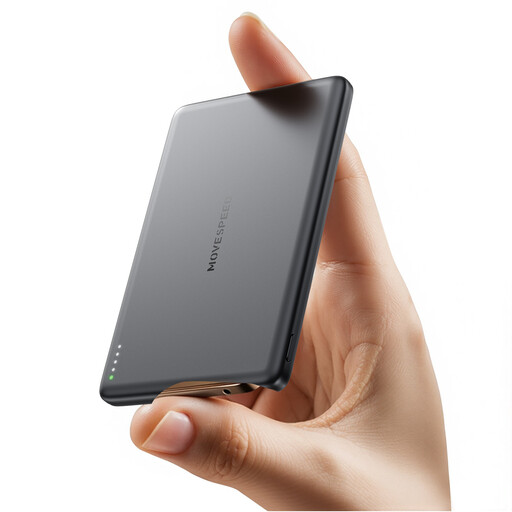
Why This Fits Their Persona: Ideal for the daily commute. At just 9.1 mm thick and weighing 120 g, it's extremely portable and barely noticeable on the iPhone. The capacity is enough to get you through the day without carrying unnecessary bulk.
The rated capacity of 3000mAh is clearly stated, avoiding the capacity trap. The alloy casing aids heat dissipation and counteracts overheating.
Extremely slim and lightweight design. Offers both wireless charging (7.5W for iPhone) and a fast USB-C output.
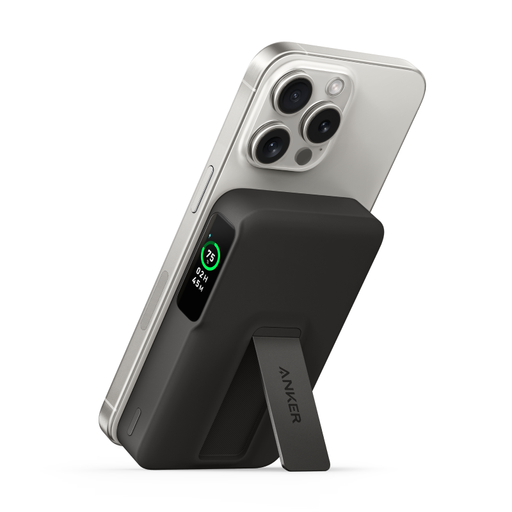
Why This Fits Their Persona: For users who need maximum performance on trips or during long days. The 10,000mAh capacity and Qi2 certification provide a fast, reliable power supply for multiple charge cycles.
The Qi2 certification guarantees 15W charging power, bypassing the slow-charging pitfall. The smart display shows the remaining charging time and capacity, creating transparency.
Future-proof thanks to the Qi2 standard. High capacity, an integrated kickstand, and an informative display offer a complete feature set.
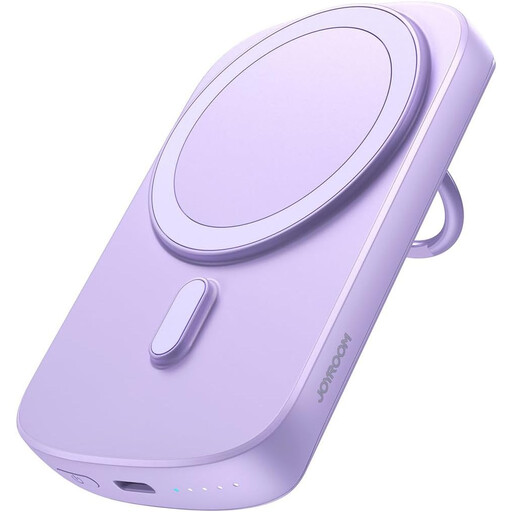
Why This Fits Their Persona: An all-rounder for daily use. The 6000mAh capacity (3400mAh rated capacity) is a good compromise between size and power. The fold-out ring serves as both a secure grip and a practical kickstand.
It provides a clear rated capacity (3400mAh) and supports up to 15W wireless charging, avoiding vague performance claims. The dual-function ring is a genuine value-add.
Combines charging, a grip, and a kickstand in one compact device. Simultaneous charging of two devices (wireless + USB-C) is possible.
We have compiled a complete, up-to-date list of products that fully meet these strict selection criteria and all relevant safety regulations.
Yes, but only if you use a MagSafe-compatible case. These cases have their own integrated magnets that ensure a strong connection to the power bank. Standard cases without magnets or particularly thick cases will prevent a secure attachment and can severely impact charging efficiency or block wireless charging altogether.
MagSafe is the magnetic charging standard developed by Apple. Qi2 is the new, universal charging standard from the Wireless Power Consortium (WPC), which builds on MagSafe's technology. A Qi2 power bank offers the same magnetic alignment and 15W charging power as MagSafe, but it is an open standard. This means it will be compatible not only with iPhones but also with future Android smartphones, making it a future-proof investment.
That depends on the power bank's rated capacity and your smartphone's battery size. A 10000mAh magnetic power bank typically has a rated capacity of around 6,000 mAh. An iPhone 15 Pro, with a battery of approx. 3,274 mAh, can be fully charged about 1.8 times with it (6000 ÷ 3274 ≈ 1.83). For a larger iPhone 15 Pro Max (approx. 4,422 mAh), it's enough for about 1.3 charges. Always check the rated capacity for a realistic estimate.