If you have access to a plug socket and a suitable place to clean up, a compact mains-powered blender with a drinking cup is a sensible starting point. If there’s no power socket where you plan to blend, a cordless blender may be a better fit. For a shared office, check how noisy the specific model is, how easy the cup and blade unit are to clean, and how much you can actually fill it with. Being battery-powered alone tells you neither how quiet a blender is nor how well it blends.
Which type of blender is right for you?
Consideration for a shared office
If you want to blend at work, think about where you’ll use the blender and how noisy it is, as well as whether there’s a power socket nearby. A battery doesn’t automatically make a blender quieter; comparable measurements of the specific model are what count.
A single serving in a drinking cup
If you want to blend avocado and liquid directly in your own cup, check which parts need cleaning afterwards. The cup, lid and blade unit may each have different care instructions.
Blending without a plug socket
If there’s no power socket where you plan to blend, a rechargeable model could be a good fit. Factor in charging time and compare the usable cup capacity with the amount your recipe makes.
What should you look for when buying?
First, check where you can blend at work and whether there’s a power socket there. Then consider cleaning, your recipe and the serving size you need.
| What matters when buying |
What to check |
Who is this especially important to? |
| Noise and consideration for others |
Look for comparable, independent measurements of the specific model, and check the rules on where and when you can blend. |
If I blend in a shared office, I want to disturb my colleagues as little as possible. Around 28% of consumers say noise is their top priority. |
| Cleaning |
Check the instructions for each part to see whether it can be removed and is dishwasher-safe. Also consider the cleaning facilities available. |
If I use the blender at work, I want to be able to clean the cup, lid and blade thoroughly after blending. Around 22% of consumers say cleaning is their top priority. |
| Ingredients and consistency |
Check the instructions for the exact model for suitable ingredients, liquid, fill limits and operating time. Only use ice or frozen ingredients if the manufacturer explicitly says they’re suitable. |
For my avocado smoothie, I want to know whether the blender can handle the ingredients in my recipe. Around 22% of consumers say suitability for their ingredients is their top priority. |
| Power supply |
Check where you plan to blend and what power supply is available. If you’re choosing a battery-powered model, factor in charging too. |
If there’s no power socket where I plan to blend, I need a suitable way to charge the blender. Around 17% of consumers say being independent of a mains power supply is their top priority. |
| Single servings |
Compare your recipe quantity with the maximum fill line for blending, not just the stated capacity. Also consider the lid and the space available on your worktop. |
For my recipe, I want to make the right-sized serving in one go. Around 11% of consumers say serving size is their top priority. |
Common misconceptions
-
Cordless doesn’t mean quiet
A battery describes the power supply, not how noisy the blender is. Without comparable measurements, you can’t tell how disruptive it might be in the office.
Look for an independent measurement of the specific model and check where and when blending is allowed at work.
-
Stated capacity isn’t necessarily the maximum blending fill
The maximum fill for blending may differ from the advertised cup capacity. If your recipe doesn’t fit, you may need to blend it in several batches.
Compare your recipe with the maximum blending fill line for the specific model.
-
Dishwasher-safe doesn’t necessarily mean every part
The cup, lid, blade unit and motor base may each have different care instructions.
Check the instructions for every part before buying, and think about the cleaning facilities available at work.
Brands worth considering
WMF
WMF makes both compact mains-powered blenders and models with drinking cups.
- WMF says the Kult X Mix & Go has a 300 W motor and a 0.6-litre drinking container.
- The separate Mix & Go Touch is a different model: WMF lists it as having 500 W and a 600 ml cup. These figures shouldn’t be applied to the Kult X, and they don’t show how noisy it will be in an office.
Severin
The Smoothie Mix & Go SM 3735 is a mains-powered blender supplied with cups for individual servings.
- Severin says the package includes two removable, dishwasher-safe drinking containers, each with a 0.6-litre capacity. The model has a 300 W motor and one speed setting with a pulse function.
- The dishwasher-safe claim for the cups doesn’t automatically apply to the motor base or blade. The wattage doesn’t guarantee a particular blending consistency.
nutribullet
According to the manufacturer, the Portable NBP003B is a rechargeable blender for a single serving in your own cup.
- nutribullet lists USB-C charging, a 475 ml cup and up to 15+ automatic blending cycles per charge.
- The number of cycles is a manufacturer’s claim. It doesn’t guarantee a particular result with avocado or a particular noise level in the office.
Ninja
According to its review, the tested BlendBoss has programmes and a travel cup.
- F.A.Z. Kaufkompass’s review describes the BlendBoss as having three programmes and being suitable for ice and fibrous ingredients.
- The review applies to the model tested and doesn’t measure how noisy it is in a shared office.
Joybuy blenders for smoothies on the go
This selection is for anyone who wants to make smoothies in a drinking cup or travel cup. For each model, check whether the capacity, power supply and cleaning instructions suit your recipe and workplace.
 No image available
Ninja BlendBoss with travel cup, 710 ml
The travel cup is handy for making a smoothie to take with you.
The product title lists three pre-set automatic programmes, an ice-crushing function and removable, dishwasher-safe parts.
View at Joybuy
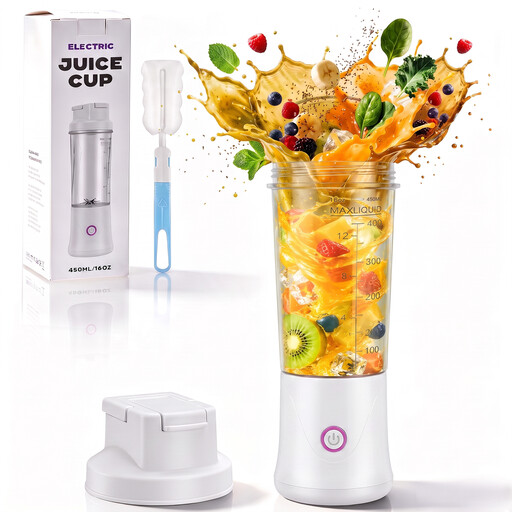 No image available
Portable blender for smoothies and shakes
The single-serving cup is designed for making smoothies and shakes.
The product description lists a personal drinking cup for use on the go.
View at Joybuy
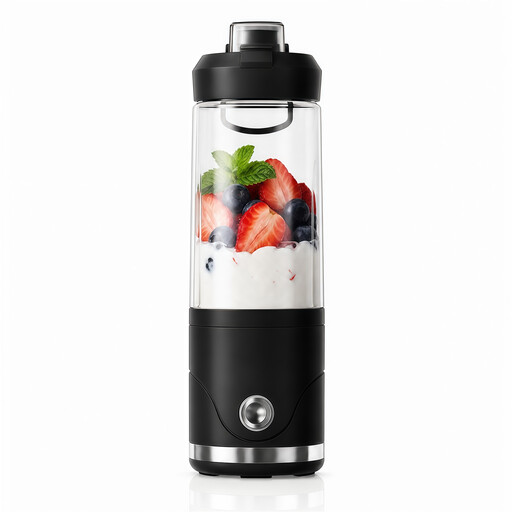 No image available
Portable USB-C blender with six blades
The product title describes a portable model for blending smoothies and shakes.
The product title lists USB-C charging and six blades. According to the product description, the motor housing must not be immersed in water.
View at Joybuy
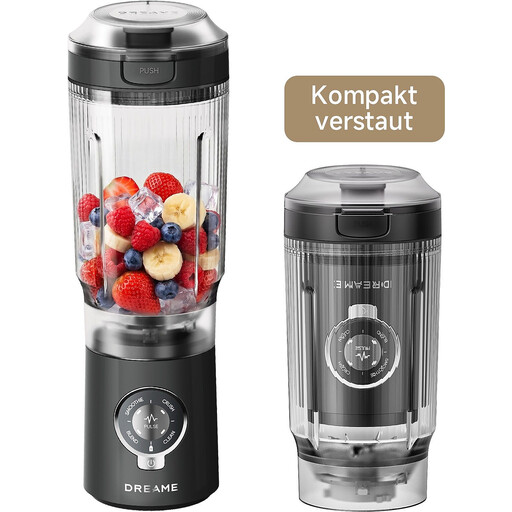 No image available
Dreame 3-in-1 blender, 0.88 l, 120 W
The blending container has a drinking lid and handle, so you can prepare and drink from the same vessel.
The product title lists cordless operation, USB-C charging, stainless steel blades and a 0.88-litre container.
View at Joybuy
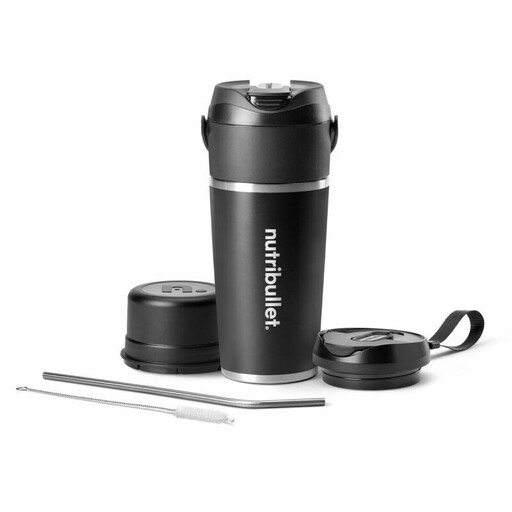 No image available
nutribullet Flip NBP016B, black
This portable model is described as being for smoothies on the go.
According to the product description, hot liquids must not be blended.
View at Joybuy
Frequently asked questions
Is 300 W enough for my avocado smoothie?
Wattage alone doesn’t guarantee a particular consistency. Check the instructions for the specific model. If you’re using ice, frozen fruit or nuts, make sure they’re explicitly listed as suitable ingredients.
Can I put the whole blender in the dishwasher?
No. A claim that the cup is dishwasher-safe doesn’t automatically apply to the motor base and blade. For the SM 3735, Severin specifically says the removable drinking containers are dishwasher-safe; check the care instructions for every other part.
What should I bear in mind when handling ingredients and cleaning at work?
The German Federal Institute for Risk Assessment recommends using fresh ingredients with no signs of spoilage and washing fruit and vegetables thoroughly. The consumer advice centre recommends cleaning used kitchen utensils and washing your hands before and between preparation steps. Also think about where you’ll be able to do this at work.
Is the CE mark an independent safety certification for my blender?
No. According to the European Commission, the manufacturer uses the CE mark to declare that the product meets the relevant EU requirements. There’s no central EU body that issues a blanket certificate for this; the mark alone doesn’t confirm that a specific listing complies.
Are there rules for materials in contact with food that apply to blending cups?
Yes. EU rules on food contact materials also cover food-processing equipment and the parts designed for it. Follow the intended use and the information provided for the specific cup; a general description of a brand doesn’t confirm that a particular product listing complies.


