Shoppers keeping an eye on fat content
If you’re shopping for a low-fat diet, the fat content per 100 g and the amount you actually eat matter more than whether the snack is made from maize or what shape it is.


If you’re looking for a maize snack to enjoy on the go as part of a low-fat diet, start by comparing the fat content per 100 g and thinking about how much you actually want to eat. A small bag can make it easier to plan your portion, but it doesn’t tell you anything about the fat content. Nor is ‘not fried’ a substitute for checking the nutritional information. If needed, also check the salt, ingredients and allergen information on the current packaging.
If you’re shopping for a low-fat diet, the fat content per 100 g and the amount you actually eat matter more than whether the snack is made from maize or what shape it is.
For the office, school or your commute, a small bag or a pre-measured portion can help you avoid eating straight from a larger pack.
Depending on your needs, the ingredients list and warnings about milk, wheat, gluten or peanuts may matter as much as the fat and salt content.
When comparing similar maize snacks, start by checking the nutritional information per 100 g. Then you can decide whether the pack size suits the amount you plan to eat, and whether the ingredients and flavouring work for you.
| Criteria | What to check | Who is it relevant to? |
|---|---|---|
| Fat content | Compare the fat content per 100 g of similar snacks, then consider how much you plan to eat. | If fat content is my priority, I don’t rely on a maize base or the claim ‘not fried’. For around 36% of shoppers, this comparison comes first. |
| Pack size | Check the pack weight in grams and whether it matches the amount of snack you plan to eat. | When I’m out and about, I want to take an amount I can plan for, rather than eating from a large bag. This is the top priority for around 29% of shoppers. |
| Ingredients and salt | Read the ingredients and allergen information for the specific variety, and compare the salt content per 100 g. | If I want to avoid certain ingredients or watch my salt intake, the variety I buy needs to meet my requirements. This check comes first for around 21% of shoppers. |
| Flavour and how you’ll eat it | Choose the flavouring and shape only after checking that the nutritional information and ingredients suit your needs. | If the other criteria work for me, the flavouring or how I plan to use the snack decides which variety I choose. This is the main deciding factor for around 14% of shoppers. |
The description doesn’t determine the fat content. Chio says its Tortillas Salted contain 22 g of fat per 100 g; Lorenz lists 24 g per 100 g for its Chillers Paprika Style, which it describes as not fried.
Compare the fat content per 100 g for the specific varieties, then take into account how much you plan to eat.
A smaller pack can help with portioning, but it doesn’t change the fat or salt content per 100 g.
Use the pack size to help plan how much you’ll eat, and check the nutritional information separately.
Vegan and free from allergens that matter to you aren’t the same thing. Chio labels its Tortillas Salted as vegan, but warns that they may contain wheat. Lorenz lists milk ingredients in its Chillers Paprika Style and says it may contain traces of gluten and peanuts.
If you have an allergy or intolerance, read the ingredients list and allergen information on the pack you buy.
Tortillas Salted is an example of maize tortilla chips whose on-pack information you can compare when shopping.
Chillers Paprika Style shows why the way a snack is made and its nutritional information should be considered separately.
The brand describes Chitos as a roasted maize snack, available in Juicy Paprika Style and Chili Cheese Style.
REWE is one place to look if you’re specifically after a small pack when shopping.
EDEKA24 is relevant here as a retailer selling Chio Tortillas Salted, rather than as a maize snack brand in its own right.
In 2023, Lidl listed Snack Day Maissnack Bio as a product from its own brand range.
This selection features a maize and millet snack in a 50 g bag, for anyone who wants to plan how much to take on the go. Check the information on the pack you buy to decide whether it suits your requirements for fat content and ingredients.
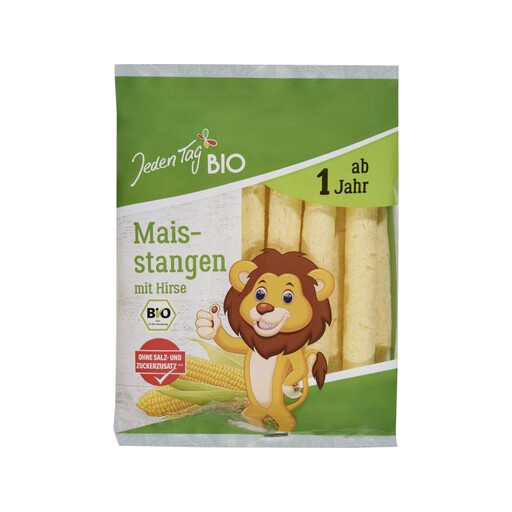 Image unavailable
The 50 g bag may suit you if you want to plan how much to take with you, but the pack size isn’t a recommended portion. Before buying, compare the fat and ingredient information on the pack with your requirements.
According to the product information, these puffs pose a choking hazard for children, who must be supervised while eating.
No. A maize base or airy shape doesn’t determine the fat content. Chio lists 22 g of fat per 100 g for its Tortillas Salted; Lorenz lists 24 g per 100 g for its Chillers Paprika Style, which is not fried. So compare the nutritional information for the specific varieties.
Yes. If you stick to the amount you’ve planned, a small bag can make portioning easier. But it doesn’t mean the snack is low in fat: also check the fat content per 100 g and consider how much you’ll eat.
For a maize snack, the fat and salt content per 100 g, as well as the ingredients and allergen information, are particularly relevant. The German Food Federation explains that the nutrition table on packaged foods includes, among other things, energy, fat, saturated fat, carbohydrates, sugars, protein and salt per 100 g or 100 ml.
No. The Nutri-Score doesn’t replace the nutrition table or ingredients list. According to the consumer advice centre, displaying it is voluntary. If you’re choosing specifically based on fat content, check the figure per 100 g directly.
No. A vegan label doesn’t answer every allergen question. Chio warns that its vegan-labelled Tortillas Salted may contain wheat; Lorenz lists milk ingredients in its Chillers Paprika Style and says it may contain traces of gluten and peanuts. Always follow the information on the pack of the variety you buy.