
Lieferung heute & morgen

Qualitätsgarantie

Willkommens-Angebote freischalten: KOSTENLOSE Lieferung | Bis zu 80 % RABATT | Kostenlose 30-Tage-JoyPlus-Testphase
App herunterladen
Anyone who has already invested in Makita's 18V battery system is often looking for a powerful and cost-effective addition for demanding tasks. A Cordless Impact Wrench for Makita 18V is a logical choice here, especially for seasonal tyre changes or for assembly work in the workshop and at home. However, the market offers a bewildering variety of options, and not every product delivers on its promises. As your Joybuy Product Recommendation Officer, I'll help you identify the crucial features and avoid common purchasing traps.
Many users invest in a tool that looks impressive on paper but disappoints in practice. Pay attention to these three points to make an informed decision:
To objectively evaluate an impact wrench's performance, you should focus on verifiable technical specifications. These three criteria are crucial for most users.
Torque indicates the rotational force the tool uses to tighten or loosen a fastener. It's important to distinguish between:
A brushless motor is now the standard for high-quality cordless tools. Unlike conventional motors, power is transmitted electronically without physical contact via carbon brushes. The advantages are significant:
The tool anvil is the square drive onto which the sockets are fitted. For automotive work and most heavy-duty assembly tasks, the 1/2-inch drive has established itself as the universal standard. It provides a robust connection and is compatible with the vast majority of socket sets. Smaller drives (e.g., 3/8-inch) are better suited for lighter tasks, while larger ones (e.g., 3/4-inch) are used for trucks and heavy machinery.
Here are three recommendations tailored to different user profiles. Each model uses a brushless motor and is compatible with common Makita 18V LXT batteries.
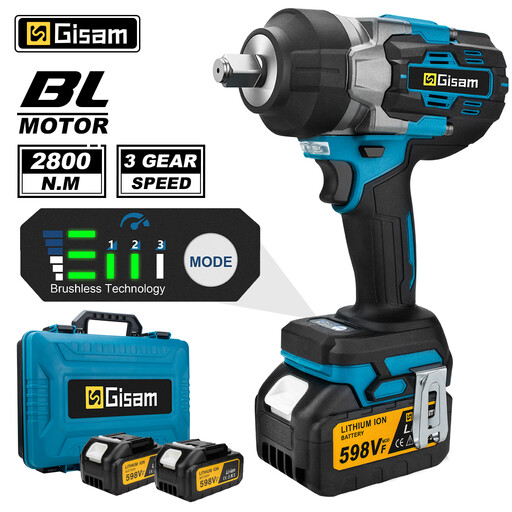
Why This Fits Their Persona: Ideal for ambitious DIY mechanics who regularly work on suspension, brakes, or engines and need maximum power reserves for seized bolts.
The tool features a brushless motor for durability, and the product description clearly lists the compatible BL18xxB-series batteries, preventing incorrect purchases.
Very high maximum torque for demanding tasks. Delivered as a kit including batteries, a charger, and a case.
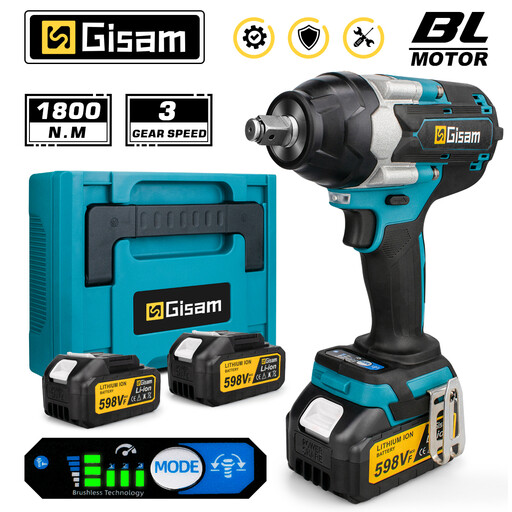
Why This Fits Their Persona: Perfect for the DIYer who needs a reliable tool for seasonal tyre changes and various assembly projects (e.g., timber constructions).
The specified torque is realistic and sufficiently powerful for tyre changes and general tasks. As an impact wrench kit with battery, it offers a complete solution.
A balanced ratio of performance, price, and included accessories. Versatile for both automotive and DIY use.
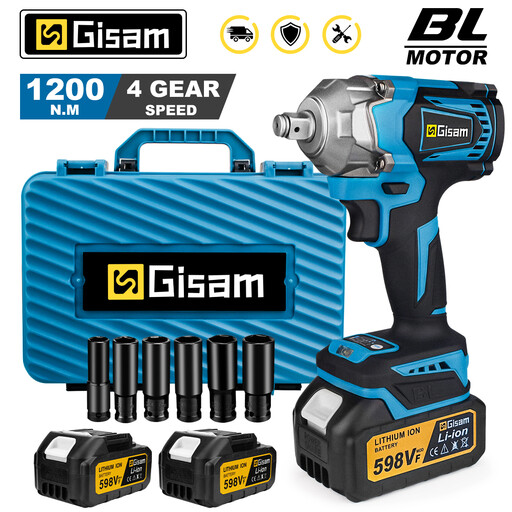
Why This Fits Their Persona: A cost-effective option for users who already own Makita 18V LXT batteries and need a tool for light to medium-duty fastening tasks without breaking the bank.
The model is clearly positioned as an entry-level tool. Its performance is appropriate for the price, and the brushless motor provides a modern, durable foundation.
Excellent value for money for users who already own a battery system. Sufficient power for many standard applications.
We have compiled a complete, up-to-date list of products that fully meet these strict selection criteria and safety standards.
For tightening the wheel bolts on a typical passenger car, most manufacturers specify a torque of 120 to 150 Nm, which should ideally be verified with a torque wrench. The real challenge, however, is loosening them. Weathering, corrosion, or a previously overtightened bolt can require a significantly higher breakaway torque. An impact wrench with a realistic loosening torque of 400–500 Nm generally provides enough reserve power for this.
No, and this is a critical point. Most compatible impact wrenches for Makita batteries are designed for the professional LXT series (identifiable by the model name, e.g., BL1850B). The G-series, intended for the DIY market (e.g., BL1813G, BL1415G), has a different connection interface and is not compatible. Therefore, always check the detailed compatibility list in the product description before purchasing.
A brushless motor offers three key advantages: It is more efficient, allowing for longer runtime per battery charge. It generates less heat and is virtually maintenance-free, as there are no carbon brushes to wear out and replace. This results in a greater overall lifespan and reliability for the tool.