What to look for when buying
First decide whether you’ll usually be making one glass or several portions. Only treat ice cubes and other hard ingredients as a separate selection criterion if you’re actually going to use them in your recipe.
| What matters |
What to look for |
Who should consider this? |
| Portion size and worktop space |
Check the usable capacity and fill markings; if you’re choosing a drinking cup, make sure it’s the right size for your usual portion. |
If I’m only blending one glass during my break and have limited space, compact dimensions and a suitable cup matter. Around 33% of consumers are likely to consider this portion size their top priority. |
| Cleaning up after your break |
Check whether the container, lid, seals and blades can each be removed and are specifically listed as dishwasher-safe. |
If I have to clean the blender after every short break, I want to know which parts are easy to remove and clean. Around 33% of consumers are likely to prioritise quick cleaning. |
| Suitable for ice and frozen ingredients |
Check the model’s instructions for explicit guidance, which ingredients are allowed and the permitted quantities. |
If I regularly add ice cubes or other frozen ingredients to my shake, the guidance for the specific appliance is essential. Around 17% of consumers are likely to consider this their top priority. |
| Features to suit your recipe |
Match the features to your ingredients and usual number of portions; only pay for extra functions if you plan to use them. |
If I mainly blend milk, malt powder and ice cream, I don’t want to choose features I’m unlikely to need. Around 17% of consumers are likely to prioritise having the right features. |
Blenders for malted milkshakes
This selection includes portable blenders for single portions and jug blenders. If you’re using ice cubes or other frozen ingredients, check the instructions for the model you choose.
 No image available
3-in-1 blender with 1,500 ml jug and 600 ml travel bottle
The jug and travel bottle combination gives you the option of making a single portion or a larger batch.
The product description lists a 1,500 ml blending jug, a 600 ml travel bottle and a 300 ml chopper. It also lists an ice-crushing function; check the instructions for specific guidance.
View at Joybuy
 No image available
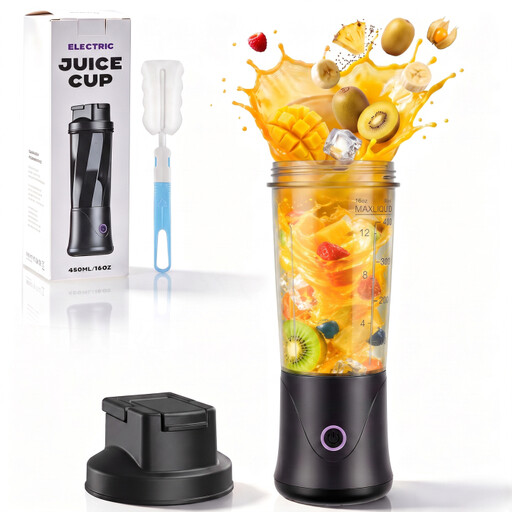
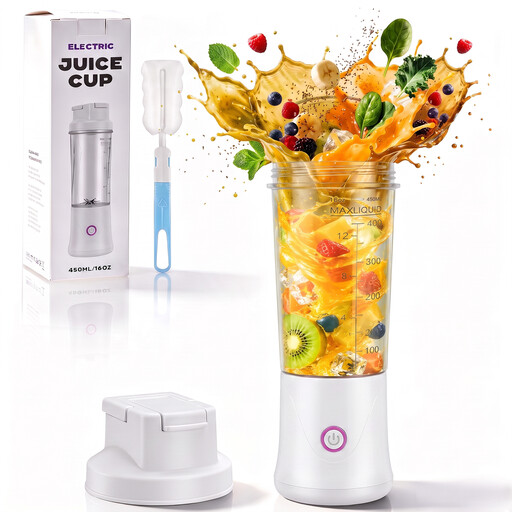
Portable blender, 400 ml, six blades
Its compact design is made for individual shakes; check that the capacity is enough for your recipe portion.
The product description lists a 400 ml capacity, six stainless steel blades and removable parts. It also describes cleaning the cup with water and washing-up liquid.
View at Joybuy
 No image available
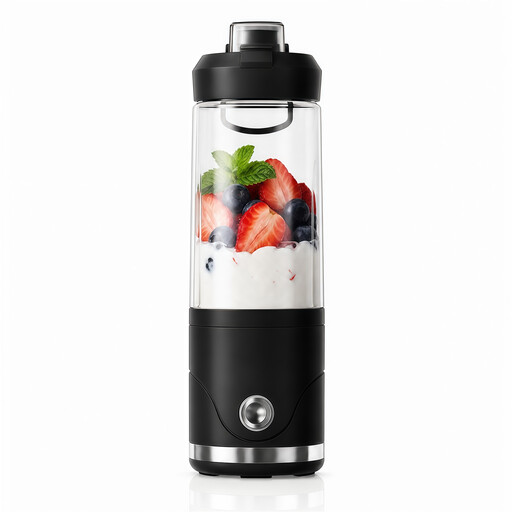
Portable personal blender for shakes
The product description mentions shakes and a cup that lets you blend and pour straight from it.
View at Joybuy
 No image available
Portable USB-C rechargeable blender, six blades
If you’re looking for a portable blender for one portion, the product description lists a shake mode and a self-cleaning mode.
The listed capacity is 650 ml.
View at Joybuy
 No image available
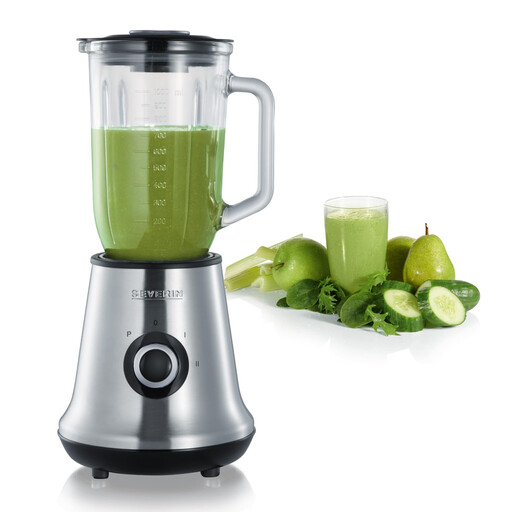
Severin SM 3734 2-in-1 blender with 1.0-litre glass jug
The jug is a good option if you want to prepare your shake ingredients in one container; check that it’s large enough for your recipe quantity.
The product description lists a 1.0-litre glass jug, 500 W, two speed settings, a pulse function and a filling opening.
View at Joybuy
Frequently asked questions
Do I need a high-performance blender for malt powder, milk and ice cream?
Not just for those ingredients. A malted shake recipe published by Betty Crocker blends milk and malt powder first, then adds ice cream. Choose the container size and style of use to suit your portion; if you’re adding ice cubes or other hard ingredients, check the instructions for the specific model separately.
How should I blend and clean it?
For the VitaPower Series 6, Bosch Home Appliances recommends adding liquid ingredients first and checking that the jug and lid are properly locked in place before use. Bosch also describes a cleaning programme for this range that uses water and a little washing-up liquid. For other appliances, follow the relevant instructions and check which parts are approved for cleaning.
Who can help if the blender develops a fault, and is a manufacturer’s guarantee the same as your statutory rights?
In Germany, the seller is generally responsible for dealing with statutory rights when a product is faulty; any additional manufacturer’s guarantee is voluntary and subject to its own terms. In its information dated 13 August 2026, the Verbraucherzentrale states that the statutory period is two years from delivery.
What do CE marking and food-contact rules mean when buying a blender?
For an appliance covered by the relevant EU requirements, the manufacturer must apply the required CE marking; it is not an independently awarded quality mark. Separate EU rules apply to parts that come into contact with food. These general requirements don’t prove that an individual product listing is compliant.
Where should I take an old electric blender?
The German Federal Ministry for the Environment lists an authorised collection point, such as one run by your local authority, or a retailer that is required to take back old appliances. Whether a retailer has to accept an old appliance without a new purchase depends, among other things, on the applicable take-back requirements and the appliance’s size.


