What should you look for when buying?
Mains-powered smoothie maker with a drinking cup
A good fit if: you’re making one serving, have access to a socket and want to take the cup with you afterwards. WMF says the KÜCHENminis Smoothie-to-go comes with two blending and drinking containers and an ice-crushing function; follow the instructions for handling ice.
The trade-off: A drinking cup saves you having to transfer your drink into another container, but it’s less convenient than a larger jug when making several servings. The type of appliance doesn’t guarantee low noise levels.
Cordless mini blender
A good fit if: there’s no socket where you plan to blend and you want to make a small serving without ice. WMF lists the KÜCHENminis Mix on the go as having a 0.3 l capacity and explicitly states that it doesn’t have a crushed-ice function.
The trade-off: Being free from a socket means you’ll need to charge it, and the container is small. Whether it can handle hard or frozen ingredients depends on the model.
Larger jug blender
A good fit if: you want to make several servings or use ice regularly. Bosch lists the MMB6384M as having a 1.5 l capacity, an ice-resistant jug and a cleaning programme.
The trade-off: A larger jug takes up more space and needs more room to clean. Bosch gives this model a sound power level of 80 dB(A) re 1 pW; this isn’t directly comparable to the noise level at an office workstation.
In its 2026 test, the VKI points out that high power ratings alone don’t guarantee good blending results. So check the functions and usage guidance for the specific model and the ingredients you plan to use.
| Priority |
What to check before buying |
Who is this important to? |
| Consideration for others and space |
Check the dimensions, where you plan to blend and your workplace rules. Only compare noise figures when the measurement and method are the same. |
If I’m blending one serving in a shared office, I need an appliance that takes up little space and don’t want to disturb others unnecessarily; around 36% of consumers prioritise consideration for others and space. |
| Ice, frozen mango and texture |
Check the ice function, instruction manual and whether the specific model is approved for frozen fruit. |
If I want my cooler to contain ice or frozen mango, approval for those exact ingredients matters more to me than a high wattage; around 29% of consumers prioritise ice and texture. |
| Cleaning up after your break |
Check separately whether the cup, lid and blade unit are dishwasher-safe and how to clean each one. |
After blending, I want to clean the cup, lid and blades without any fiddly steps; around 21% of consumers prioritise ease of cleaning. |
| Serving size |
Match the usable capacity and any included cups to the number of servings you plan to make. |
If I’m making drinks for several colleagues, I want to prepare the right amount; around 14% of consumers prioritise making several servings. |
Products for making mango coolers at work
This selection includes portable blenders for single servings and a jug blender with a 1.5-l container for larger quantities. Food-contact materials are covered in particular by Regulation (EC) No 1935/2004, a requirement set out by the European Commission, while the Federal Office of Consumer Protection and Food Safety explains the German regulations. Before buying, check that the parts that come into contact with your drink are suitable for that purpose.
 No image available
Ninja BlendBoss Portable Blender, 710 ml
The travel cup is handy for a drink on the go; the product description also lists blending and ice-crushing modes.
710 ml travel cup; three automatic programmes; dishwasher-safe parts according to the product description.
View at Joybuy
 No image available
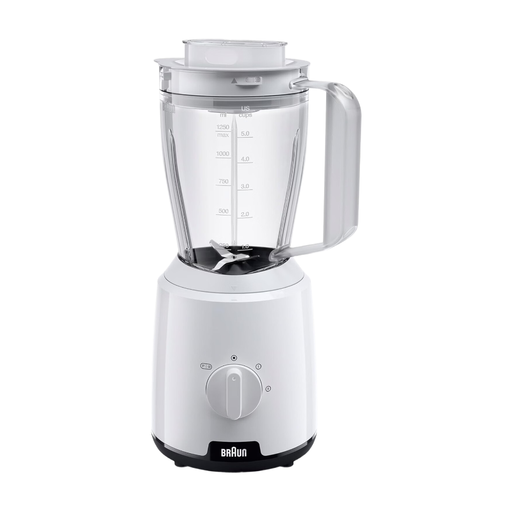
Braun PowerBlend 1 JB1000WH
The 1.5 l blending jug is an option if you want to make more than one small to-go serving.
1.5 l blending jug; 600 W; two speeds; pulse and ice-crushing functions.
View at Joybuy
 No image available
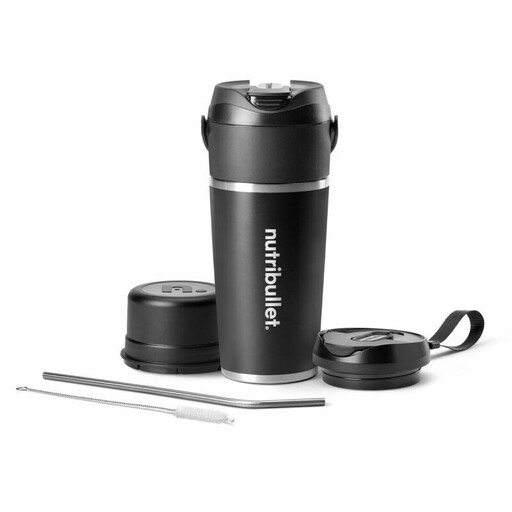
nutribullet Flip NBP016B, Schwarz
Its rechargeable design is made for blending somewhere without a socket; check that it’s approved for the ingredients you want to use.
590 ml insulated cup; USB-C charging; drinking lid with straw.
View at Joybuy
 No image available
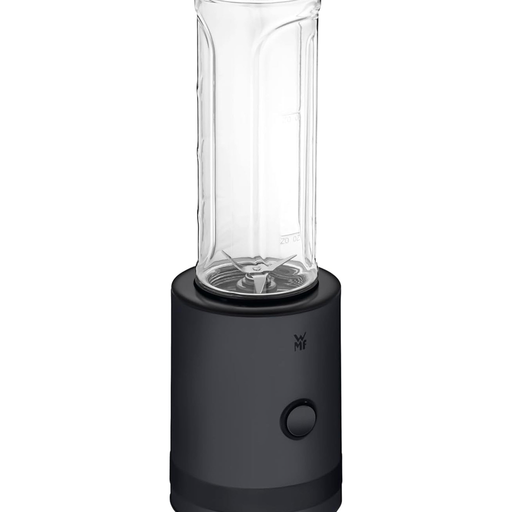
WMF KÜCHENminis Smoothie-to-go, 0.6 l
The blending and drinking containers are handy if you want to take your serving with you; an ice-crushing function is listed.
Two 0.6 l containers; 300 W. The instructions limit the fill level to 600 ml per container and continuous operation to no more than one minute.
View at Joybuy
 No image available
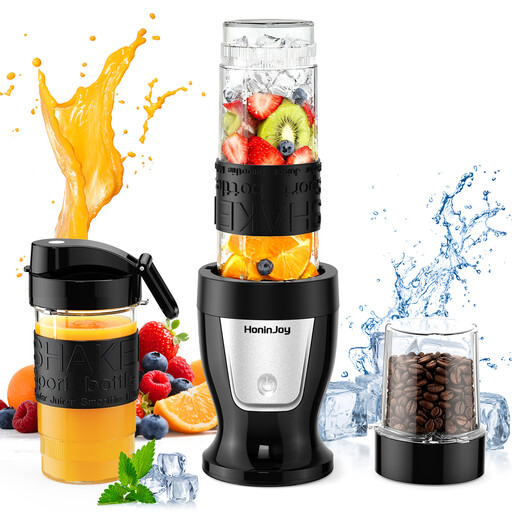
HoninJoy Personal Blender, 650 W, 20 oz + 14 oz
The two portable cups let you choose different serving sizes to take with you.
650 W; pulse and ice-crushing functions; two leakproof cups, 20 oz and 14 oz.
View at Joybuy
Frequently asked questions
Can I use a blender in a shared office without checking first?
Before using it, check that your chosen blending spot and workplace rules allow it. Arbeitsschutz NRW outlines employers’ responsibility to make workplaces safe; a noise figure for a product doesn’t mean it’s approved for use at a particular workstation.
Can a cordless mini blender crush ice cubes for a mango cooler?
That depends on whether the specific model explicitly lists this function, not simply on whether it’s cordless. WMF doesn’t list a crushed-ice function for the KÜCHENminis Mix on the go; for other appliances, check which ingredients and ice they’re approved for.
Can the cup, lid and blades all go in the dishwasher?
This depends on the model and the individual parts. Check the cleaning instructions for each component separately, especially the blade unit.
What rules apply in Germany to materials that come into contact with drinks?
Food-contact materials are covered in particular by Regulation (EC) No 1935/2004. The European Commission sets out this EU requirement, while the Federal Office of Consumer Protection and Food Safety provides further information on German regulations. Check the details for any parts intended to come into contact with the drink.
What are my rights if my blender is faulty?
Where goods are faulty, § 437 of the German Civil Code (BGB) provides, subject to the relevant conditions, for remedies including repair or replacement and other rights. For ordinary movable goods, claims for defects generally become time-barred two years after delivery (§ 438 BGB); your statutory rights are separate from any voluntary manufacturer’s guarantee. The statutory conditions for each case apply; this information is based on Gesetze im Internet.


