For a glass of mango lassi made with soft mango and yoghurt, a compact blender is often enough. If storage space is limited, a hand blender with a suitable container may also be an option. For several portions or frozen ingredients, only choose a jug blender if the instructions explicitly say these ingredients are suitable. The key things to consider are the permitted fill level, how easy the parts are to clean and how much space the appliance needs – wattage alone tells you neither how smooth the blend will be nor how noisy it is.
Which type of blender is right for you?
A single serving in a shared kitchen
If you usually make just one glass, have limited worktop space and want to clean and put away both the cup and the appliance yourself, a compact personal blender could be a good fit. The SWR also describes hand blenders as a handy option for small quantities.
The occasional lassi with soft ingredients
If you don’t blend every day and want to put the appliance away after use, you could consider a hand blender with a suitable container. Check that the container and accessories are right for your recipe; different types of appliance aren’t necessarily designed for the same quantities.
Several servings or frozen ingredients
If you want to make several glasses at once, or use ice or frozen mango, check the usable capacity and whether the instructions explicitly approve these ingredients. Bosch lists these features for the MMB6172B, but its German website says this exact model is no longer available.
What to consider when choosing
Compact blender with drinking cup
A good fit if: you usually blend one portion and want to drink from the cup afterwards.
Things to consider: You may need to blend several times to make multiple glasses. Check the permitted fill level and how easy the blade and seal are to clean.
Hand blender with a suitable container
A good fit if: you occasionally make a small quantity with soft mango and yoghurt and want to put the appliance away afterwards.
Things to consider: The container and how you use the blender can affect splashing. Check the accessories and the specific model’s guidance on hard or frozen ingredients.
Jug blender
A good fit if: you regularly make several portions and have enough worktop and storage space.
Things to consider: The jug and motor base take up space. The Bosch MMB6172B is an example of a design with a 1.5-litre glass jug and an ice-resistant blending cup, but the manufacturer’s website says it is no longer available.
| Priority |
What to check before buying |
Who it matters most to |
| Cleaning and hygiene |
Cleaning instructions for the model and accessories; how easy the blade and seal are to reach, and which parts are explicitly dishwasher-safe. |
If I use an appliance in a shared kitchen, I want to be able to clean the parts that come into contact with food thoroughly after blending. This is a priority for around 33% of consumers. |
| Portion size and storage space |
Check the recipe quantity against the permitted fill mark, and allow space for the appliance and accessories. |
If I usually make one glass, I don’t want it to take up more worktop or storage space than necessary. Around 27% of consumers have this priority. |
| Frozen ingredients |
Check the specific model’s instructions for approval to use ice or frozen ingredients, as well as any guidance on quantities and liquid. |
If I want to blend ice cubes or frozen mango, I need explicit approval rather than relying on wattage alone. Around 20% of consumers give this priority. |
| Noise while blending |
Look for comparable measurements of the models and settings you’re considering, and agree suitable times to use the blender with your housemates. |
If I want to be considerate of housemates in a shared kitchen, noise is a factor in its own right. Around 20% of consumers have this priority. |
Common misconceptions when buying a blender
-
Assuming wattage means a smoother blend or quieter operation
In IMTEST’s jug blender test, published on 31 October 2026, the models with the highest stated motor output didn’t come out on top. Noise levels also varied across the models tested. This doesn’t prove that other models perform in the same way or show how well they make mango lassi.
Compare tests of the exact model you’re considering, and check the conditions under which blending results and noise were measured.
-
Assuming the stated capacity is the usable quantity for lassi
The stated capacity alone doesn’t tell you how much of a particular recipe you can put in the container. A small drinking cup and a larger jug are also suited to different serving sizes.
Check the model’s fill mark and instructions, and think about how many glasses you usually make at once.
With a smaller container, you may need to blend in several batches and clean it more often.
-
Assuming similarly named model variants are identical
Bosch’s German website says the MMB6172B is no longer available. Its details on capacity, cleaning or suitability for ice can’t automatically be applied to a similarly named model.
Check the full model number and the latest information from the manufacturer before assuming that features apply to another variant.
Brands to consider
WMF
The Kult X Mix & Go is a compact blender and drinking bottle for making individual drinks.
- WMF lists a 0.6-litre Tritan container with a drinking lid and a 300-watt motor for this model.
- These specifications don’t prove that it runs particularly quietly or is suitable for every frozen ingredient.
Philips
The Daily Collection HR2602/01 is a mini jug blender marketed for smoothies and shakes.
- Philips lists a 350-watt motor and a four-blade unit for this model.
- The advertised blending time is a manufacturer’s claim, not an independent lassi test. Check the usable recipe quantity and cleaning instructions.
Braun
The MultiQuick MQ50236M is a hand blender for occasional small quantities, while the PowerBlend 9 JB9040 is a jug blender that has been tested separately.
- Braun lists a blending and measuring beaker among the accessories supplied with the MQ50236M.
- The manufacturer describes its SplashControl design as helping to prevent splashes, but that doesn’t guarantee a splash-free experience. Test results for the JB9040 don’t apply to the hand blender.
Bosch
The VitaPower MMB6172B is an example of a jug blender with a larger glass jug and stated suitability for ice.
- Bosch lists a 1.5-litre capacity, an ice-resistant blending cup and dishwasher-safe parts for this model.
- The German manufacturer’s website says this exact product is no longer available, so these features shouldn’t be treated as a current buying recommendation.
Blenders for different lassi-making needs
The models below include compact personal blenders for single servings, a hand blender and jug blenders for larger quantities. If you’re using frozen ingredients, always check the instructions for the specific model.
 No image available
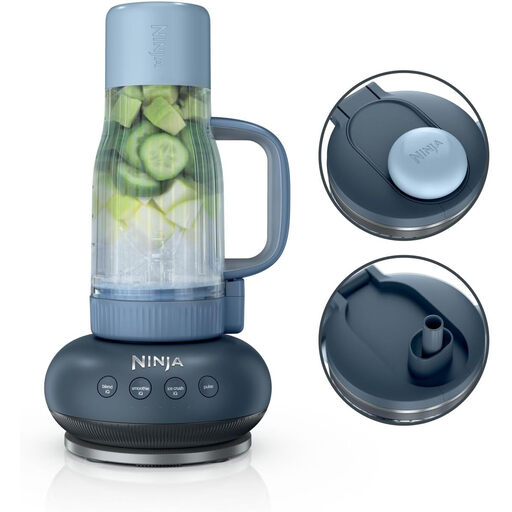
Ninja BlendBoss Portable Blender, 710 ml
This portable blender with a travel cup is an option if you’re making one portion and want to take the cup with you afterwards.
The product description lists a 710 ml capacity, three automatic programmes, a pulse function and an ice-crushing function.
The removable parts are described as dishwasher-safe. Check the instructions for the quantities of ingredients and cleaning.
View at Joybuy
 No image available
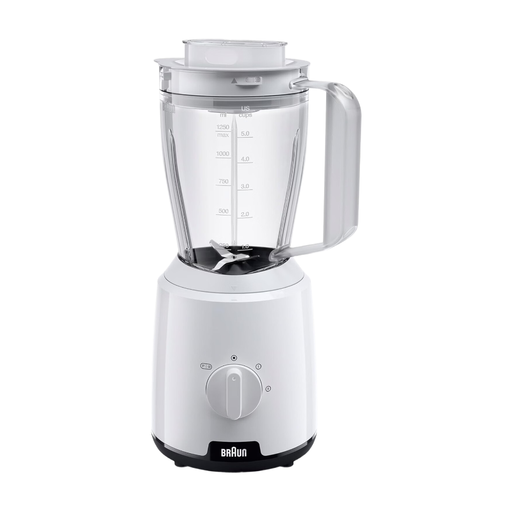
Braun PowerBlend 1 JB1000WH
This jug blender could be a good fit if you want to make a larger quantity and have space for the appliance and jug.
The product description lists a 1.5-litre jug, an ice-crushing function, two speeds, a pulse function and 600 W.
According to the product information, run it continuously for no more than two minutes and allow the motor to cool between cycles.
View at Joybuy
 No image available
Monsga 2-in-1 Hand Blender & Whisk S100
This hand blender with a beaker is a space-saving option for small quantities of soft ingredients; use a suitable container.
The product description lists a 500 ml beaker, plus standard and turbo settings.
The removable accessories are described as dishwasher-safe. Check the cleaning instructions for each specific part.
View at Joybuy
 No image available
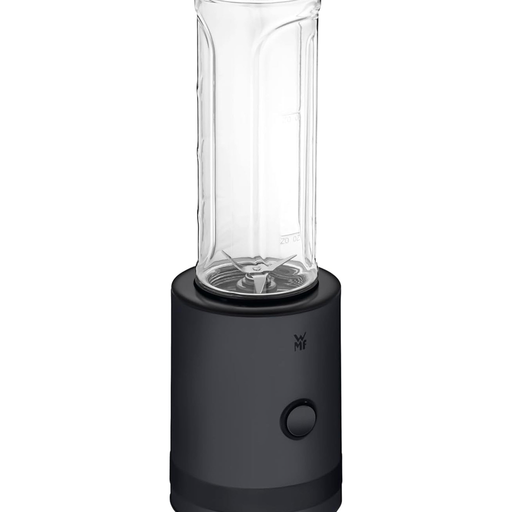
WMF Küchenminis Smoothie-to-Go Mini Blender, 0.6 l
With two blending and drinking containers, this model could be a good choice for individual servings to enjoy at home or take with you.
The product description lists two 0.6-litre containers, four stainless steel blades and an ice-crushing function.
According to the product information, run it continuously for no more than one minute and don’t blend liquids above 60 °C. The containers are described as dishwasher-safe.
View at Joybuy
 No image available
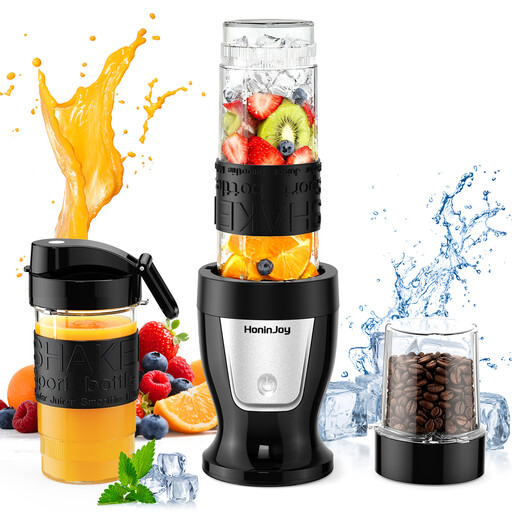
HoninJoy Smoothie Blender, 650 W
With two portable cups, this model is an option if you want to make individual drinks and take them with you.
The product description lists 20 oz and 14 oz cups, a pulse function and an ice-crushing function.
The cups and lids are described as dishwasher-safe. Check the instructions for preparing drinks with frozen ingredients.
View at Joybuy
Frequently asked questions
Do I need a powerful jug blender to make mango lassi?
No. For soft mango and yoghurt in small quantities, a compact personal blender or a hand blender with a suitable container may also do the job. If you’re using ice or frozen mango, check that the specific appliance explicitly allows it; wattage alone won’t tell you.
What should I clean after blending in a shared kitchen?
Clean the parts that come into contact with food according to the model’s instructions, and leave the worktop you used clean too. Only put parts in the dishwasher if they’re explicitly approved for it. The consumer advice centre recommends cleaning kitchen utensils and washing your hands before and between tasks.
What are my rights if a blender is faulty or I want to cancel an order?
If a product is faulty, you have statutory rights against the seller; a voluntary guarantee is separate from these. For consumer contracts made online, there is generally a 14-day cancellation period. You must notify the seller that you’re cancelling, and the details of the specific contract matter. The consumer advice centre explains these two rights separately.
What should I look for regarding food contact and product labelling?
Check that the product and any materials that come into contact with food are declared suitable for their intended use. For food contact materials, the European Commission refers to Regulation (EC) No 1935/2004. Relevant electrical appliances must also meet applicable requirements and be labelled accordingly. The German Federal Network Agency lists product traceability and German-language instructions among the points to check; a CE mark is not a performance test.


