A single serving in a holiday cottage
If you usually make one glass and have limited worktop space, a personal blender you can drink from may be handy. WMF lists a 0.6-litre container for the Kult X Mix & Go.


For a single serving made with soft mango and yoghurt, a compact personal blender is an obvious choice. For several glasses at once, the usable capacity of a jug matters. If you’re using frozen mango or ice, check that the specific model is approved for these ingredients. As well as wattage, consider cleaning, the containers included and how much space it takes up.
If you usually make one glass and have limited worktop space, a personal blender you can drink from may be handy. WMF lists a 0.6-litre container for the Kult X Mix & Go.
If you’re making several glasses, compare the jug’s usable fill level with the quantity you need. Bosch lists a 1.5-litre capacity for the MMB6172B; this specific model is shown as no longer available on the German product page.
For hard, cold ingredients, check the approval for the exact model. WMF lists an ice-crushing function for the KÜCHENminis Smoothie-to-go. CHIP’s stand blender test shows that high power alone doesn’t guarantee a particular result.
Start by considering how many portions you’ll make and how much space you have. Then check which ingredients the specific model can handle and read its cleaning instructions.
| What matters when buying | What to check | Who is it important for? |
|---|---|---|
| Single servings and limited space | Container size and usable capacity; the set’s dimensions and whether it includes a drinking lid. | If I usually make one glass in my holiday cottage and have limited worktop space, I’d like to blend directly in the drinking cup if possible. Around 33% of consumers put single servings and space requirements first. |
| Several glasses | Usable fill level, not just stated capacity; how many servings you plan to make. | When I’m making drinks for several guests, I want to prepare enough without having to blend multiple batches. Around 27% of consumers prioritise making several glasses per blending cycle. |
| Easy cleaning | Instructions for the container, blades and seals; only parts explicitly listed as dishwasher-safe should go in the dishwasher. | After blending, I want to be able to clean the container and accessories without too much effort. Around 20% of consumers put easy cleaning first. |
| Frozen mango or ice | Check the product details and instructions for the exact model to see whether it’s approved for frozen ingredients or ice cubes. | If my recipe includes frozen mango or ice cubes, I want to know whether this specific model can handle them. Around 20% of consumers prioritise frozen ingredients or ice. |
High power alone doesn’t guarantee a particular blending result. What matters is whether the model is designed for the ingredients in your recipe.
First decide whether you’ll be using soft mango, frozen mango or ice cubes, then check the instructions for the exact model.
The container’s stated capacity doesn’t automatically tell you how high you can fill it when making lassi. If you’re serving several guests, you may need to blend extra batches.
Check the maximum fill line against the number of servings you’re planning.
For several glasses, a small cup could mean repeatedly refilling and cleaning the blender.
The WMF Kult X Mix & Go, the KÜCHENminis Smoothie-to-go and a hand blender called KULT X are different types of appliance or models. Details about their containers and features aren’t interchangeable.
Before you buy, check the full model number, appliance type and what’s included.
Compact blend-and-drink models for single servings.
The VitaPower range includes jug blenders; the MMB6172B is one example.
MultiQuick hand blenders are an alternative if you have a suitable container and would also like to use the appliance for other blending tasks.
The Series 3000 HR2041/00 is a jug blender.
BlendBoss and Ninja Blast are different ranges of portable blenders.
This selection includes compact blend-and-drink cups, jug blenders and cordless blenders for single servings or larger quantities.
 No image available
The blend-and-drink cup is ideal for single servings that you can make directly in the cup and take with you.
The cup holds 710 ml. Features listed include three automatic programmes, a Pulse function, ice crushing and dishwasher-safe parts.
 No image available
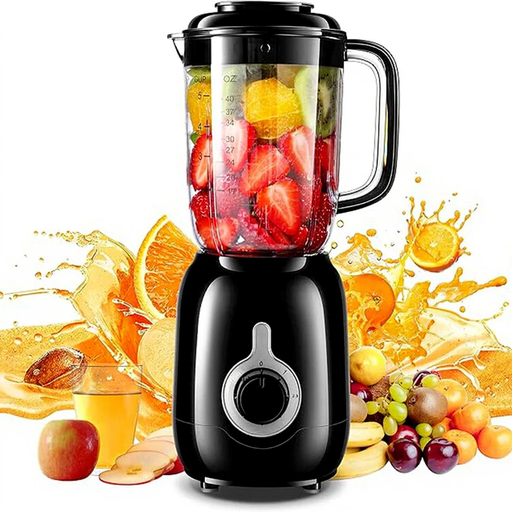
A jug blender is worth considering if you’d rather use a jug than a drinking cup when making several glasses.
The product name lists a 1.2-litre jug, 500 W, two speeds, Pulse and four stainless steel blades.
 No image available
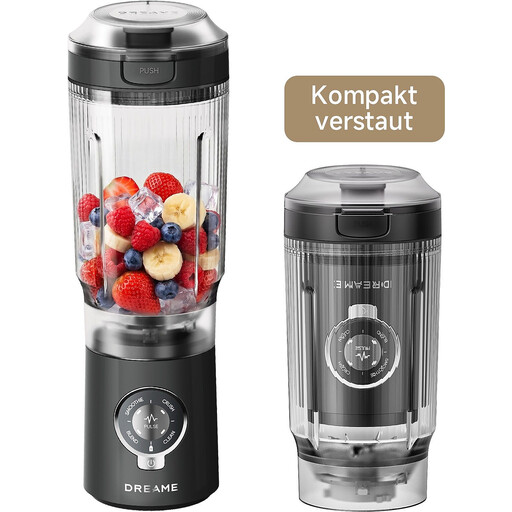
Cordless operation is useful if you don’t want to rely on a plug socket where you plan to blend.
The blending container holds 0.88 l. Other features listed include a drinking lid with a handle, USB-C charging and ice crushing.
 No image available
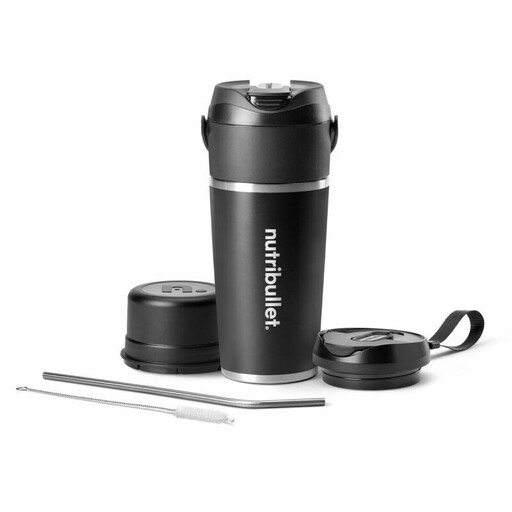
The portable cup is a good choice for single drinks if you want to blend and drink from the same container.
Features listed include a 590-ml insulated stainless steel cup, a rechargeable battery and USB-C charging. The product description says the ice-crushing function can handle a maximum of 3–4 ice cubes per use.
 No image available
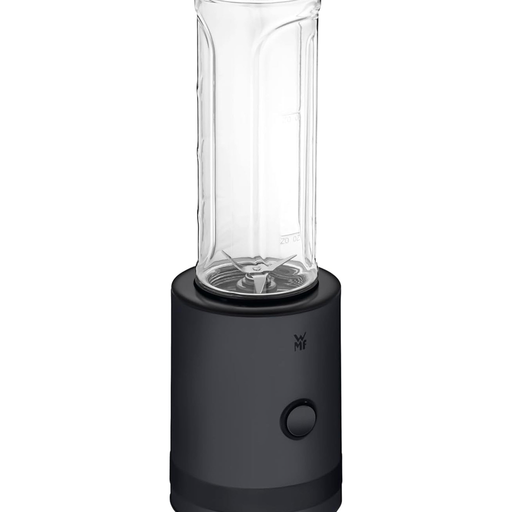
The two blend-and-drink containers are handy if you want to make portions without transferring the drink to another container.
The description lists two 0.6-litre containers, screw-top lids, an ice-crushing function and dishwasher-safe containers.
Only if your recipe includes ice cubes. If you’re using soft mango and yoghurt, ice crushing isn’t essential. For ice or frozen ingredients, check that the specific model is approved for them. CHIP’s comparison also shows that wattage alone doesn’t guarantee the result.
Wash fresh fruit before preparing it and keep perishable ingredients chilled until you’re ready to use them. The German Federal Institute for Risk Assessment recommends keeping perishable foods in a fridge at between 2 °C and 7 °C.
Only parts that the instructions for the specific model say are dishwasher-safe. For the MQ 50051 M, Braun specifically refers users to the instruction manual for the parts listed as dishwasher-safe.
For consumer purchases, the seller is generally responsible for your statutory rights if a product is faulty. The Verbraucherzentrale (German consumer advice centre) describes a two-year statutory warranty period and distinguishes it from a voluntary manufacturer’s guarantee. It also notes that contracts entered into from 31 July 2026 are subject to specific information requirements when choosing between repair and replacement.
EU rules require CE marking only for product groups covered by the relevant harmonised rules, including electrical and electronic equipment. Parts that come into contact with food must comply with the applicable EU rules for food contact materials. A CE mark alone is not an independently awarded quality mark and doesn’t replace checking the specific product listing.