What should you look for when buying?
Hand blender
A good fit if: you want to purée a small amount of soft mango in your own suitably tall container and store the appliance without taking up much space.
Things to weigh up: the container and blending foot need to suit the depth of the portion; using an open container can lead to splashing.
Compact personal blender
A good fit if: you want to prepare a portion in the blending cup and put the appliance away afterwards.
Things to weigh up: the capacity limits the quantity; for very small portions, the ingredients need to reach the blades.
Jug blender with a larger jug
A good fit if: you regularly want to make several portions or prepare different consistencies.
Things to weigh up: consider the space it takes up and how easy the jug is to clean, alongside how often you’ll use it.
In a shared kitchen, it’s worth checking portion size and storage space first, then cleaning and the consistency you want, and finally how to interpret the noise measurements.
| What matters |
What to check before buying |
Who is it most relevant to? |
| Portion and space |
Check the usable working capacity, not just the container capacity; consider the container’s shape and the space needed to use and store the appliance. |
If I’m making a small portion and want to put the appliance away afterwards, I look at the container and working capacity. Around 31% of consumers put portion size and space first. |
| Cleaning and hygiene |
Check the instructions for the blending foot, container, blades, seals and lid separately to see which parts are removable and dishwasher-safe. |
If you share a kitchen, you’ll want to be able to clean the parts that come into contact with food thoroughly after use. Cleaning and hygiene are the top concern for around 25% of consumers. |
| Smoothness and control |
Look at the speed settings and how the blades are positioned; don’t assume results with comparable ingredients will be the same as for a smoothie. |
If I need a particular, controllable texture for my recipe, choosing the right way to process the ingredients matters. Around 25% of consumers prioritise the consistency of their purée. |
| Noise while blending |
Compare the testing conditions, speed setting and test ingredients; don’t treat noise readings taken while the blender is running empty as measurements taken while puréeing. |
If other people are using the kitchen at the same time, I want to keep disruption to a minimum. Around 19% of consumers say considerate operation is their top concern. |
Joybuy products for blending in a container
The following Joybuy products are hand blenders for use in your own container. Check which accessories are included with each model.
 No image available
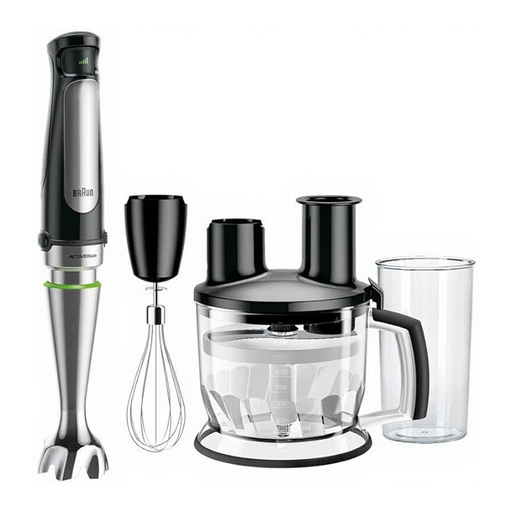
Braun MultiQuick 7 MQ7075X hand blender
For making mango purée in your own container, if you’d like to use a blending beaker.
SmartSpeed, three speed settings and ACTIVEBlade; supplied with a 600 ml measuring beaker and a 1.25 l chopper.
Joybuy
 No image available
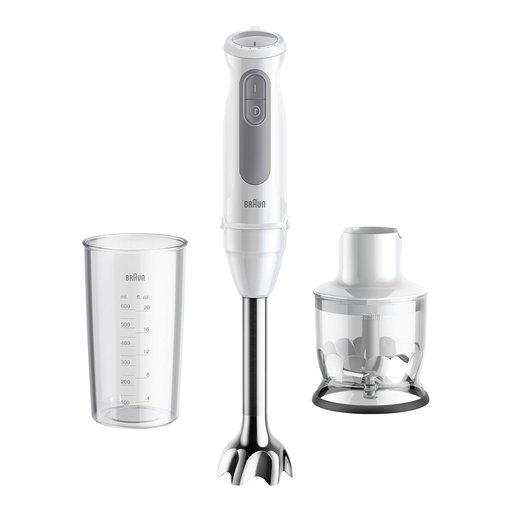
Braun MultiQuick MQ50201M hand blender, grey
An option if you want to purée mango in your own blending beaker and adjust the speed.
21 speeds, turbo function and SplashControl; supplied with a 600 ml beaker and a 350 ml chopper.
Joybuy
 No image available
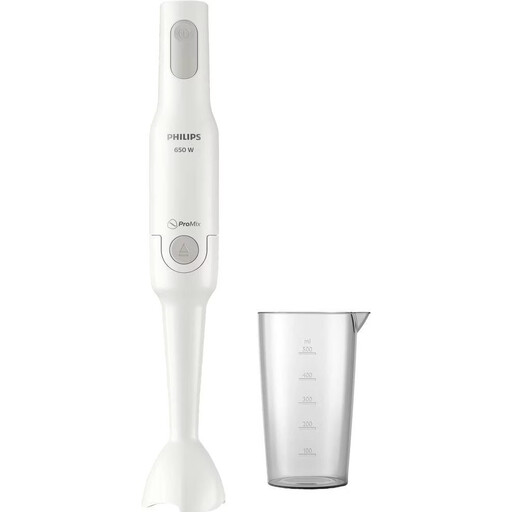
Philips HR2531/00 hand blender, 650 W
For blending in your own container, if the supplied blending beaker is the right size for your portion.
ProMix technology and removable, dishwasher-safe parts, according to the product description. Run for no more than 1 minute at a time, then allow to cool.
Joybuy
 No image available
ochama 4-in-1 hand blender, 600 W
An option for making mango purée in your own beaker, if its capacity suits your portion.
Two speed settings; supplied with an 800 ml beaker and a 500 ml chopper, according to the product description.
Joybuy
 No image available
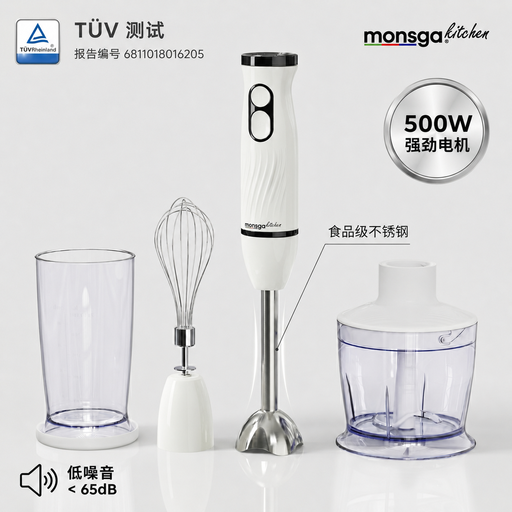
Monsga S100 2-in-1 hand blender with whisk
For making individual portions in a blending beaker, if a 500 ml container suits your recipe.
Normal and turbo modes; the product details list a 500 ml beaker and a 500 ml chopper, as well as removable accessories.
Joybuy
Frequently asked questions
Can I simply leave the blender out after preparing mango?
No. If other people use the same kitchen, you should clean utensils that come into contact with food after use. The German Federal Institute for Risk Assessment warns against cross-contamination, while the Verbraucherzentrale recommends cleaning kitchen utensils between tasks. Follow the instructions for your specific model when using a dishwasher.
Can I put the whole blender in the dishwasher?
No. “Dishwasher-safe parts” doesn’t mean you can put the whole appliance in the dishwasher. Bosch lists dishwasher-safe parts for the MMB2111S; for the relevant parts of the MQ 50051 M, Braun refers users to the instruction manual. Check the instructions for your specific model.
If something goes wrong, what matters more: a guarantee or statutory rights?
When you buy from a retailer in Germany, statutory warranty rights are a legal claim against the seller. A guarantee is an additional voluntary promise with its own terms. If a product is faulty, the first options to consider are repair or replacement.
What should I check about product safety in Germany?
Electrical and electronic equipment must comply with the applicable EU safety regulations. The European Commission considers CE marking generally relevant to this product category. It is a declaration made by the manufacturer, not a general independent quality mark, so check the marking on the specific appliance.
How should I dispose of a broken old blender?
According to the German Environment Agency, electrical waste must not go in household rubbish. You can take it to municipal collection points or recycling centres, in particular; return options at retailers depend on the relevant conditions.


