Fans of chunky mango salsa
If you want recognisable chunks of mango, you can pulse the ingredients briefly and check the texture as you go. Kenwood’s mango salsa recipe recommends this approach.


For chunky mango salsa, a compact chopper with pulse or press-to-operate controls is a natural starting point: you can check the texture between short bursts. A hand blender set is a better fit if you also purée other foods, while a jug blender is more suited to smooth sauces or drinks. In a shared kitchen, you should also consider portion size, how easy the individual parts are to clean and how much storage space you have.
If you want recognisable chunks of mango, you can pulse the ingredients briefly and check the texture as you go. Kenwood’s mango salsa recipe recommends this approach.
If you share a kitchen and worktop with others, look for parts that are easy to access and clean according to the instructions. The German Federal Institute for Risk Assessment recommends using separate utensils for raw and cooked food, as well as for food that will be eaten without further heating.
If there’s limited space in your shared kitchen, it’s not just the size of the appliance that matters: you’ll also need room to store the bowl and accessories. Smaller containers may mean you need to work in several batches when making larger quantities.
A good fit if: Chunky salsa is your priority and you want to chop the ingredients in stages.
The trade-off: Smaller bowls may mean several batches, and the blade and lid are extra parts to clean.
A good fit if: You regularly purée food as well as making salsa, and the specific set includes a suitable chopper attachment.
The trade-off: What’s included and which attachments you get varies by model, so make sure you factor this in.
A good fit if: You mainly make smooth sauces or drinks and are looking for a suitable jug capacity.
The trade-off: Continuous blending is less precise than controlled chopping when you want distinct chunks of mango; controls also vary by model.
For chunky salsa, controlled chopping and a suitably sized bowl are key. In a shared kitchen, you’ll also need to think about cleaning and storage.
| Priority | What to check before buying | Who it matters most to |
|---|---|---|
| Chunky texture | Pulse or press-to-operate controls and a suitable chopping bowl. | If you want to keep distinct chunks of mango, you’ll want to chop in short bursts and check the texture yourself. Around 31 % of consumers prioritise chunky rather than puréed salsa when buying. |
| Cleaning after shared use | Check which removable parts are dishwasher-safe according to the instructions, and how to clean the blade safely. | If you share a kitchen and worktop with others, you’ll want to be able to clean the bowl, lid and blade thoroughly, following the instructions. Easy cleaning is the top priority for around 25 % of consumers. |
| Storage and portion size | Bowl capacity, appliance dimensions and space for accessories. | If cupboard space is limited and you’re making several portions, consider whether a small container will be enough or whether you’re happy to work in several batches. Around 19 % of consumers prioritise storage space over the quantity processed in one go. |
| Noise around other people | If available, check noise measurements taken using comparable metrics and methods, as well as when you plan to use the appliance. | If other people are nearby, you’ll want to plan when you use the appliance to minimise disruption. Noise is the top buying priority for around 13 % of consumers. |
| Other cooking tasks | Check which functions and attachments are actually included with the specific model. | If you regularly purée food or make drinks as well as salsa, an appliance with extra functions may suit you, as long as you’re happy with the accessories and cleaning involved. Around 12 % of consumers prioritise other cooking tasks over an appliance designed solely for salsa. |
Power consumption alone doesn’t tell you whether you can stop the appliance frequently and control the process. The controls, container and running time are all worth checking to get the texture you want.
Compare pulse or press-to-operate controls and suitable containers rather than looking at the wattage alone.
Which parts can go in the dishwasher depends on the specific model. The motor unit should not go in the dishwasher unless the instructions explicitly say it can.
Check the instructions for the bowl, lid, blade and motor unit separately. Handle sharp blades only as directed.
Parts that aren’t dishwasher-safe according to the instructions will need to be washed by hand.
With hand blender sets, the exact model determines whether a suitable chopper is included.
Before buying, check the full model number against the list of everything included in the box.
Extra attachments take up storage space and need cleaning too.
The Easy Chop CHP61.100WH is a compact chopper with a 500-ml bowl; Kenwood gives mango salsa as an example of what you can make with it.
The Mini Chopper 5KFC3516 has an 830-ml work bowl and, according to KitchenAid, can also be used to make salsa.
The KÜCHENminis Chopper, with its 0.3-l container, is designed for small quantities and limited storage space.
The MultiQuick 5 Pro MQ55755M set combines a hand blender with attachments, including a 500-ml mini food processor.
According to Bosch’s specifications, the VitaPower MMB2111S is a compact jug blender with a 0.6-l takeaway cup.
The MZ 500 is a chopper with a 1.5-l glass bowl, designed for larger quantities.
The Joybuy products below range from compact choppers to jug blenders. For chunky salsa, the details that matter most are whether each model has a pulse function, how it processes ingredients and how easy it is to clean.
 No image available
The description lists salsa as one use and mentions a pulse function, which lets you check the texture as you go.
Blender jug: 1.500 ml; chopper cup: 300 ml. The description also lists a 600-ml travel cup and dishwasher-safe attachments.
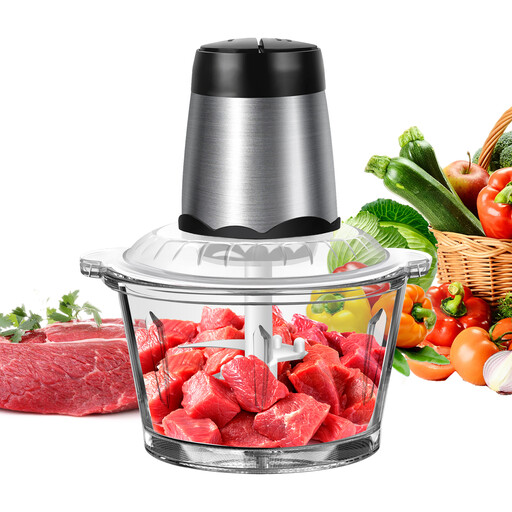 No image available
The two speeds and pulse function give you a way to control the process in stages.
The product description lists a 2-l glass bowl, removable dishwasher-safe parts and suitability for fruit and vegetables.
 No image available
According to the product description, the lower speed is designed for soft ingredients such as fruit; the glass bowl lets you see how the chopping is progressing.
The description lists four stainless steel blades. Run the appliance for no more than 40 seconds at a time, then pause for at least 2 minutes; after three cycles, allow it to cool for 15 minutes. Do not use it for dry ingredients, bones, ice or frozen food.
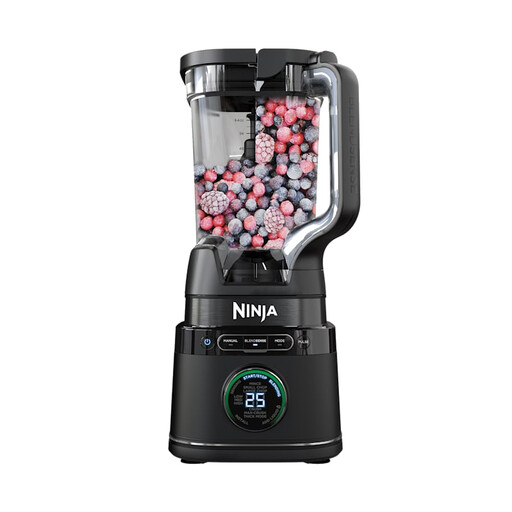 No image available
The product description lists a pulse function and says the blender can make chunky salsa. Check the texture as you go to see if it’s ready.
Jug: 2.1 l; according to the description, the jug, lid and blade unit are removable and dishwasher-safe. Do not blend hot liquids or run the appliance continuously for more than 60 seconds.
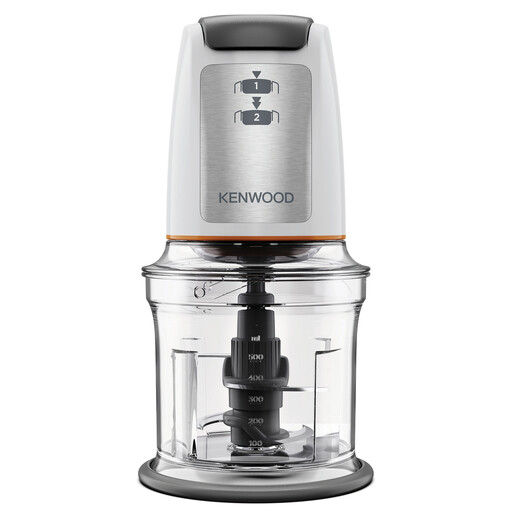 No image available
This compact chopper is an option for smaller batches of salsa; short bursts let you check the texture as you go.
The product details list a 0,5-l bowl and two speeds. Kenwood describes this model as having press-to-operate controls and dishwasher-safe parts.
Put the mango and firmer ingredients in a suitable chopper and process them briefly in bursts. Check the texture as you go, then stir in delicate ingredients afterwards if needed. Kenwood describes this approach in a mango salsa recipe, though the result will still depend on the quantity of ingredients and the processing time.
Wash fruit and vegetables thoroughly, and keep utensils for ingredients eaten raw separate from those used for raw animal products. Clean the bowl and other food-contact parts according to the appliance instructions, and handle blades carefully. The German Federal Institute for Risk Assessment recommends keeping utensils separate and washing fruit and vegetables.
Online purchase contracts generally come with a 14-day cancellation period. According to the Verbraucherzentrale consumer advice centre, depending on the circumstances, it may start when the contract is concluded or when the goods are received. If a product is faulty, statutory rights should be distinguished from a voluntary guarantee. The Verbraucherzentrale’s guidance reflects the position as at 13 August 2026.
No. For products covered by the relevant EU rules, the CE marking is the manufacturer’s declaration that the product meets the applicable requirements; it is not an independent quality mark. Your Europe, the European Union’s information service, explains the CE marking in the context of EU rules.