
Lieferung heute & morgen

Qualitätsgarantie

Willkommens-Angebote freischalten: KOSTENLOSE Lieferung | Bis zu 80 % RABATT | Kostenlose 30-Tage-JoyPlus-Testphase
App herunterladen
For many coffee enthusiasts, grinding the beans immediately before brewing is an indispensable step. A high-quality manual coffee grinder promises complete control over the flavour profile. However, the market is flooded with models whose promises don't hold up in practice. Before you make a decision, it's crucial to understand the common pitfalls that often lead to disappointment and buyer's remorse.
This guide focuses on the critical technical features and will help you find a grinder that is precise, durable, and perfectly suited to your needs.
Many grinders look robust at first glance but reveal their flaws after just a few weeks of use. Pay close attention to these three points to avoid a poor investment:
To avoid the problems mentioned above, you should focus on three core technical aspects. These are the primary determinants of your manual coffee grinder's performance and longevity.
The heart of any grinder is its burr set. The conical burr grinder has established itself as the standard for high-quality manual models. Compared to blade grinders (found in very cheap electric models), it cuts the beans rather than shattering them, resulting in a more uniform grind.
A good grinder must allow for precise and easily repeatable grind size adjustments. A click-based system, where each step provides tactile feedback, is ideal for this.
The external and internal construction determines the grinder's feel and long-term consistency.
Based on these criteria, we have curated products for different user groups.
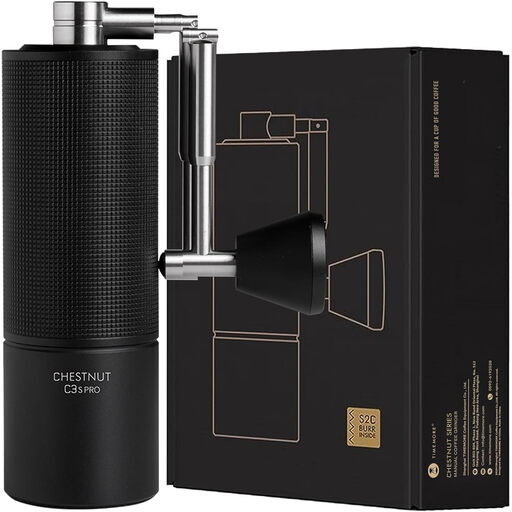
Why This Fits Their Persona: This model is aimed at users who refuse to compromise on grind quality, whether at home or on the go. The combination of precision and portability makes it a versatile tool.
The all-metal aluminium construction and dual-bearing axle prevent instability. The CNC-machined stainless steel conical burr set ensures durability and a consistent grind.
Highly precise, click-based grind adjustment with approx. 36 steps; foldable handle for excellent portability; efficient grinding thanks to the S2C 660 burr set.
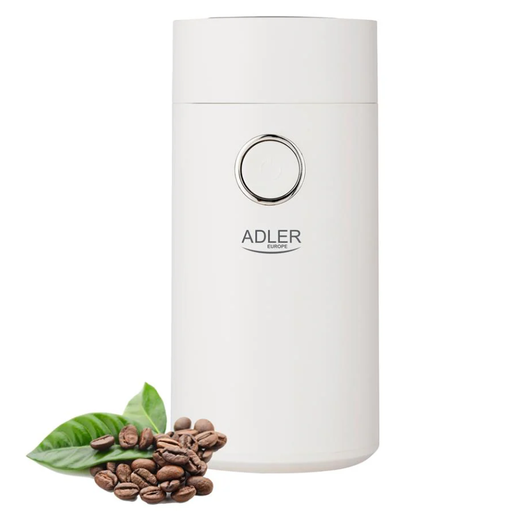
Why This Fits Their Persona: For users who want freshly ground coffee but shy away from the effort of a manual grinder and have a very limited budget. The priority here is speed and a low entry price.
As an electric grinder, it completely bypasses the manual effort. It's a simple 'plug-and-play' solution that requires no learning curve. The transparent lid allows for visual control of the grind.
Very low purchase price; grinds at the touch of a button in seconds. Note: This is a blade grinder, which produces a less uniform grind than a conical burr grinder.
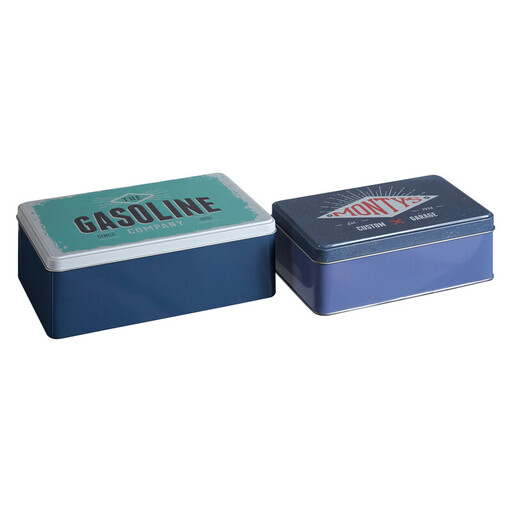
Why This Fits Their Persona: For coffee lovers for whom the aesthetics of their coffee corner are just as important as the contents of their cup. These tins offer a stylish solution for storing coffee beans.
Addresses an often-overlooked aspect: proper storage. Poorly stored beans quickly lose their aroma. These metal tins protect the beans from light and create an appealing, organised look.
Decorative retro design that makes a statement; durable and lightweight material (tinplate); set of two sizes for different bean varieties or quantities.
We have compiled a complete, real-time list of products that fully satisfy these strict selection criteria and UK safety regulations.
Regular cleaning is crucial for flavour and longevity. Most high-quality manual grinders can be easily disassembled. Remove the grounds container and unscrew the adjustment knob to take out the burr set. Use a small brush and an air blower to remove coffee residue and oils from the burrs and housing. According to the manufacturer, water should be avoided, especially on the steel burrs and ball bearings, to prevent rust.
As a general guideline:
For coffee lovers who value flavour and control, the answer is usually yes. Compared to electric blade grinders, a conical burr grinder produces a significantly more uniform grind. This leads to a more even extraction and a clearer, more nuanced flavour profile in the cup. Additionally, manual grinders offer the advantages of portability, quiet operation, and not needing electricity—ideal for travel or the office.