
Lieferung heute & morgen

Qualitätsgarantie

Willkommens-Angebote freischalten: KOSTENLOSE Lieferung | Bis zu 80 % RABATT | Kostenlose 30-Tage-JoyPlus-Testphase
App herunterladen
Brewing coffee by hand is more than just a process—it's a ritual that allows you to fully discover the nuances and aromas of your coffee. However, given the wide variety of manual coffee makers, choosing the right model can be a challenge. Whether you prefer a bold espresso, a clean filter coffee, or a full-bodied pressed coffee, there is a suitable method for every preference.
This guide is designed to give you an overview of different types of coffee makers and help you make an informed decision. We will introduce you to a selection of models that stand out for their specific features and use cases.
Before you decide on a model, a few fundamental considerations are helpful. The method, material, and capacity are crucial factors that significantly influence the brewing results and user experience.
The preparation method has the greatest impact on the taste of your coffee.
The material affects not only the appearance but also the durability and maintenance required.
For sustainable coffee brewing, models with reusable stainless steel filters are an interesting option. They reduce waste by eliminating the need for paper filters. Also, pay attention to the coffee maker's capacity—from a single serving to a pot for several people—and ensure it can be easily disassembled for straightforward cleaning.
Here is a selection of different coffee makers designed for various preferences and applications.
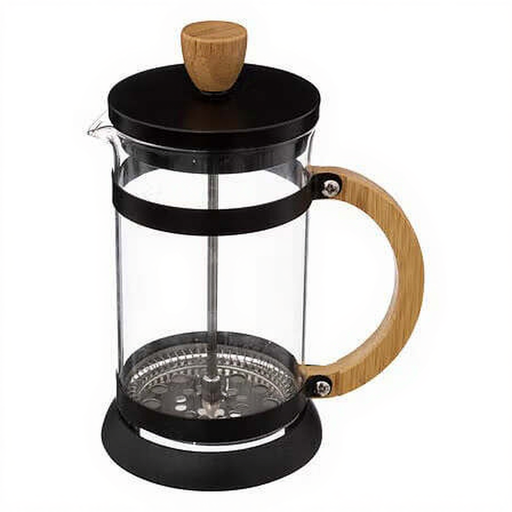
Why it stands out: The Atmosphera coffee maker combines the pour-over method with an elegant design. The borosilicate glass carafe is complemented by a handle and lid made of natural bamboo, giving it a modern yet natural aesthetic. A special feature is the integrated, reusable stainless steel filter, which makes paper filters obsolete.
Advantages:
Who is it for? For coffee lovers who value a clean flavour profile and an appealing design. It is a great choice for anyone looking for a sustainable and straightforward method for brewing coffee by hand.
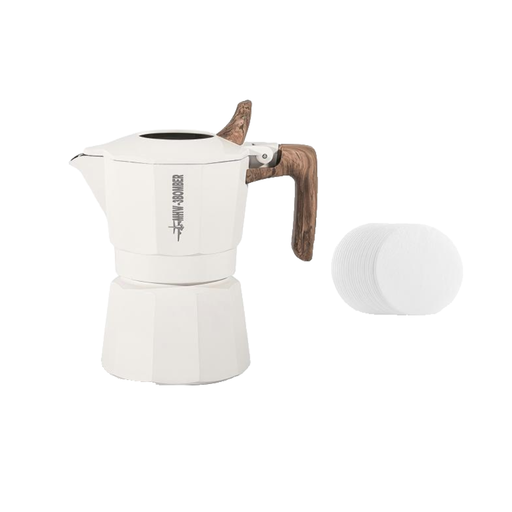
Why it stands out: This stovetop espresso maker from MHW-3BOMBER is distinguished by its dual-valve design. According to the manufacturer, this construction allows for improved pressure control, resulting in a richer extraction and an authentic crema. Made from an aluminium alloy, it follows the classic design of the Moka pot.
Advantages:
Who is it for? Ideal for those who appreciate the intense flavour of Moka coffee and are looking for a robust, portable solution for home, the office, or camping. The dual-valve system appeals to users who want to get the most out of their Moka pot.
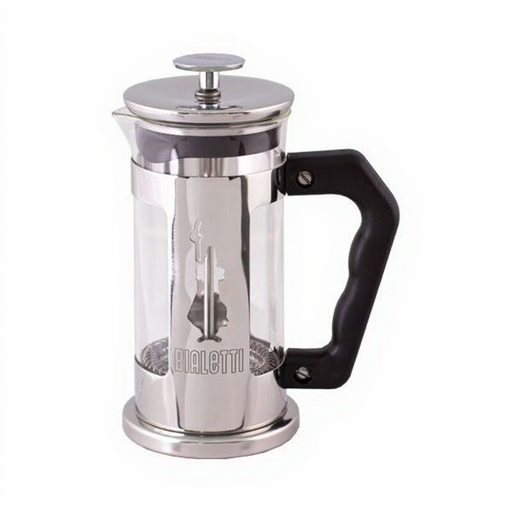
Why it stands out: The Preziosa by Bialetti is a classic French press that combines functionality with proven quality. The frame made of high-quality 18/10 stainless steel and the borosilicate glass beaker make it a durable companion. The design is simple and functional, as you would expect from a storied Italian manufacturer.
Advantages:
Who is it for? For beginners and purists who appreciate the straightforward brewing process and the bold result of a French press. Its robust materials and easy cleaning make it a practical choice for daily use.
The world of manual coffee brewing is diverse. If the models presented here don't quite meet your needs or you simply want to browse further, you can find a wider selection in our category.
? Discover more pour-over coffee makers on Joybuy.de
1. What is the difference between a French press and a pour-over coffee maker? The main difference lies in the filtration and contact time. With a French press (immersion), the coffee steeps directly in the water, and a metal filter separates the grounds from the beverage. This results in a full-bodied coffee. With pour-over (percolation), water flows through the coffee grounds in a filter, leading to a cleaner, more nuanced flavour profile, as oils and sediment are retained.
2. Can you use a Moka pot on an induction hob? That depends on the material of the pot. Traditional aluminium Moka pots do not work on induction hobs. However, models made of ferromagnetic stainless steel or those with a base specifically designed for induction are compatible. It is important to check the manufacturer's specifications. Some models, like the MHW-3BOMBER, are designed for induction, but compatibility can vary depending on the cooktop.
3. How do you clean a coffee maker properly? Cleaning depends on the material. Glass and stainless steel coffee makers are often dishwasher-safe. Aluminium Moka pots should only be cleaned by hand with warm water to preserve the patina, which, according to connoisseurs, contributes to the flavour. It is important to let all parts dry completely after cleaning to prevent mould growth or material damage.