Marathon trainees thinking about their post-workout snack
You want to choose a snack with a clear protein content after a run or strength session, while keeping an eye on portion size, salt and allergens.


A nut or seed mix is more suitable as a post-workout snack or between meals during marathon training than as your sole source of fuel for a long run. The German Nutrition Society (DGE) highlights the role of carbohydrates in fuelling exercise, so your choice should depend on when you plan to eat it, the nutritional values for your intended portion and the ingredients.
You want to choose a snack with a clear protein content after a run or strength session, while keeping an eye on portion size, salt and allergens.
You’re planning your fuel for a longer run and want to avoid confusing a protein-rich snack with a carbohydrate-rich snack.
You’re looking for something savoury to nibble on, but need to check the ingredients and nutritional information on the specific pack, perhaps because of allergies or personal dietary requirements.
First decide whether the snack is for a long run or between meals. Then compare the nutritional values per 100 g and for the portion you actually plan to eat.
| What to look for | What to check | Who it matters to |
|---|---|---|
| Carbohydrates for long runs | Check the carbohydrates per portion and when you plan to eat it; “High Protein” alone doesn’t tell you whether it’s suitable fuel for a run. | When I have a long training run coming up, I want to plan my fuel carefully rather than rely on a protein snack. Around 33% of consumers put this question first. |
| Protein as a post-workout snack | Compare the protein per 100 g with the amount in the portion you plan to eat. | After training, I want to know how much protein is in my usual snack portion. This is the main priority for around 27% of consumers. |
| Portion size and convenience | Consider the pack size, ingredients, fat and fibre if you plan to eat the snack shortly before or after a run. | I want to take a portion with me that suits my training routine in terms of size and ingredients. Around 20% of consumers focus on this first. |
| Salt and allergens | Check the salt per 100 g, as well as the ingredients and allergen information on the specific pack. | With a savoury mix, I need to know what it contains and its nutritional values. This labelling is the most important buying consideration for around 20% of consumers. |
A protein-rich mix doesn’t automatically provide the answer to what you need for energy during a long endurance session. The DGE highlights the importance of carbohydrates for this.
Choose a snack based on when you’ll eat it. For long runs, plan your carbohydrate intake separately from your protein.
Values per 100 g are useful for comparing products, but they may not reflect the portion you’ll actually eat. On their own, they also tell you nothing about sugar, fat or salt.
Compare products using the same reference amount, and factor in the portion you plan to eat. The Verbraucherzentrale recommends looking at the full nutrition table, especially for high-protein products.
The snack types considered here may contain ingredients such as peanuts, tree nuts, soya, milk and wheat. Ingredients can vary between products and recipes.
Every time you buy, check the ingredients and highlighted allergens on the pack you’re actually taking with you.
The product information varies considerably: REWE lists 0.4 g of salt per 100 g for Kluth Fit Food Protein Mix, while EDEKA lists 2.9 g per 100 g for GUT&GÜNSTIG Snack-Mix. These are different products, not two portions of the same mix.
Compare salt levels per 100 g, then factor in your intended portion rather than choosing based on protein alone.
The examples below show different types of snack. A brand name alone tells you nothing about the nutritional values of another variety or whether it’s suitable fuel for a long run.
Fit Food Protein Mix, listed by REWE, is an example of a mix made with soya beans and nuts.
Protein Chips Paprika is a savoury crisps-style snack, not a nut or seed mix.
Protein Chips are a crisps-style snack made with lentil flour and pea protein, rather than a snack mix.
NicNac’s Original is a savoury peanut snack, not a mix specially designed for marathon training.
Lidl sells a range of products under the Alesto brand, including nuts, dried fruit and party snacks. The right type of snack depends on the specific product.
This selection includes a seed and kernel mix, as well as a nut mix for between meals or as a post-workout snack. Plan your carbohydrate intake separately if you’re looking for fuel for long runs.
 No image available
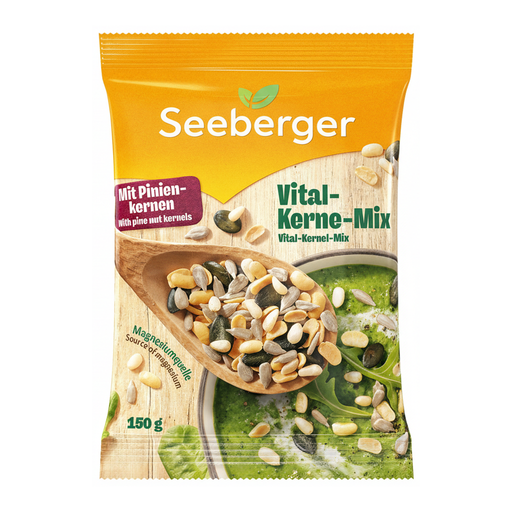
This seed and kernel mix could work as a post-workout snack or between meals if you’re after a mix rather than specific fuel for a run.
Pack size: 150 g. Check the nutritional information for your intended portion, and the ingredients list on the pack if you have any allergies.
 No image available
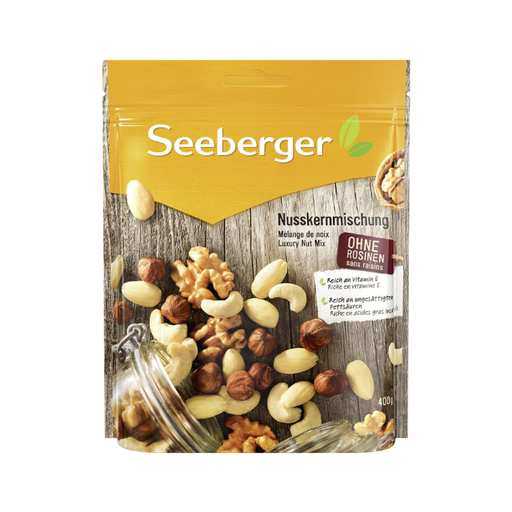
This nut mix without raisins could work as a snack between meals if you’re specifically looking for a mix without dried fruit.
Pack size: 400 g. Compare the nutritional values for your intended portion, and check the ingredients list on the specific pack if you have any allergies.
Not necessarily: a high protein content doesn’t answer the question of how you’ll get enough carbohydrates during a long run. The DGE highlights the importance of carbohydrates for fuelling exercise. Choose a mix based on when you’ll eat it and its nutritional values, rather than assuming it’s suitable run fuel just because it contains protein.
Compare carbohydrates, sugar, fat, salt and protein per 100 g, as well as for your intended portion. The Verbraucherzentrale points out that a protein-related claim doesn’t replace checking the other nutritional information.
Check the ingredients and allergen information on the specific pack before you buy. Depending on the product, it may contain peanuts, tree nuts, soya, milk or wheat, for example. The term “snack mix” doesn’t tell you which ingredients it contains.
Before making your final choice, check the information on the pack you’re buying. ALDI SÜD notes that the nutritional values of its Protein Chips may vary between suppliers; labelling and recipes can also change for other products.