For NDR Info Spezial, a DAB+-capable radio is a good choice if reception has been confirmed where you plan to listen. For the DWD spoken-word broadcast on 5905 and 6180 kHz, however, you’ll need a shortwave receiver. An FM/MW radio is only suitable if the forecast you want is broadcast by a station you can receive on one of those bands. For quiet listening, also check that the specific radio has a headphone socket and volume control.
Who this radio guide is for
Quiet listeners
You’d like to listen to marine weather forecasts through headphones rather than a speaker, so you’re checking the connection, controls and reception where you plan to listen. TechniSat and Panasonic list headphone sockets for their respective models.
NDR DAB+ listeners
You’d like to listen to NDR Info Spezial on a compact radio and need to check whether the programme is available via DAB+ where you plan to use it. Norddeutscher Rundfunk offers a location-based reception checker.
DWD shortwave listeners
You’re specifically interested in the DWD spoken-word broadcast on shortwave and need a receiver that covers the stated frequencies. Deutscher Wetterdienst describes the broadcast as a technical test service.
What to look for when buying
DAB+/FM pocket radio
A good choice if: you want to listen to NDR Info Spezial via DAB+ where you plan to use the radio. Norddeutscher Rundfunk carries the marine weather forecast on NDR Info Spezial and offers a reception checker for your location.
Keep in mind: Support for the right band doesn’t guarantee reception everywhere. Check reception and try the volume with headphones.
FM/MW pocket radio
A good choice if: you’ve confirmed that the forecast you want is broadcast by an FM or MW station you can receive where you plan to listen.
Keep in mind: FM/MW alone won’t cover DAB+ or shortwave. Check the station and how it broadcasts before you buy.
Shortwave receiver
A good choice if: you specifically want to receive the DWD spoken-word broadcast at 5905 or 6180 kHz during its technical test service. According to the manufacturer, the Sangean ATS-405 covers these frequencies within its shortwave range.
Keep in mind: Deutscher Wetterdienst says the broadcast is a test service. A receiver covering the right frequencies still won’t guarantee reception at your location. At 165 × 100 × 33 mm and 360 g, the ATS-405 is less compact than the small DAB+ and FM radios considered here.
| What you’re looking for |
What to check before buying |
Who it matters most to |
| Quiet, private listening |
Check that the radio has a headphone socket and that your headphones are compatible. Try listening to spoken-word content at a low volume. |
If I want to listen to the forecast quietly and privately through headphones, I look for a suitable connection and precise volume control. Around 36% of consumers put this first. |
| Reception of the forecast you want |
Check the forecast, station and broadcast method for your location. Norddeutscher Rundfunk offers a DAB+ reception checker by location or postcode. |
If you specifically want to listen to NDR Info Spezial where you’re staying, you’ll need to know whether DAB+ reception is available there. Around 29% of consumers make this forecast their priority. |
| Portable power |
Check the power source and battery-life conditions: TechniSat quotes up to 6 hours for the TECHNIRADIO RDR, while Sony quotes 20 hours with headphones for the XDR-P1DBP. These are manufacturer figures based on different conditions. |
If I want to use the radio on the go without a mains socket, choosing the right battery or rechargeable power option is essential. Around 21% of consumers prioritise being able to use their radio away from the mains. |
| Dedicated shortwave reception |
Check that the receiver covers 5905 and 6180 kHz and that Deutscher Wetterdienst is still broadcasting the programme as a test service. |
If you specifically want to listen to the DWD spoken-word broadcast on shortwave, you’ll need a suitable multi-band receiver and be prepared for the particular reception conditions. Around 14% of consumers put this first. |
Reception and quiet-listening pitfalls
-
A radio won’t automatically receive the marine weather forecast you want
FM/MW, DAB+ and shortwave are different ways of receiving broadcasts. Norddeutscher Rundfunk carries the marine weather forecast on NDR Info Spezial; according to Deutscher Wetterdienst, its spoken-word broadcast is a technical test service on shortwave.
First, decide which forecast and station you want. Then check the required frequency band against the radio’s specifications and confirm reception where you plan to use it.
-
A headphone socket doesn’t guarantee a comfortable listening volume
Connection details don’t tell you whether you’ll be able to make out spoken content comfortably at a low volume.
If possible, try the headphones and volume control with spoken-word content.
-
Manufacturer battery-life figures aren’t directly comparable
Depending on the model, figures may relate to different operating modes and power sources. For example, Sony quotes 20 hours with headphones for the XDR-P1DBP, while TechniSat quotes up to 6 hours for the TECHNIRADIO RDR.
Check the stated conditions, battery or rechargeable battery type, and charging accessories separately for each model.
Depending on the model, you may need charging accessories or replacement batteries.
Key brands at a glance
TechniSat
The TECHNIRADIO RDR is a compact DAB+/FM model for listening to NDR, provided DAB+ is available where you plan to listen.
- According to TechniSat, the features include a 3.5 mm headphone socket, preset buttons, an antenna in the wrist strap and a replaceable rechargeable battery. The stated playback time is up to 6 hours.
- These details don’t tell you how clear speech will sound at the lowest volume that suits you, or whether you’ll get reception where you plan to use it.
Sony
The XDR-P1DBP is a compact DAB+/FM model with a headphone socket.
- Sony quotes 20 hours of battery life with headphones, as well as a sleep timer and USB Micro-B charging.
- The manufacturer’s figures don’t tell you about reception where you plan to use it or how clearly speech can be heard at a very low volume.
Panasonic
The RF-P150D is an FM/MW alternative powered by AA batteries, provided the forecast you want is available on one of these bands.
- Panasonic lists a 3.5 mm mono headphone output and battery life that varies depending on the type of battery used.
- This model is specified for FM and MW, not DAB+ or shortwave. Check whether you can receive the station you want on one of its supported bands where you plan to use it.
Philips
The TAR1506/00 is an analogue FM/MW radio with a headphone socket and two AAA batteries.
- Philips lists tuning and volume dials, with a choice of FM or MW.
- DAB+ and shortwave aren’t listed for this model. It’s only suitable for the forecast you want if FM or MW reception has been confirmed where you plan to listen.
Sangean
The ATS-405 is a portable multi-band receiver for the specialist DWD shortwave option.
- Sangean lists a shortwave range of 2.3 to 26.10 MHz and a headphone socket. This means the 5905 and 6180 kHz frequencies specified by DWD fall within its stated range.
- At 165 × 100 × 33 mm and 360 g, this model is less compact than the small DAB+ and FM radios considered here. Deutscher Wetterdienst describes its shortwave spoken-word broadcast as a technical test service.
Joybuy radios for DAB+ reception
The following Joybuy models are portable DAB+/FM radios for listening to NDR Info Spezial via DAB+. Check DAB+ reception where you plan to listen, and try adjusting the volume with headphones to see whether it suits you.
 No image available
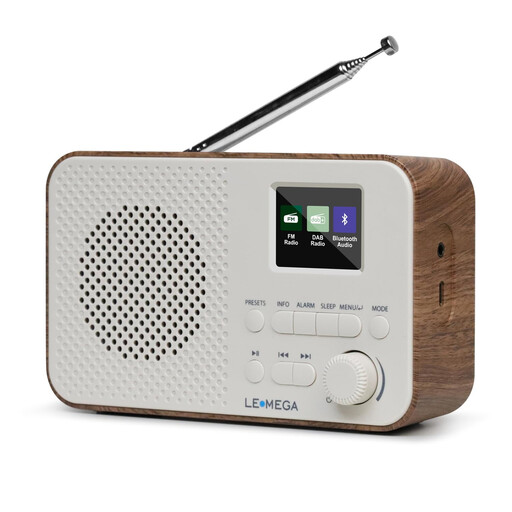
LEMEGA DAB Go, DAB+/FM radio, 2200 mAh rechargeable battery, walnut
Suitable for DAB+ listening if NDR Info Spezial is available where you plan to use it. Try the volume with headphones before buying.
The product name lists a rechargeable 2200 mAh battery, USB-C, 40 presets, Bluetooth, an LCD display and a headphone socket.
View at Joybuy
 No image available
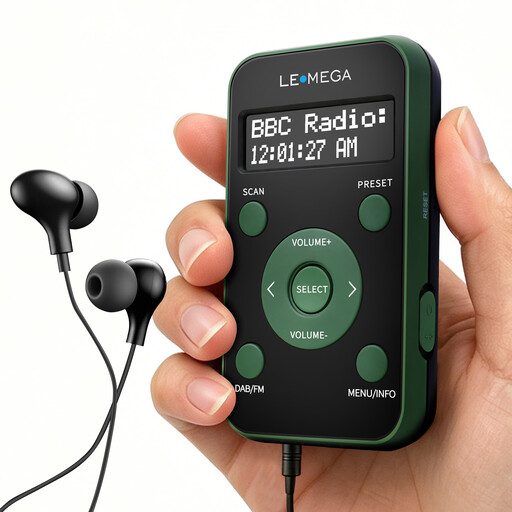
LEMEGA PR1 Pocket, DAB/DAB+/FM radio, green/black
An option for listening on the go via DAB+, provided the station you want is available where you plan to use it. Check that the earphones work for you at your preferred volume.
The product name lists a rechargeable battery, 20 presets, an LCD display and earphones.
View at Joybuy
 No image available
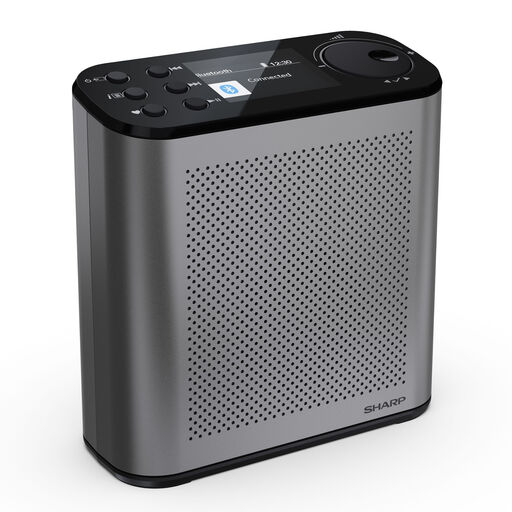
SHARP DR-P530(GY) Osaka, DAB+/FM, storm grey
Suitable for listening to NDR Info Spezial via DAB+ if the programme is available where you plan to use it. Also check how easy it is to use with headphones.
The product name lists Bluetooth 5.3, BestTune, 120 station presets, USB-C, a stated battery life of 15 hours and a 2.4-inch colour display.
View at Joybuy
Frequently asked questions
Can I listen to NDR Info Spezial anywhere with a DAB+ pocket radio?
No, you’ll need to check reception where you plan to listen. Norddeutscher Rundfunk offers a reception checker by location or postcode.
What should I do if a saved NDR station can no longer be found?
Following a change to the NDR Info service ID on 14 April 2026, Norddeutscher Rundfunk recommends running a new DAB+ station scan if necessary, then setting up your favourite button again. This advice relates to NDR Info; it doesn’t prove that every reception problem with NDR Info Spezial has the same cause.
Is an FM/MW radio enough for the DWD spoken-word broadcast on 5905 and 6180 kHz?
No. Deutscher Wetterdienst specifies shortwave for this spoken-word broadcast and describes it as a technical test service. The radio must explicitly cover the relevant shortwave range, and reception at your specific location is not guaranteed.
Can I rely on older DWD broadcast times when planning?
Not without checking again. The DWD schedule with the broadcast times referenced here is dated 15 January 2025. Check the programme and DWD information again before making plans.
What other information is important when travelling by boat?
Check the latest weather and nautical warnings for the area you’ll be sailing in. The Federal Maritime and Hydrographic Agency’s Weather and Warning Broadcast publication, dated 23 September 2026, also lists coast radio stations and nautical warning messages. This doesn’t mean an ordinary radio is suitable for marine radio communications.


